
Social media is changing in a big way during 2026. For a long time, we were all stuck in what experts call “walled gardens.” These are places like Facebook or the old Twitter where you had to stay inside their app to talk to your friends. If your friend was on a different app, you were out of luck. You could not send them a message or see their posts.
But today, we are seeing the rise of the open social web. This is a world where different apps can talk to each other just like email does. In this new world, the two biggest names are mastodon and bluesky. They both want to give you back control of your online life. However, they go about it in very different ways.
However, there may be a future where you can pick the app you like best without losing touch with the people you care about. This article will show you how mastodon and bluesky are building that future together, even when they do not always agree on the rules.
Table of Contents
The Great Protocol Divide of 2026
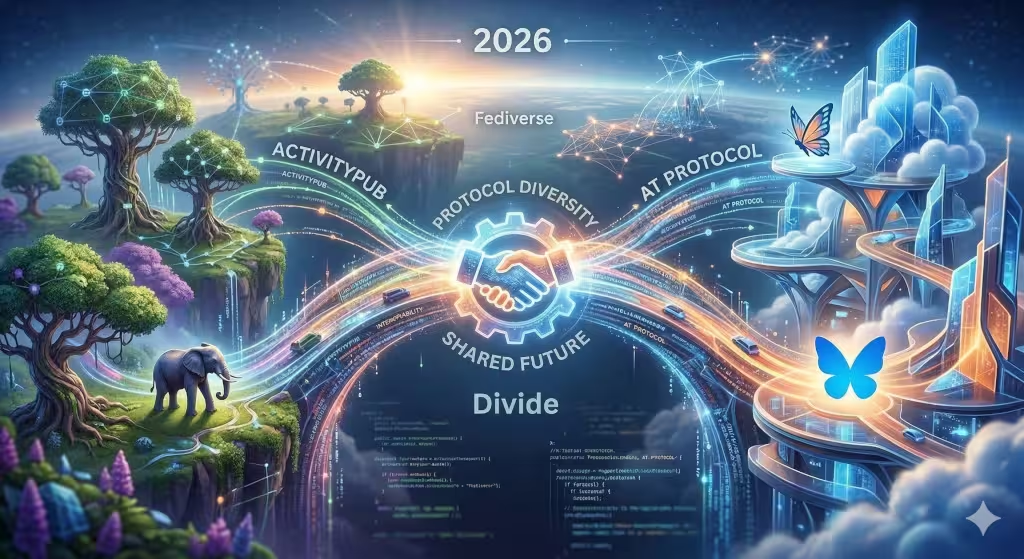
The year 2026 has brought us to a turning point. We used to think that one giant company would always own our digital conversations. Now, we know better. We have seen that when one person or one board of directors makes all the rules, things can go wrong quickly. This is why decentralized social media has become so popular. Instead of one big computer running everything, thousands of small computers work together. This is the heart of mastodon and bluesky. They are decentralized, which means no single boss can turn off the whole thing or sell your data to the highest bidder.
But there is a catch. Mastodon and bluesky use different “languages” to talk. Mastodon uses a language called ActivityPub. This language is an official standard for the web. It is like a set of rules that everyone agreed on a long time ago. Bluesky uses a newer language called the AT Protocol. Because they speak different languages, they do not naturally understand each other. It is like one person speaking English and another speaking Spanish. They are both talking about the same things, like sharing photos or telling jokes, but they need a way to translate those thoughts. This divide is the biggest challenge for the open social web today.
The community around mastodon and bluesky is working hard to fix this. They know that if we want a better internet, we need these two worlds to meet. We are moving toward a time when it won’t matter which app you use. Your digital identity will belong to you, not to a company. This is what we call the future of interoperability. It is a big word that just means different systems working together smoothly. By the end of this year, we hope that the wall between mastodon and bluesky will be almost invisible.
ActivityPub vs. AT Protocol: The Technical Friction
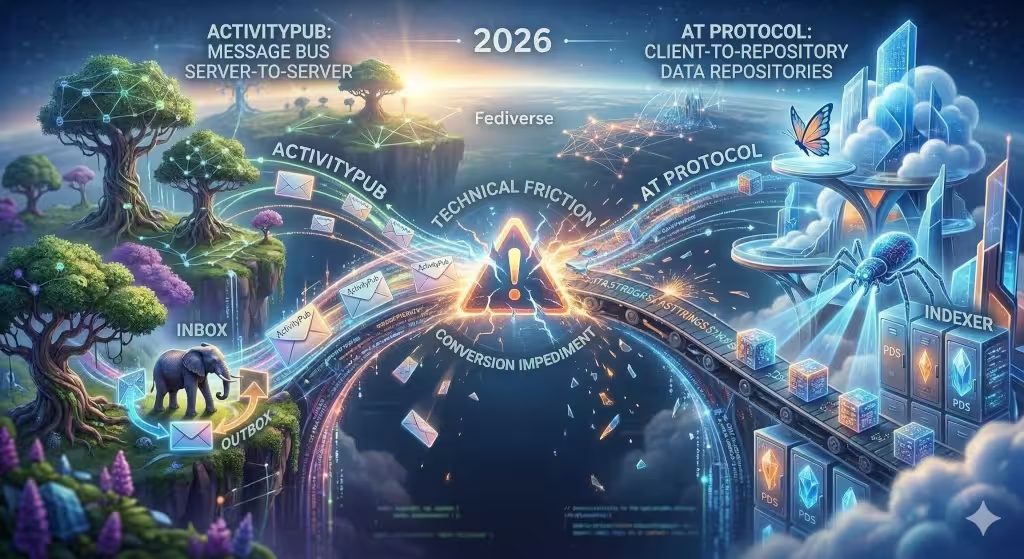
To understand why mastodon and bluesky struggle to talk to each other, we have to look at how they are built. Mastodon is built like email. When you join Mastodon, you pick a “server.” This is a community run by a person or a group. Your data lives on that server. When you post something, your server sends a message to the servers of all your followers. This is how ActivityPub works. It is a system of sending and receiving mail. It is very reliable and has been around for years. Many other apps also use ActivityPub, which makes it a very big and friendly neighborhood.
Bluesky is built more like the web itself. Instead of servers sending mail to each other, Bluesky uses a system of “data stores” and “indexers.” Imagine that all your posts are kept in a tiny digital locker that you own. This locker is called a Personal Data Server. When someone wants to see your posts, an app looks into your locker and shows the content. This is the AT Protocol.
The big benefit here is that you can move your locker to a different company whenever you want without losing your friends or your posts. In Mastodon, moving to a new server is a bit like moving to a new house in a different town. You can do it, but you have to tell everyone your new address. In Bluesky, it is more like moving your furniture to a new room in the same house.
This difference creates friction. Mastodon expects a steady stream of incoming messages. Bluesky expects to go out and “crawl” data from many different places. Because of this, making mastodon and bluesky work together requires a lot of clever engineering. We have to build tools that can take a “letter” from ActivityPub and turn it into a “data entry” for the AT Protocol. It is not impossible, but it takes time to get it right so that things like likes, reposts, and private messages don’t get lost in the middle.
The Bridge Era: Current Solutions and Limitations
Since mastodon and bluesky do not speak the same language natively, we use something called a “bridge.” A bridge is a piece of software that sits in the middle and translates everything. The most famous one right now is called Bridgy Fed. This tool is a lifesaver for people who want to stay on Mastodon but follow their friends who moved to Bluesky. When you use a bridge, it creates a “shadow” version of you on the other network. If you are on Mastodon, the bridge makes a fake Bluesky account that looks just like you. When you post on Mastodon, the bridge copies that post over to the fake Bluesky account so your friends there can see it.
While bridges are great, they are not perfect. One big problem is speed. Sometimes it takes a few minutes for a post to cross the bridge. This can make a fast conversation feel very clunky. Another issue is that not everything can be translated. For example, some special features on Mastodon, like “content warnings,” might not show up correctly on Bluesky.
Also, some people do not like the idea of their posts being copied to a different network without their permission. This has led to big debates about “consent.” Most bridges today are “opt-in,” which means you have to choose to use them. This is safer, but it means the bridge between mastodon and bluesky isn’t always as full of life as we want it to be.
There is also the problem of “second-class citizens.” When you follow someone through a bridge, the experience isn’t always as good as following them directly. You might not see all their replies, or you might find it hard to see who liked their posts. We are in the “Bridge Era” right now, which is a temporary step. It is better than having nothing, but the goal is to have mastodon and bluesky talk to each other directly without needing a middleman. We want a world where the connection is fast, safe, and works for everyone by default.
Can Mastodon and Bluesky talk to each other?
A lot of people ask if mastodon and bluesky can talk to each other right now. The answer is a hopeful yes, but with some extra steps. As we discussed, they do not talk to each other automatically. If you just sign up for both and do nothing else, they will remain two separate worlds. However, thanks to tools like Bridgy Fed, you can link them up. If you are a Mastodon user, you can search for a special address that represents a Bluesky user. Once you follow that address, their posts will start appearing in your home feed. It feels like magic when it works!
But you should know that it is a two-way street. For the connection between mastodon and bluesky to be really good, both users usually need to “opt-in” to the bridge. If only one person does it, the conversation can feel a bit one-sided. You might see their posts, but they might not see your replies. It is also important to remember that these are two different communities with different cultures. What is considered a normal post on one might feel out of place on the other. But despite these small hurdles, thousands of people are already using these bridges every day to keep their social circles together.
In the future, we expect this process to get much easier. There are developers working on “multi-protocol” apps. These are apps that can sign into mastodon and bluesky at the same time. Instead of using a bridge in the cloud, the app on your phone does the work of showing you both feeds in one place. This makes the question of whether they “talk to each other” less important because the app makes it feel like one big network. We are moving toward a seamless experience where the technical details stay hidden in the background.
Why did Bluesky create a new protocol instead of using ActivityPub?
This is a question that comes up a lot in the community. Since Mastodon and its language, ActivityPub, were already working well, why did the Bluesky team decide to build something new from scratch? The main reason is that they had different goals for how social media should work. The team behind the AT Protocol felt that ActivityPub had some weaknesses when it came to moving your data. As mentioned earlier, if a Mastodon server shuts down, you might lose your account and your followers unless you have a backup. Bluesky wanted to make sure that “account portability” was built into the very foundation of the system.
Another reason is how they handle the “firehose” of data. ActivityPub is great for small communities talking to each other, but it can be hard to build a giant search engine or a global “trending” list because the data is spread out across thousands of servers. The AT Protocol was designed to make it easier for big “indexers” to see everything that is happening across the whole network at once. This allows Bluesky to have a very fast and powerful “Discover” feed that feels more like the old Twitter. The developers felt that creating a new protocol was the only way to achieve the speed and scale they wanted for mastodon and bluesky to compete with big tech companies.
Finally, it was about experimentation. The world of decentralized social media is still very young. By having two different protocols, we can see which ideas work best. Mastodon shows us how powerful small, local communities can be. Bluesky shows us a new way to keep our digital identity safe even if we change where we host our data. Both mastodon and bluesky are pushing the boundaries of what is possible. Even if it makes things a little more complicated right now, having these two different approaches will lead to better technology for everyone in the long run.
The Threads Factor: Meta’s Influence on Interoperability
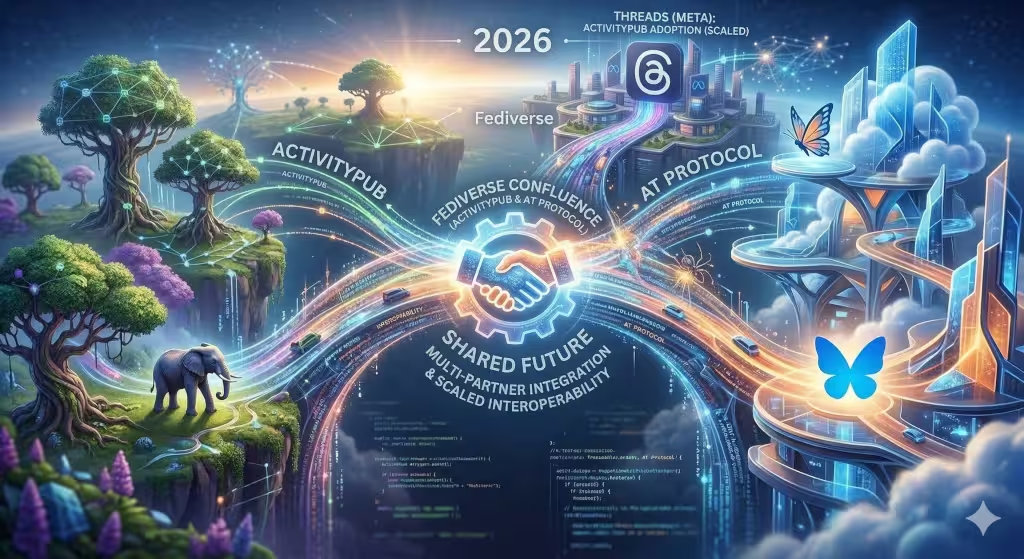
We cannot talk about mastodon and bluesky without talking about the 800-pound gorilla in the room: Meta’s app, Threads. When Meta decided to join the open social web by using ActivityPub, it changed everything. Suddenly, a giant company with billions of users was saying that they wanted to talk to the Fediverse. This was a huge win for Mastodon because it proved that ActivityPub was a serious standard. It meant that a user on Threads could potentially follow a user on Mastodon. This added a lot of pressure to the situation between mastodon and bluesky.
If Threads and Mastodon are successfully talking to each other, users will start to expect the same from Bluesky. No one wants to be left out of the party. Meta’s involvement has made the dream of a “connected web” feel much more real to the average person. It also brought a lot of money and developer talent into the space. However, it also brought a lot of fear. Many people in the Mastodon community are worried that a giant like Meta will try to “take over” the network. They worry that Meta will change the rules to suit themselves, which is something mastodon and bluesky are both trying to prevent.
Because of the “Threads Factor,” the race to make mastodon and bluesky work together has picked up speed. Developers know that if they don’t create a good way for these two to connect, people might just flock to the easiest option, which could be the corporate-owned Threads. Interoperability is no longer just a “nice to have” feature. It is a tool for survival. By working together, mastodon and bluesky can offer a truly open alternative to the big tech giants, giving users the features they want without the corporate control they hate.
Technical Milestones: The Roadmap to Native Interoperability
So, how do we get from where we are now to a world where mastodon and bluesky talk to each other without a bridge? There are several big milestones that developers are working on right now in 2026. The first is something called “Lexicon Mapping.” Think of a lexicon as a dictionary for a protocol. It defines what a “post” is, what a “reply” is, and what a “like” is. By creating a shared dictionary, we can make sure that when a Mastodon user sends a “like,” the Bluesky system knows exactly what that means. This is a very technical job, but it is the foundation for everything else.
Another milestone is the use of Decentralized Identifiers, or DIDs. Right now, your identity on Mastodon is tied to your server address. On Bluesky, it is tied to a DID that stays with you forever. There is an effort to bring DIDs to the ActivityPub world. If Mastodon adopts this technology, it will be much easier for a user to move between mastodon and bluesky without losing their “who’s who” status. It would mean your username could stay the same no matter which protocol you are using at the moment. This is a huge step toward making your digital self truly yours.
Lastly, there are FEPs, which stands for Fediverse Enhancement Proposals. These are ideas suggested by the community to improve the network. There are new proposals specifically designed to bridge the gap between mastodon and bluesky. They focus on things like “cross-protocol mentions” and “unified blocklists.” These are the nuts and bolts of the social web. As more of these proposals are accepted and built into the software, the wall between the two networks will continue to crumble. We are seeing a lot of progress this year, and it is an exciting time to be a part of this community.
Privacy and Safety in a Connected Ecosystem
One of the biggest worries about mastodon and bluesky talking to each other is safety. On the internet, there are always people who want to be mean or spread lies. Each network has its own way of handling this. Mastodon relies on “instance-level” moderation. This means the person running your server can block another server if they are being toxic. It is like a neighborhood watch program. Bluesky uses a different model based on “labeling services.” This allows you to subscribe to a list of “moderators” that you trust, and they will hide the bad stuff for you.
When we connect mastodon and bluesky, we have to make sure these safety tools still work. If a user on Mastodon blocks someone on Bluesky, that block needs to be respected across the bridge. If it isn’t, then the bridge becomes a tool for harassment. This is one of the hardest problems to solve because the two protocols handle “blocking” and “muting” in different ways. Developers are working on “shared signals” so that when a bad actor is caught on one network, the other network gets a heads-up. This helps keep everyone safe regardless of which app they prefer to use.
Privacy is also a major concern. Some people use Mastodon because they want to post in a small, private community. They might not want their posts to show up on the wide-open world of Bluesky. This is why “opt-in” systems are so important for mastodon and bluesky. We have to respect the “robots.txt” of social media, which means honoring the privacy settings that users have chosen. Interoperability should be about giving us more choices, not taking away our right to be private. As we build these connections, we are being very careful to make sure that “open” doesn’t mean “exposed.”
Future Outlook: The Multipolar Fediverse
As we look ahead to the rest of 2026 and beyond, we see a “multipolar” world for social media. This means there won’t be just one winner. Instead, we will have several healthy networks like mastodon and bluesky all working together. We might have a network for artists, a network for scientists, and a network for just hanging out with friends. Because they are all connected, you won’t feel like you are missing out if you aren’t on all of them. This is a much better way to live online than being stuck in a single app that everyone complains about but no one can leave.
In this future, the technical differences between mastodon and bluesky will matter less and less. We will have “universal” apps that let us browse the entire open social web with ease. You might pick your app based on how it looks or what kind of extra tools it gives you, not based on which protocol it uses. This will lead to a burst of creativity. Imagine an app that is designed specifically for reading long stories, or an app that helps you find local events. All of these will be powered by the same open data, making the internet feel like a big, connected library instead of a series of locked rooms.
The most important thing about the future of mastodon and bluesky is that the users will be in charge. If you don’t like the way one app is working, you can just take your data and your friends and move to a better one. This “exit power” is what will keep companies honest. They will have to earn your trust every day because they can’t hold your social life hostage anymore. This is the ultimate goal of interoperability. It is not just about code and servers. It is about freedom and respect for the people who use the internet every day.
Conclusion: Why Interoperability Wins for the User
We have covered a lot of ground today. We have looked at how mastodon and bluesky are different, how they are the same, and how they are trying to come together. While it can seem complicated with all the talk of protocols and bridges, the reason we care is simple. We want a better way to connect with each other. We want a social web that is owned by us, not by a handful of billionaires. The work being done to link mastodon and bluesky is the key to making that dream a reality.
Interoperability wins for the user because it gives you choice. It prevents “platform enshittification,” which is a fancy way of saying that apps tend to get worse over time as they try to squeeze more money out of you. When you have the power to leave, the apps have to stay good. By supporting the connection between mastodon and bluesky, you are voting for a more open and fair internet. You are saying that your relationships with your friends are more important than any company’s stock price.
As we move forward into 2026, keep an eye on these developments. Try out a bridge, follow someone on a different network, and see how it feels. The more of us who use these tools, the better they will become. The future of the social web is not a single giant app. It is a vast, beautiful network of many different spaces all linked together. Mastodon and bluesky are leading the way, and I am excited to see where they take us next.