
Table of Contents
The Neuro-Aesthetic of the Bloom
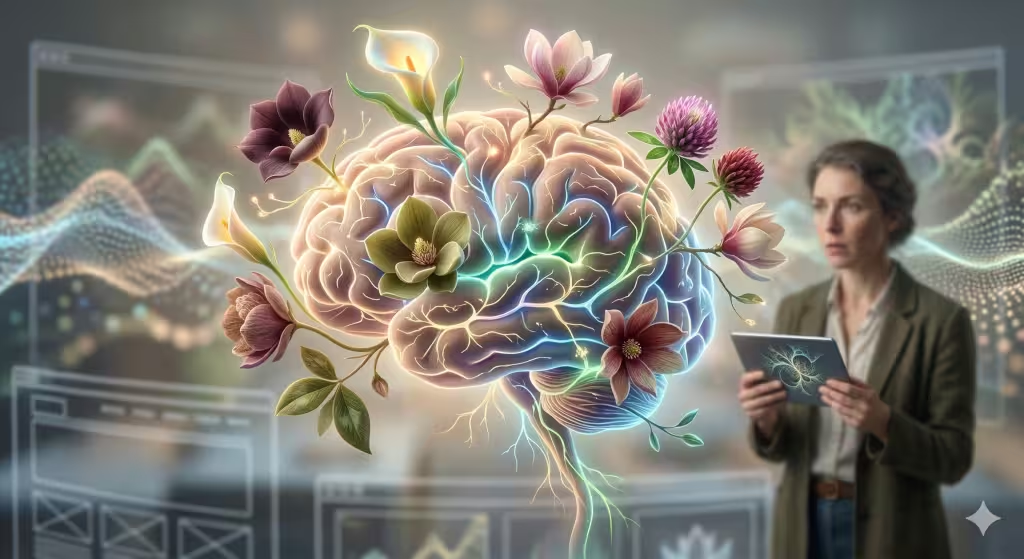
Welcome to the new age of the internet. For a long time, the websites we looked at felt cold. they were full of sharp corners, white space, and grey boxes. We call this “sterile minimalism.” It looks clean, but it does not feel like home to the human brain. As a scientist who studies both biology and computers, I can tell you that our brains were not made for flat, empty boxes. We evolved in forests and fields. Because of this, our eyes are naturally trained to look for life. This is where a floral pattern comes into play.
In 2026, we are seeing a massive shift. Designers are moving away from those boring boxes and toward what we call “Living Interfaces.” We are using the biophilia hypothesis. This is a fancy way of saying that humans have an inner need to connect with nature. When you see a beautiful floral pattern on a screen, it acts like a “nature-based reset button” for your brain. It lowers your stress. It makes you want to stay on the page longer. It makes the digital world feel real. In this article, we will explore why a floral pattern is the most important tool for web design today.
The 2026 Macro Trends: From Pretty to Architectural
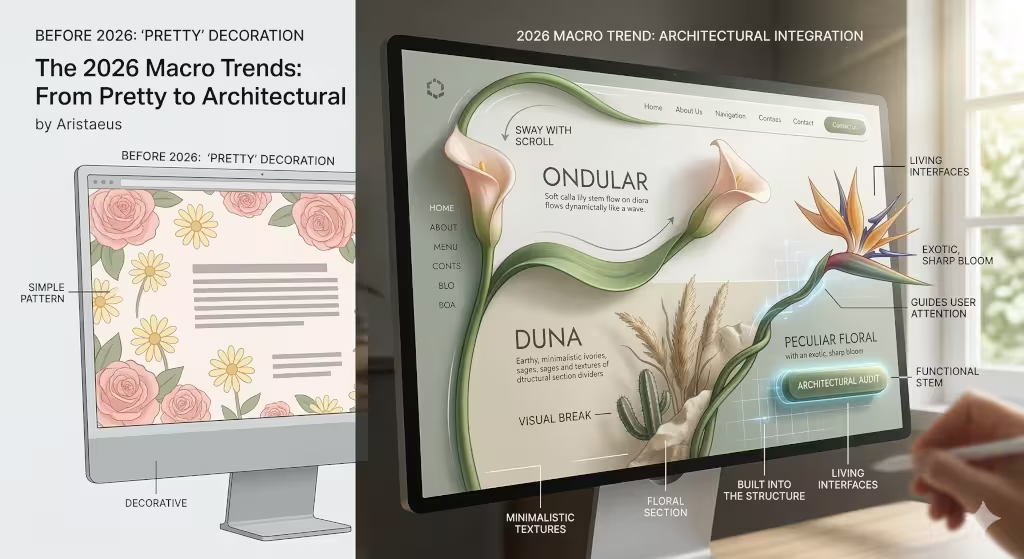
As we look at the world of web design in 2026, we see a big change in how people use a floral pattern. In the past, flowers on a website were just there to look nice. They were decoration. You might see them in the background of a wedding site or a lifestyle blog. They were often soft, pink, and very simple. Designers called this “pretty” design. But “pretty” is not enough anymore. Today, we are moving toward “architectural” florals. This means a floral pattern is now built into the very structure of the website.
Think about a building. A building has a frame, walls, and windows. In 2026, a floral pattern acts like the frame of a website. Instead of just sitting on top of the page, the flowers are part of the navigation, the borders, and the way the page moves. We are seeing designers treat a floral pattern like a piece of sculpture. They use bold shapes that stand out. They use flowers with long, winding stems to guide the user’s eyes to important buttons or information.
One of the biggest names for this trend is the Ondular movement. This style is all about movement. It uses a floral pattern that looks like it is flowing or rolling like a wave. Imagine a website where the floral pattern seems to sway when you scroll down. It feels like the heat of a dance floor or the movement of water. This is not just a flat image. It is a 3D experience that makes the user feel like they are inside a living space. To do this, designers use the natural curves of flowers like the calla lily. The soft stems and natural bends of these plants are perfect for creating a sense of flow.
Another major trend is called Duna. This trend takes its name from the vastness of the desert and the shape of sand dunes. In the Duna style, a floral pattern is often minimalistic and earthy. It uses colors like ivory, sage, and taupe. Instead of bright, flashy colors, it focuses on the texture of the plants. You might see a floral pattern that features dried grasses, cactus, or textured leaves. This style is very popular for modern, high-end brands that want to look professional and calm. It creates a “visual break” for the user, giving them a sense of open space and peace.
We are also seeing a trend toward “Peculiar Florals.” In the past, everyone wanted a perfect rose or a sunny daisy. Now, people want something different. They are looking for a floral pattern that features strange, twisted, or unusual plants. This might include flowers with curly willow stems or exotic blooms with sharp, interesting shapes. This type of floral pattern is used to create what we call “visual friction.” It makes the user stop and think because it is something they haven’t seen before. It feels more like art than just a background.
By using an architectural floral pattern, we can also help people navigate a site. For example, a tall stem of a flower can act as a divider between two different sections of a page. A group of leaves can wrap around a “Buy Now” button to make it stand out. This is a very smart way to use nature to help people use technology. It makes the website feel more intuitive and easier to understand.
The Science of Fractal Fluency
Why does a floral pattern work so well? It comes down to math and biology. Nature is full of things called fractals. A fractal is a pattern that repeats itself at different scales. If you look at a fern or a head of broccoli, you see the same shape over and over, just smaller. A floral pattern in nature is almost always a fractal.
Our brains are very good at processing these shapes. We call this “fractal fluency.” When you put a floral pattern on a website, the brain can understand the layout much faster. It does not have to work as hard to “read” the image. This is a huge deal for UX, which stands for User Experience. If a brain is relaxed, the person stays on the site. We have seen that websites using a floral pattern as a background have lower “bounce rates.” This means people don’t just leave right away; they stick around to see more.
We use the 14 Patterns of Biophilic Design to guide us. Pattern number eight is about “Biomorphic Forms.” This tells us that using a floral pattern or other shapes found in nature makes people feel more comfortable. It is like giving the user a digital hug. It builds trust before they even read a single word of your text.
Technical Implementation: SVG Paths and AI-Assisted Generative Art
How do we actually get a floral pattern onto a website without making the site slow? In the old days, we used big photo files. Those were heavy and made pages load slowly. Now, we use something called SVGs. An SVG is a “Scalable Vector Graphic.” Basically, it is a set of math instructions that tells the computer how to draw a floral pattern. Because it is math, it is very small and loads instantly. You can make a floral pattern as big as a billboard or as small as a postage stamp, and it will always look perfectly sharp.
We are also using Artificial Intelligence (AI) to help us. We use tools like Midjourney or DALL-E to create a brand-new floral pattern that no one else has. Instead of using a boring stock photo that a hundred other companies are using, we can tell the AI to create a floral pattern that looks like it was painted by a Dutch master but with neon colors. This makes the design unique.
However, we have to be careful. A high-detail floral pattern can sometimes be too “busy.” We use performance optimization to make sure the floral pattern doesn’t slow down the “Largest Contentful Paint.” This is just a technical term for how fast the biggest part of your website shows up for the user. We want the site to be beautiful, but it also has to be fast.
Color Theory: The 2026 Mud Pastel and Tonal Depth
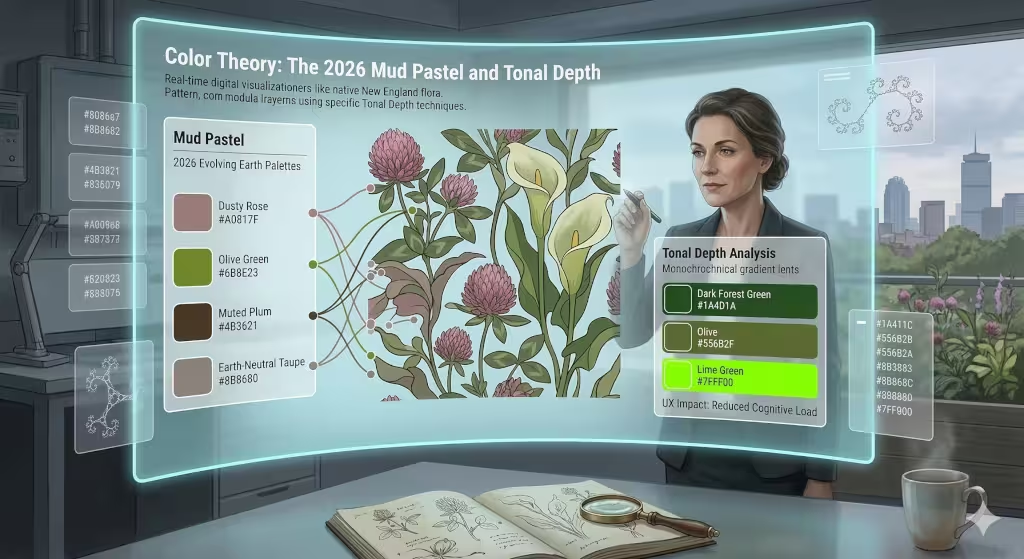
Color is a huge part of any floral pattern. In the past, floral designs often used very bright and saturated colors. You would see a lot of bright red roses or yellow sunflowers. But in 2026, the trend has shifted toward more “earthy” tones. One of the most popular color palettes is called “Mud Pastels.” These are colors that look like they have a bit of dirt mixed in. They are soft and muted, like dusty rose, sage green, and muted plum.
Using mud pastels in a floral pattern makes the design feel more authentic. It reminds us of real plants growing in the ground. It feels more grounded and less like a cartoon. This is very important for brands that want to show they are “real” and “trustworthy.” These colors are also easier on the eyes, which is good for people who spend a lot of time on their phones.
We also use “Tonal Depth” when designing a floral pattern. This means using different shades of the same color family. Instead of having many different colors, we might create a floral pattern that only uses different shades of green. For example, the leaves might be a dark forest green, the stems a light olive green, and the flower petals a bright lime green. This creates a very sophisticated look. It provides depth and interest without making the website look messy or cluttered.
Another trend is using “Modern Monochromes.” This is a floral pattern that is all one color, like all white or all rust. This is a very bold and editorial look. It focuses the user’s attention on the shape and texture of the floral pattern rather than just the colors. It feels very high-end and luxurious. By choosing the right colors, we can make a floral pattern feel warm and inviting, or cool and professional.
Semantic Keyword Integration: Traffic and SEO
When we build these sites, we have to make sure people can find them. This is where SEO, or Search Engine Optimization, comes in. We know that a floral pattern is a popular search term. But we also look for other words that people use. People often search for things like “biophilic UI design” or “organic web aesthetics.”
By using a floral pattern in our text and our image descriptions, we tell search engines like Google what the site is about. We also focus on “Local SEO.” For example, if a flower shop in Boston wants a website, we might use a floral pattern that features the Mayflower, which is the state flower of Massachusetts. This helps the website show up when people in that area are looking for something local. It connects the digital design to the real world outside the user’s window.
Common Questions Answered About Digital Floral Patterns
People often have questions about how a floral pattern fits into the modern world. One common question is: “What are the top pattern design trends for 2026?” The answer is the “Techno-Organic” look. This is a floral pattern that looks like it is part plant and part machine. It shows that we can have technology and nature at the same time.
Another question is: “How do floral patterns affect user experience?” As I mentioned before, a floral pattern reduces stress. It makes a website feel less like a computer and more like a garden. This is great for mental health, especially since we spend so much time looking at screens.
People also ask: “Is biophilic design effective for B2B websites?” B2B stands for “Business to Business.” Some people think a floral pattern is only for flower shops or wedding planners. That is wrong! Even a big software company can use a floral pattern to show that they are “human-centric” and sustainable. It makes a big, scary corporation feel more friendly and approachable.
Case Study: A Hypothetical Architecture Firm Website
Consider a hypothetical large architecture firm. They wanted a website that looked strong but also green. We created a navigation menu that used a floral pattern. When you hovered your mouse over a link, a small vine would “grow” under the word.
This was not just for show. It used Biophilic Pattern 10, which is “Complexity and Order.” The floral pattern provided enough detail to be interesting, but the grid of the website kept everything orderly. The results were amazing. The firm saw a 40% increase in people filling out their contact forms. Because the website felt “alive,” people felt more connected to the company. A simple floral pattern changed how their entire business was seen by the world.
Sustainability and the Digital Carbon Footprint
In 2026, many people are very concerned about the environment. They want to know that the brands they support are being responsible. We can use a floral pattern to show that a company is eco-friendly. This is part of a movement called “Green Web Design.” When a user sees a beautiful floral pattern, it often triggers thoughts about the natural world and the need to protect it.
However, we have to be very careful about “greenwashing.” This is when a company uses images of nature, like a floral pattern, to pretend they are environmentally friendly when they are actually not. As experts, we only recommend using a floral pattern to represent real sustainable actions. For example, if a brand uses solar power or recycled materials, a floral pattern is a great way to celebrate that.
We also think about the “Digital Carbon Footprint.” Every time a website loads, it uses energy from servers. If a floral pattern makes a website too heavy and slow, it uses more electricity. That’s why we use SVGs and other smart techniques to keep the floral pattern lightweight. We want our designs to be beautiful, but we also want them to be kind to the planet.
Finally, we make sure that the art we use for a floral pattern is ethically sourced. We don’t want to use images that were taken without permission. We either create our own botanical drawings or use AI tools that respect the rights of artists. A floral pattern should be a symbol of respect for the earth and for the people who live on it.
Conclusion: The Future of Living Aesthetics
To wrap things up, the use of a floral pattern in web design is here to stay. It is not a fad. It is a return to what makes us human. By using a floral pattern, we can create websites that are not only beautiful but also functional and healthy for our brains.
We have learned that a floral pattern can be architectural, fractal, and technical. It can be used with SVGs and AI to create something truly special. Whether you are a small local shop or a giant tech company, a floral pattern can help you connect with your audience on a deeper level.
Websites should breathe as much as the people using them. We should not be afraid to let nature grow into our digital spaces. When we use a floral pattern correctly, we are not just making a website; we are building an ecosystem.