Imagine walking down a familiar city street. You pass a small, unassuming park, a place you have seen a thousand times. But today, you hold up your phone. Through your screen, the ghost of a 19th century fountain appears on the lawn, shimmering in the afternoon light. You tap a button, and the voice of a longtime resident begins to tell the story of the day the fountain was dedicated, a story passed down from her grandfather.
The park is no longer just a patch of grass; it is a layered space, rich with memory and meaning. This is the power of a story. This experience is made possible by the tools and techniques used to create digital stories for placemaking.
Essentially, digital placemaking is where community building, urban design, and modern technology meet. It operates on a simple but profound principle: a place is not just a location, but a web of relationships, memories, and meanings. Our work is not simply to build physical spaces, but to weave these narratives into the very fabric of our communities.
The power of story is fundamental to how we as humans connect with our environment. Stories build emotional bridges between people and the places they inhabit. They preserve the unique cultural fingerprint of a neighborhood, celebrate its history, and give residents a shared sense of ownership and pride. When we create digital stories for placemaking, we are tapping into this ancient human need for narrative.
This guide is meant to serve as your compass in this exciting field. It offers a clear and complete overview of the digital tools available today. Whether you are a city planner, a local artist, a community leader, or simply a passionate resident, this article will equip you with the knowledge to create and share the digital stories for placemaking that will define your community for years to come.
Table of Contents
Understanding the ‘Why’: The Principles of Digital Storytelling in Placemaking
Before we look into the specific software and platforms, it is critical to understand the foundational principles that make digital stories for placemaking so effective. These are not just technical exercises; they are strategies rooted in human psychology, community dynamics, and the deep need to belong. By grasping these ideas, you can ensure that the projects you create are not just technologically impressive, but genuinely meaningful and impactful.
Principle 1: Fostering Connection (Eliciting Topophilia)
There is a powerful concept in environmental psychology called “topophilia,” which literally means “love of place.” It is the emotional bond that forms between a person and a location. This bond is what turns a generic housing development into a beloved neighborhood, or a simple park into a community’s heart. Creating effective digital stories for placemaking is a direct method for cultivating topophilia. When you layer historical photos, personal memories, or ecological data onto a physical space, you give people new reasons to see it, appreciate it, and care for it.
For example, a digital story could guide a user along a riverwalk, using their phone’s GPS to trigger audio clips about the native fish species that once thrived there or the industries that grew along the banks. This experience transforms a simple walk into a journey through time and ecology. The technology acts as a bridge, connecting the present physical environment to its unseen past and its potential future. This process enriches our perception and strengthens our commitment to protecting and enhancing these shared spaces. The goal of all digital stories for placemaking is to deepen this essential human connection to our surroundings.
Principle 2: Democratizing Narrative
For much of history, the story of a place was told by a select few: government officials, wealthy patrons, or designated historians. This often resulted in a single, official narrative that could overlook the diverse experiences of the community’s everyday residents. Technology has radically changed this dynamic. The tools we now have access to democratize the act of storytelling. They give a voice to everyone.
Imagine a neighborhood facing redevelopment. A city plan might present a sterile, top down vision. But through simple tools, residents can collaborate on their own interactive map. They can plot locations of cherished local businesses, document oral histories from elderly residents about community traditions, and upload photos of neighborhood block parties. This collective creation becomes a powerful counter narrative. It is a living document, built from the ground up, that asserts the community’s identity and values.
This form of digital stories for placemaking empowers citizens to move from being passive consumers of their environment to active creators of its story. This participatory process not only produces a richer, more authentic portrait of a place but also builds stronger community ties among the contributors.
Principle 3: Enhancing Accessibility and Inclusivity
A place is not truly public if not everyone can access its stories and meanings. Digital tools offer powerful solutions to long standing barriers of accessibility. Thoughtfully designed digital stories for placemaking can open up community heritage to a much wider audience, ensuring that everyone has the opportunity to connect with their surroundings.
Consider a historical walking tour. For a person with a visual impairment, traditional plaques and signs are useless. But an app could provide rich audio descriptions of the architecture, ambient historical sounds, and narrated stories that bring the location to life. For visitors who speak a different language, a digital project can offer instant text and audio translations, breaking down communication barriers. Furthermore, virtual reality (VR) can offer immersive experiences of places for those with mobility challenges who cannot physically visit a site, such as the top floor of a historic lighthouse or a rugged hiking trail. By intentionally designing digital stories for placemaking with inclusivity in mind, we ensure that our shared heritage is truly shared by all.
Principle 4: Driving Economic and Social Value
While the emotional and cultural benefits are primary, the practical value of well crafted digital stories for placemaking should not be overlooked. These projects can deliver significant economic and social returns to a community. Compelling narratives make a place more interesting and attractive, which can directly support local economies.
For instance, a digital culinary tour that tells the story behind local restaurants and their chefs can draw in tourists and residents alike, boosting business for those establishments. A public art project that uses augmented reality (AR) to create a dynamic, city wide gallery can become a destination in itself, attracting visitors who will then spend money at local shops, hotels, and cafes. Socially, these projects create opportunities for community interaction. A digital scavenger hunt designed to reveal local history can bring families and neighbors together, strengthening social bonds. Successful digital stories for placemaking transform public spaces into active destinations, generating foot traffic, encouraging local spending, and fostering a vibrant community life.
The Toolkit: Categorizing the Essential Tools for Digital Placemaking
With a firm grasp of the principles, we can now explore the toolkit. The sheer number of available tools can be overwhelming. To make it manageable, we have grouped them into four key categories based on their primary function. For each tool, we will discuss what it is, its ideal use case for digital stories for placemaking, and the skill level required to use it effectively.
1. Geospatial & Interactive Mapping Tools
Maps are the natural canvas for place based stories. These tools ground your narratives in specific locations, allowing users to explore a landscape and uncover information tied to geography.
- ArcGIS StoryMaps
- What It Is: A web based application from the geographic information system (GIS) leader, Esri. It allows you to combine interactive maps with multimedia content like text, photos, and videos to create elegant, scrolling narratives.
- Placemaking Use Case: Imagine creating a detailed story of a city’s urban forest. You could map every public tree, with pop up information showing its species, age, and ecological benefits. The narrative could scroll through the history of the city’s greening initiatives, showing historical maps of parks and telling the stories of the people who championed them. This is one of the most powerful platforms for professional digital stories for placemaking.
- Skill Level: Intermediate. While the interface is user friendly, getting the most out of it requires some understanding of data and mapping concepts.
- Google My Maps / Google Earth
- What It Is: Free and highly accessible tools from Google that allow anyone to create custom maps. You can drop pins, draw routes, and add descriptions, photos, and videos to locations.
- Placemaking Use Case: A neighborhood association could use Google My Maps to create a “Community Asset Map.” Residents could collaboratively add pins for community gardens, public art, historical homes, favorite local businesses, and even places with personal meaning, like “the bench where my parents met.” It is a simple yet powerful tool for community sourced digital stories for placemaking.
- Skill Level: Beginner. If you can use Google Maps, you can use these tools.
- Mapbox Studio
- What It Is: A design platform for developers to create completely custom maps. It offers incredible control over every visual element, from colors and fonts to 3D building data and custom datasets.
- Placemaking Use Case: A city planning department could use Mapbox to build a web application visualizing proposed development projects. Users could toggle between different design scenarios, view traffic flow simulations, and leave feedback directly on the map. This tool is for ambitious, data heavy digital stories for placemaking that require a unique look and feel.
- Skill Level: Advanced. This tool is geared toward web developers and designers with coding experience.
2. Immersive Experience Tools (AR & VR)
Immersive tools change the very nature of reality, either by layering digital content onto the physical world (Augmented Reality) or by creating entirely new, simulated worlds (Virtual Reality).
- Adobe Aero
- What It Is: A free application from Adobe that allows you to create and share AR experiences without writing any code. You can place 3D models, images, and animations into the real world through a phone or tablet.
- Placemaking Use Case: An artist could create a virtual sculpture garden in a public park. Visitors could use their phones to see massive, interactive digital artworks that would be impossible or too expensive to build physically. This allows for dynamic, temporary exhibitions that bring new life to familiar spaces, representing a cutting edge approach to digital stories for placemaking.
- Skill Level: Beginner/Intermediate. The interface is intuitive, especially for those familiar with other Adobe products.
- Unity & Unreal Engine
- What It Is: These are professional grade 3D development platforms, often called “game engines.” They are used to build the world’s most popular video games, but they are also incredibly powerful tools for creating high fidelity VR and AR applications.
- Placemaking Use Case: A historical society could partner with developers to create a VR reconstruction of the city’s main square as it appeared in 1900. Users could put on a headset and “walk” through the historic space, hear the sounds of the era, and interact with virtual characters who share stories of the time. This is the ultimate tool for resurrecting lost places.
- Skill Level: Advanced. These platforms require significant programming and 3D modeling skills.
- Hoverlay
- What It Is: A platform focused on creating and sharing location based AR content. It simplifies the process of “anchoring” digital media like videos and photos to specific real world locations for others to discover.
- Placemaking Use Case: A university could use Hoverlay to create an interactive campus tour. As prospective students walk the grounds, they could point their phones at different buildings to see videos of student testimonials, 3D models of lab equipment, or historical photos of the building’s construction. This method of creating digital stories for placemaking is excellent for tours and educational content.
- Skill Level: Beginner. The platform is designed for ease of use.
3. Multimedia Content Creation & Editing Suites

The heart of any digital story is its content. The photos, videos, audio recordings, and graphics are the building blocks of the narrative. These tools are essential for producing high quality assets.
- Adobe Creative Cloud (Premiere Pro, Audition, Photoshop)
- What It Is: The industry standard professional suite of creative software. Premiere Pro is for video editing, Audition for audio, and Photoshop for image manipulation.
- Placemaking Use Case: A team producing a documentary style series of digital stories for placemaking would use this suite. They would edit interviews with community members in Premiere Pro, clean up the audio and compose a soundtrack in Audition, and restore old historical photographs in Photoshop before incorporating them into the final project.
- Skill Level: Intermediate/Advanced. These are deep, feature rich programs.
- Canva
- What It Is: A user friendly, web based design platform perfect for creating graphics, social media posts, short videos, and presentations quickly and easily.
- Placemaking Use Case: To promote a digital placemaking project, a community group could use Canva to create eye catching flyers with QR codes, engaging Instagram stories with short video clips, and a beautifully designed PDF summary of the project for local stakeholders.
- Skill Level: Beginner.
- Audacity / DaVinci Resolve
- What It Is: Incredibly powerful and completely free software for audio and video editing, respectively. They are excellent alternatives to Adobe’s subscription model.
- Placemaking Use Case: An independent artist creating an audio walking tour would use Audacity to record and edit narration, mix in sound effects, and master the final audio files. A small nonprofit could use DaVinci Resolve to edit a high quality promotional video for their digital placemaking initiative.
- Skill Level: Beginner/Intermediate. They are easier to learn than the Adobe suite but still offer professional level capabilities.
4. Platforms for Aggregation & Community Engagement

Once you have created your content, you need a place to house it and a way for the community to interact with it. These platforms serve as the digital home for your project.
- Omeka
- What It Is: An open source web publishing platform specifically designed for displaying library, museum, and archival collections. It excels at organizing items with rich metadata and creating digital exhibits.
- Placemaking Use Case: A local library could use Omeka to create a digital archive of their town. They could upload digitized photos, letters, and maps, allowing residents to contribute their own family histories and stories. The platform’s exhibit builder could then be used to curate themed digital stories for placemaking, such as “Our Town During World War II” or “The History of the Downtown District.”
- Skill Level: Intermediate. It requires some web hosting and setup knowledge.
- WordPress with Mapping Plugins
- What It Is: WordPress is the world’s most popular content management system for building websites. Combined with powerful mapping plugins, it becomes a flexible and customizable hub for any project.
- Placemaking Use Case: A group focused on urban exploration could build a WordPress site to document forgotten or hidden public spaces. Each location could have its own blog post with a gallery of photos, a written history, and an embedded interactive map showing how to get there. This is a versatile solution for ongoing digital stories for placemaking.
- Skill Level: Beginner/Intermediate. Basic WordPress is easy, but customization requires more skill.
- Social Media Platforms (Instagram, TikTok)
- What It Is: These platforms, while not dedicated placemaking tools, are essential for community engagement and disseminating bite sized stories.
- Placemaking Use Case: A project could use a dedicated hashtag on Instagram to crowdsource photos of a specific neighborhood. A historical society could create short, engaging TikTok videos that share “one minute histories” of different landmarks around the city. These platforms are crucial for reaching a wider audience and making your digital stories for placemaking part of the daily conversation.
- Skill Level: Beginner.
Case Studies: Digital Placemaking in Action
Theory and tools are important, but seeing real world examples is what truly inspires. These case studies show the diverse and powerful ways that communities are already using digital stories for placemaking to reshape their environments.
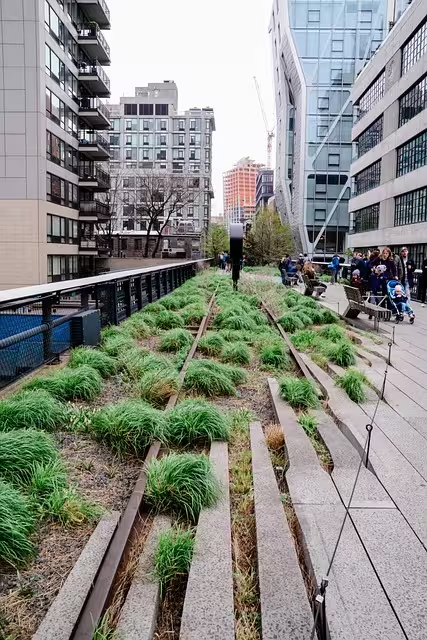
- Urban Renewal: The High Line, New York City: The High Line is a world famous park built on a disused elevated railway in Manhattan. To enrich the visitor experience, the park’s conservancy collected oral histories from people connected to the area: railroad workers, factory employees, and neighborhood residents. These audio stories were made accessible via the park’s website and app. By connecting these personal narratives to the physical structure, the project transformed a simple walk into a moving experience. It reminds visitors that the park is not just a triumph of landscape architecture, but a place built on layers of human history and labor.
- Cultural Heritage: [murmur]: One of the pioneering projects in this field, [murmur] was deceptively simple yet brilliant. It began in Toronto and spread to cities worldwide. The project team collected and curated personal stories about specific locations, told by the people who lived them. They then installed green, ear shaped signs at these spots, each with a phone number and a location code. Passersby could call the number, enter the code, and hear a story about the very spot where they were standing. It used low tech, accessible technology to create a magical and intimate connection between people, stories, and place, proving that powerful digital stories for placemaking do not always require the latest high tech gadgets.
- Environmental Storytelling: The Hidden Rivers of London: Using a combination of historical maps and modern GIS technology, various projects in London have digitally unearthed the city’s lost rivers. These waterways, long since buried and built over, were once vital parts of the city’s ecosystem. Web based interactive maps allow users to trace the ancient paths of these rivers through today’s streets. This form of digital stories for placemaking serves a critical educational purpose. It reveals the hidden ecological history of the urban landscape and raises awareness about urban hydrology, watershed health, and the potential for “daylighting” these lost streams to create new green spaces.
The Future Horizon: AI, IoT, and the Evolution of Placemaking
The field of digital placemaking is constantly evolving. As technology advances, new tools and possibilities emerge that will allow us to create even more dynamic, responsive, and engaging stories. Keeping an eye on these future trends is essential for any practitioner.
- Generative AI: Artificial intelligence will play a growing role in both creating and personalizing content. Imagine an AI tool that could analyze community feedback from online forums and generate 3D models of a new park playground that reflect the most desired features. Or an AI powered chatbot on a city’s history website that can act as a “virtual historian,” answering visitors’ questions about any location in a natural, conversational way. This will make the creation of dynamic digital stories for placemaking more efficient and responsive.
- Internet of Things (IoT): The IoT refers to the network of physical objects embedded with sensors that can collect and exchange data. In placemaking, this could lead to “sentient” spaces. Imagine a park bench that uses sensors to know it is occupied and then whispers a short story or poem from a local author through a small, directional speaker. Or a trail in a nature preserve where environmental sensors trigger informational content on your phone about the current air quality, soil moisture, or the specific bird species detected nearby. This creates living digital stories for placemaking that change with the environment itself.
- The Metaverse and Digital Twins: The concept of a persistent, shared virtual world, or metaverse, opens up new frontiers. Urban planners are already creating “digital twins”—perfect, data rich 1 to 1 virtual models of cities. These models can be used for complex simulations, but they also offer new platforms for placemaking. Before a new public square is built, citizens could walk through a fully immersive VR version of it, experience the design, and provide feedback. These virtual spaces will become the new testing grounds for the digital stories for placemaking of the future.
Conclusion: Your Role as a Digital Cartographer of Place
We have journeyed from the core principles of connection and community to the practical tools and future frontiers of technology. The key takeaway is this: the tools, while impressive, are merely the instruments. The true magic lies in the stories they enable us to tell. Creating digital stories for placemaking is about becoming a new kind of cartographer, one who maps not just streets and buildings, but memories, meanings, and emotions. It is about revealing the invisible layers that make a place unique and forging deeper connections between people and their environment.
You do not need to be a professional developer or a master filmmaker to begin. Your role as a digital cartographer of place can start today. Start small. Think of a story in your own community that deserves to be told. Is it the history of the old tree in the town square? The tale of a beloved local shop that closed its doors? The hidden ecology of a local creek? Pick one. Then, experiment with a beginner friendly tool like Google My Maps or Hoverlay to bring that single story to life. Share it with your neighbors.
The goal of using technology for digital stories for placemaking is not to pull us away from the real world and into our screens. It is to use our screens to see the real world more deeply, to enrich our physical experiences, and to make our shared spaces more resonant, meaningful, and beloved.