
At Silphium Design LLC, we study how nature and web design work together. My background is in biology and web design. This helps me see a website as more than just code. I see it as an environment. When we talk about using botanical illustrations for website backgrounds, we are talking about more than just a pretty picture. We are talking about biophilic design. This is the practice of bringing nature into our digital spaces.
Many people think a website is just a tool. However, the human brain still thinks it is in the wild. If a screen looks cold and mechanical, our brains get tired. If we use botanical illustrations, we help the brain relax.
This article will show you how to use botanical illustrations to make your website better for people and for search engines. We will look at why these drawings work and how to put them on your site without slowing it down.
Table of Contents
The Neurobiology of Digital Greenery
The way our brains react to botanical illustrations is very interesting. Thousands of years ago, humans had to look at plants to survive. We had to know which leaves were safe and which flowers meant fruit was coming. We also had to known which parts of the plant were edible. Because of this, our eyes are very good at tracking organic shapes. When you use botanical illustrations on a website, you are speaking to a very old part of the human brain. This is called the parasympathetic nervous system. It is the part of your body that helps you stay calm and digest food.
Most websites today use sharp corners and straight lines. This is called skeuomorphism when it looks like real world objects, or flat design when it is very simple. But there is a new way called biomorphic design. This means making things look like life. Botanical illustrations are the perfect tool for this. They take the clinical feel of a computer and make it feel like a garden. This changes the core thesis of your design. You are no longer just showing information. You are creating a digital herbarium. This makes users want to stay longer because they feel safe and relaxed.
The Psychological Impact of Botanical Imagery on UX

Many people wonder, what are the benefits of botanical illustrations on a website? The answer lies in something called Attention Restoration Theory. Think about how you feel after a long day of looking at a screen. Your eyes hurt and your brain feels foggy. This is because your “directed attention” is tired. Nature helps fix this. Even looking at botanical illustrations can help your brain recover. When a user lands on your page, the botanical illustrations act as a soft landing.
If your background is a wall of white or a bright solid color, it can be jarring. But if you use botanical illustrations, you give the eye a place to rest. Studies show that when people see organic patterns, their stress levels go down. This leads to better user experience or UX. In the world of websites, a happy user is a user who stays. If someone stays on your site longer, your bounce rate goes down. This tells search engines that your site is valuable. By using botanical illustrations, you are not just being artistic. You are using science to keep people engaged with your brand.
Selection Criteria: Scientific Accuracy vs. Aesthetic Appeal
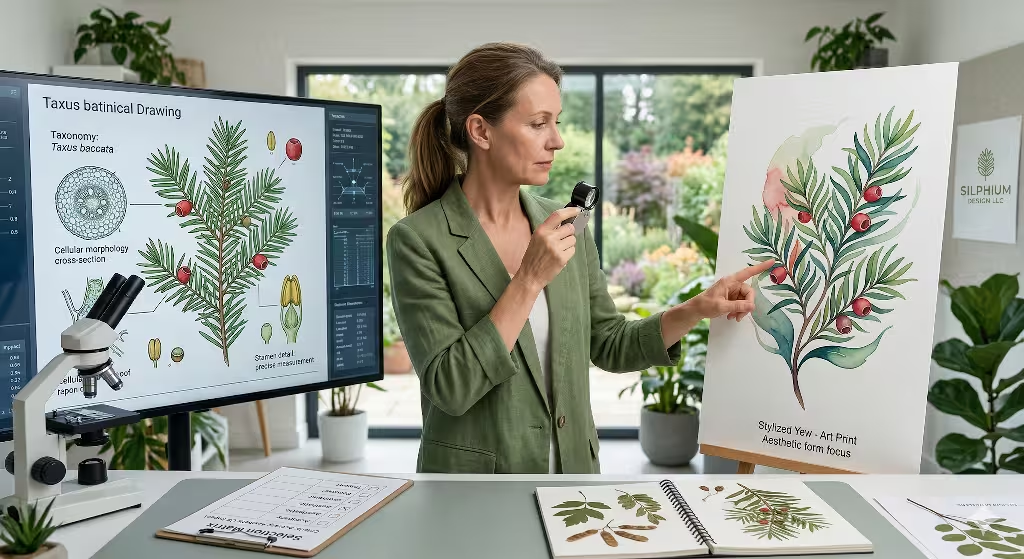
Choosing the right botanical illustrations for your background is a big decision. You have to decide if you want them to look like art or like a science textbook. This is the balance between scientific accuracy and aesthetic appeal. Some brands want to look very professional and serious. For them, a scientific illustration is best. These are very detailed. They show every vein in a leaf and every part of a flower.
You might look at the work of Maria Sibylla Merian. She was a famous artist and scientist who drew plants and insects together. Her botanical illustrations are very accurate but also very beautiful. On the other hand, you might want something softer.
You could look at the work of Pierre-Joseph Redouté. He was known as the Raphael of flowers. His botanical illustrations are very elegant and fluid. They fit well with luxury brands or wellness sites. The key is to make sure the style of your botanical illustrations matches your brand’s voice. If you are a high tech company, maybe you want modern, clean botanical illustrations. If you are a florist, you might want vintage, colorful botanical illustrations.
Technical Implementation: Performance and Scalability
Since I have a Ph.D. in Computer Science, I care deeply about how a site runs. You can have the best botanical illustrations in the world, but if they make your site slow, you will lose visitors. This is the heavy asset problem. Botanical illustrations often have many small details. If you save them as a regular photo file, like a JPEG, they can be very large. A large file takes a long time to load. This hurts your page load speed.
To fix this, I recommend using SVG files. SVG stands for Scalable Vector Graphics. Unlike a photo, an SVG is made of math. It tells the computer where to draw the lines for your botanical illustrations. This means the file is very small. It also means you can make the drawing as big as a house or as small as a penny, and it will always look sharp.
If you must use a photo file, use next gen formats like WebP or AVIF. These are better at image compression. You should also use a CDN, which stands for Content Delivery Network. This stores your botanical illustrations on servers all over the world. This way, the images load fast no matter where your visitor lives.
Layering and Depth: The Forest Floor Strategy
A great website background should have depth. It should not just be a flat image stuck behind your text. At Silphium Design, we like to use what I call the forest floor strategy. This involves using layers. Imagine you are walking in a woods. You see some leaves close to you and some trees far away. You can do this on a website by using botanical illustrations in different layers. One layer might move slowly, while another moves faster. This is called parallax scrolling.
When a user scrolls down your page, the botanical illustrations move at different speeds. This creates a 3D effect. It makes the website feel like a real space. You can also add micro-interactions. These are tiny animations. For example, if a user moves their mouse, a leaf in your botanical illustrations might wiggle slightly. This makes the site feel alive.
However, you must be careful. Do not make it too busy. Use plenty of whitespace. Think of whitespace as the soil. Your botanical illustrations need room to breathe. If the page is too crowded, the user will feel stressed, which is the opposite of what we want.
Sourcing and Legalities: Building Your Digital Herbarium
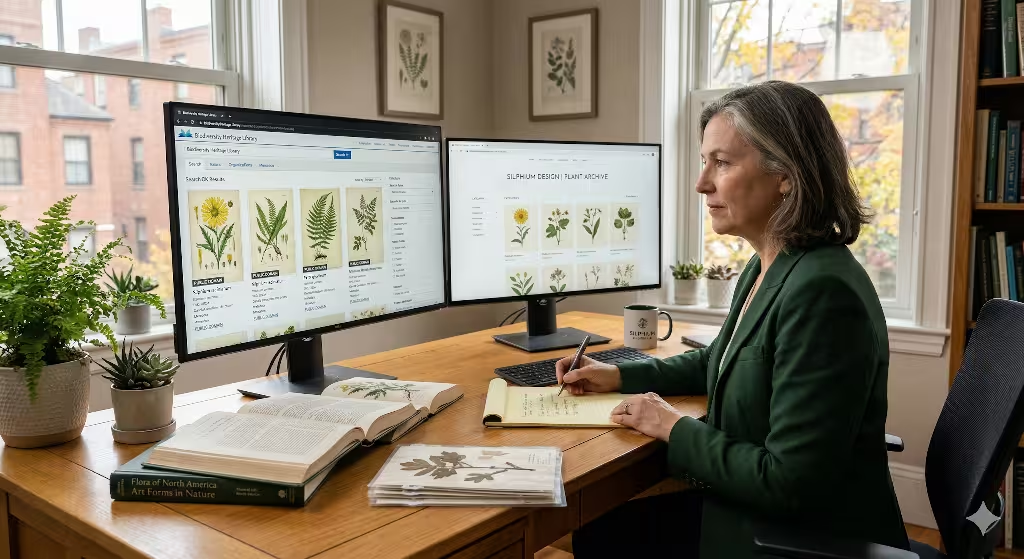
Where can I find vintage botanical illustrations for my website? This is a question I hear often. You cannot just take an image from a search engine. That is stealing. You need to find images that are in the public domain. One of the best places is the Biodiversity Heritage Library. They have thousands of old books filled with botanical illustrations. These drawings are often hundreds of years old, so the copyright has expired.
When you find an illustration you like, check the license. Look for terms like CC0 or Creative Commons. This means you can use the illustrations for free, even for a business.
At Silphium Design LLC, we often take these old drawings and clean them up. We remove the yellow background of the old paper. This makes the botanical illustrations look fresh and modern. If you want something totally unique, you can hire an artist to create custom botanical illustrations for you. This gives your brand a look that no one else has. Another way is to go to your own, another garden, or outside and get images of plants. These images can then rendered as an illustration.
Accessibility and Readability: The Biophilic Conflict
There is a small problem when using botanical illustrations as backgrounds. If the drawings are too dark or too colorful, it is hard to read the text on top of them. This is a conflict between art and function. As an expert, I must tell you that reading comes first. If you do blogging all day, like me, you how important proper contrast is. If a user cannot read your message, the botanical illustrations are a failure. You must follow WCAG guidelines. These are rules for making the internet easy to use for everyone, including people who cannot see well.
One trick I use is called glassmorphism. I put a semi-transparent box behind the text. This box looks like frosted glass. It blurs the botanical illustrations behind it. This makes the text pop out and stay easy to read. But the user can still see the beautiful botanical illustrations around the edges. Another way is to use very light or faded botanical illustrations. This is called a watermark style. It gives the feeling of nature without getting in the way of the words. Always check your color contrast. Your text should be much darker or much lighter than the botanical illustrations in the background.
Semantic SEO: Botanical Metadata and Alt Text
Search engines are smart, but they do not have eyes. They cannot “see” your botanical illustrations. You have to tell them what the images are. This is called semantic SEO. Every image on your site should have alt text. This is a short description for the computer. Instead of just saying “flower,” you should be specific. You could say “Hand drawn vintage Silphium laciniatum botanical illustrations for background.” This helps the search engine understand your topic.
You should also use schema markup. This is a special code that gives more data to search engines. If you use botanical illustrations, the schema can tell Google that these are high quality images. This can help your site show up in image searches. When you write about botanical illustrations, use related words. These are LSI keywords. Words like flora, petals, stems, and taxonomy are all related. Using these words helps the search engine build a topic cluster. It sees your site as an expert source on botanical illustrations and nature design.
Case Study: The Organic Conversion Framework
Let me tell you about a theoretical project. Imagine working with a firm that designed buildings. Their old site was very grey and boring. People only stayed on the site for about thirty seconds. It was decided to use botanical illustrations of local plants from Vermont. They used these illustrations as subtle backgrounds for their project pages. They then made sure the botanical illustrations were high resolution but fast to load.
The results were amazing. The average time people spent on the site went up to three minutes. People said the site felt “trustworthy” and “calm.” This is because the botanical illustrations changed the brand sentiment. They even used the work of Ernst Haeckel. He was a scientist who drew very complex patterns of nature. These botanical illustrations showed that the firm was detail oriented. This is the organic conversion framework. When you make people feel good with botanical illustrations, they are more likely to hire you.
The Future of Biophilic Interfaces
The world is becoming more digital every day. But humans are still biological. We need nature to feel whole. Using botanical illustrations for website backgrounds is a way to bridge this gap. In the future, we will see even more of this. We are starting to see generative biophilia. This is where AI helps create new illustrations that change based on the time of day or the weather.
If you want your website to stand out, you should start using botanical illustrations now. It is a way to show that you care about your users’ well being. It is also a way to make your site beautiful and unique. Remember to keep your files small and your text easy to read. Use the right illustrations for your brand and tell search engines what they are.
At Silphium Design LLC, we believe that the best websites are those that look like they grew from the ground. Botanical illustrations are the seeds of that growth. Take a look at your website today. Does it feel like a cold machine? Or does it feel like a garden? Adding botanical illustrations might be exactly what you need to bring it to life.
By following these steps, you can create a site that is both a work of art and a powerful business tool. Botanical illustrations have been used for hundreds of years to document the beauty of the world. Now, we can use botanical illustrations to document the beauty of our digital world. It is an exciting time to be a designer. I hope you feel inspired to go out and find the perfect botanical illustrations for your next project. Nature is waiting for you.
To make sure your site is truly optimized, you should check your keyword density. We have used the phrase botanical illustrations many times in this text. This helps search engines know exactly what this article is about. But more than just keywords, the value comes from the information. You now know about the history of botanical illustrations and the science of how they help the human brain. You know the technical side of how to use botanical illustrations as SVGs and how to keep your site fast. This is the complete guide to using botanical illustrations in modern web design.
As we move forward, the internet will continue to change. But the shapes of leaves and the colors of flowers in botanical illustrations will always be pleasing to us. They are timeless. They are universal. By using botanical illustrations, you are making a choice that will still look good years from now. Trends in web design come and go, but the beauty found in botanical illustrations is forever.
Thank you for reading this expert guide on botanical illustrations. We hope this helps you build a better, more natural web. If you have questions about which botanical illustrations are right for your specific industry, remember to look at the history of those plants. Some plants mean strength, while others mean peace. Choose the botanical illustrations that tell your story. When you do, your website will become a living, breathing part of your brand.