
In the world of design, we often talk about “Technobiophilia.” This is a big word that simply means humans have a deep need to connect with nature, even when we are on our phones or computers. We love to see pictures of forests, oceans, and sunlight. It makes us feel good. When it comes to biophilic hashtags, we see the internet as a giant digital ecosystem. It is not just a machine; it is a living thing that grows and changes.
Many people make a mistake when they post online. They use random tags like #nature or #design. This is like planting a flower in a dark closet. It will not grow. To be successful, you need a plan that works like a forest. A healthy forest has layers. It has the tall trees at the top (the canopy), the smaller bushes in the middle (the understory), and the soil at the bottom (the forest floor). Your biophilic hashtag strategy needs to have these same layers. The good thing about it is that AI can help you select the right hashtags for your content.
My goal for Silphium Design LLC and for you is to move beyond simple tags. We want to use a smart biophilic hashtag system. This system will use the 14 Patterns of Biophilic Design to organize our words, much like the blog. By doing this, we can reach the right people. We can find people who are truly interested in what we do, not just people who click by accident. A strong biophilic hashtag is like a seed. If you plant it in the right place, it will grow into a strong connection with a customer.
Table of Contents
The Taxonomy of Influence: Categorizing Your Hashtags
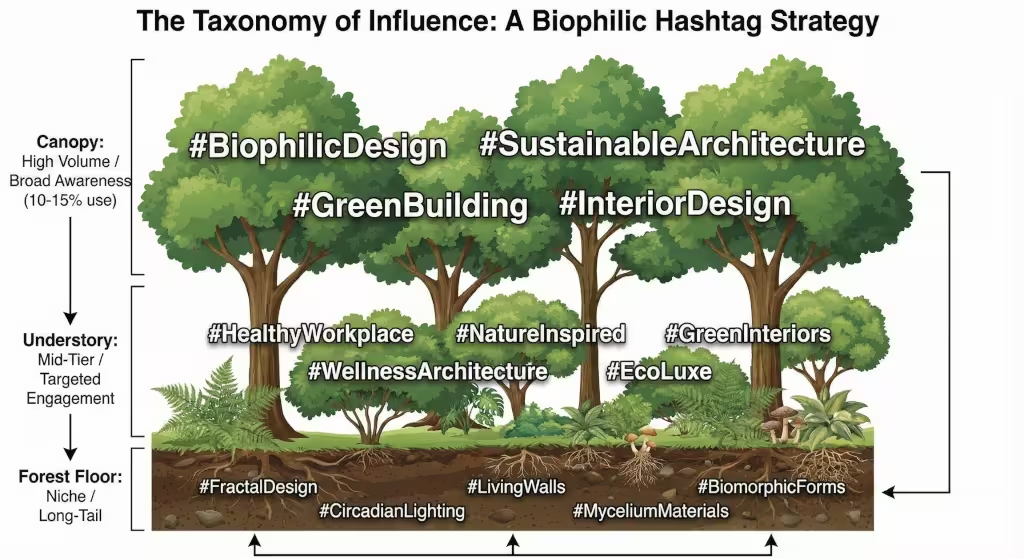
In biology, “taxonomy” is how we name and group living things. We can do the same thing with our keywords. We need to sort our tags so we have a mix of big, popular words and small, specific words. This mix is the secret to a great biophilic hashtag strategy.
The Canopy (High Volume / Broad Awareness)
The “Canopy” represents the tallest trees in the forest. These are the hashtags that everyone sees. They are very popular. Millions of people use them every day. Examples of a canopy biophilic hashtag include #BiophilicDesign, #SustainableArchitecture, #GreenBuilding, and #InteriorDesign.
When you use a canopy biophilic hashtag, you are shouting to a very large crowd. This is good because many people might see your post. But it is also bad because your post can get lost very quickly, especially on social media like Mastodon, where there is no algorithm. It is like a drop of water in the ocean. Because so many people post with these tags, your content might only stay at the top of the list for a few minutes.
You should use these tags, but be careful. Do not use too many. I recommend that only 10% to 15% of your tags should be from the canopy. If you use too many, you will just disappear in the noise. A balanced biophilic hashtag plan uses these big tags just to get a little bit of general attention.
The Understory (Mid-Tier / Targeted Engagement)
Below the tall trees is the “Understory.” This is where the smaller trees and shrubs grow. In our strategy, these are the tags that are used by specific groups of people. They are not too big, but not too small. A good understory biophilic hashtag might have between 50,000 and 500,000 posts.
Examples of these tags are #HealthyWorkplace, #NatureInspired, #GreenInteriors, #WellnessArchitecture, and #EcoLuxe. These tags are very important. This is the “sweet spot” for finding new customers. The people searching for these tags are not just looking for pretty pictures. They are looking for ideas. They might be business owners who want a better office, or homeowners who want a healthy house.
When you use an understory biophilic hashtag, you are talking to people who already care about the topic. They are more likely to like your post, leave a comment, or visit your website. This layer is where the real growth happens. It provides a steady stream of interest, just like the understory of a forest provides food and shelter for many animals.
The Forest Floor (Niche / Long-Tail)
At the very bottom is the “Forest Floor.” This might seem unimportant, but it is actually the most critical part. The soil is where all the nutrients are. In our digital world, the forest floor is made of very specific, technical tags. These are what we call “long-tail” keywords. A forest floor biophilic hashtag might only have a few thousand posts.
Examples include #FractalDesign, #CircadianLighting, #LivingWalls, #BiomorphicForms, and #MyceliumMaterials. These words are very specific. If someone searches for #CircadianLighting, they are likely an expert or someone who is ready to buy a specific product. They know exactly what they want.
Using a forest floor biophilic hashtag signals that you are an expert. It shows that you understand the science behind the design. We are not just decorating; we are engineering wellness. Competition for these tags is low, so your post will stay at the top of the search results for a long time. This is how we build deep authority and trust.
Semantic Layering: Integrating LSI Keywords
“Semantic” means related to meaning. “LSI” stands for Latent Semantic Indexing. This is a fancy way of saying that search engines are smart. They know that some words go together. If you talk about “apple,” the computer looks for words like “fruit” or “pie” to know you are not talking about the computer company. A good biophilic hashtag strategy uses this logic.
We need to mix visual words with technical words. This helps the search engine understand exactly what our image is about.
Visual vs. Technical Keywords
Visual keywords describe what the picture looks like. A visual biophilic hashtag appeals to people who are browsing for inspiration. Examples are #UrbanJungle, #PlantParent, and #IndoorGarden. These tags are fun and emotional. They catch the eye.
Technical keywords describe how the design works. A technical biophilic hashtag appeals to professionals and the search engine algorithm. Examples are #LEEDCertification, #WELLStandard, #CarbonSequestration, and #BiobasedMaterials. These tags tell the computer that our content is educational and valuable.
By mixing these two types, we cover all our bases. We attract the person who loves plants with a visual biophilic hashtag, and we attract the architect with a technical biophilic hashtag. This layering makes our content stronger. It is like a root system that spreads out in all directions to find water.
Platform-Specific Adaptation
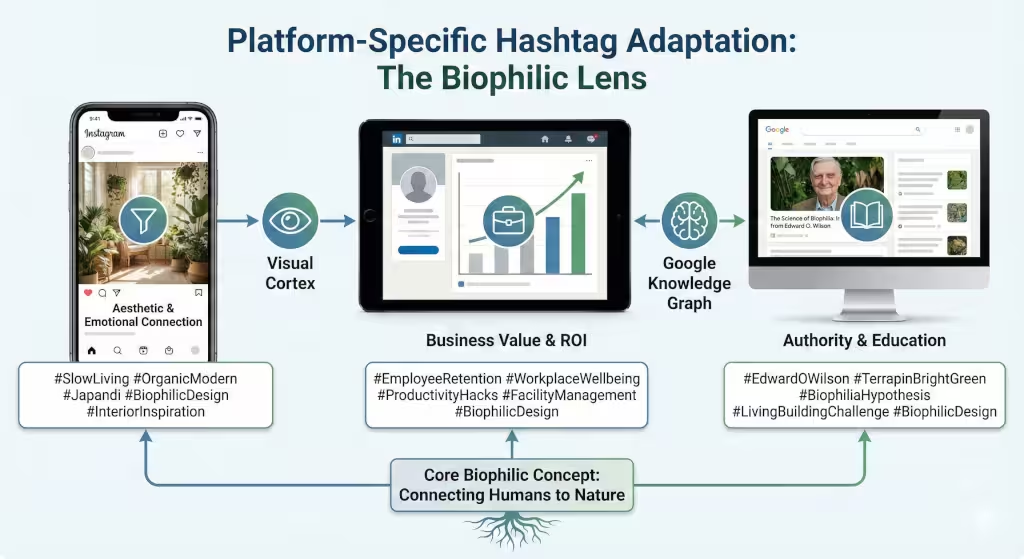
Every social media platform is a different environment. A cactus grows in the desert, but a fern grows in the damp forest. You cannot treat them the same. Your biophilic hashtag choices must change depending on where you are posting.
Instagram & Pinterest (The Visual Cortex)
Instagram and Pinterest are all about how things look. They stimulate the “visual cortex” of the brain. On these platforms, people want to feel something. They want to feel calm, inspired, or amazed.
Here, your biophilic hashtag should focus on aesthetics. Use tags like #SlowLiving, #OrganicModern, and #Japandi. These words describe a mood/vibe. The user is scrolling quickly, so the tag needs to match the feeling of the image instantly. A technical biophilic hashtag can still be used here, but put it at the end of the list. The emotional tags should come first.
Mastodon (The Rhizomatic Network)
Mastodon is very different from Facebook or Instagram. It is not one single garden owned by one company. It is thousands of small gardens connected by gates. We call this the “Fediverse.” In biology, we compare this to a rhizome, like ginger or bamboo. It is a root system that spreads sideways underground, popping up in different places. There is no central brain or algorithm deciding what you see.
Because there is no algorithm to push your content to strangers, your biophilic hashtag is the only way to be found. On Mastodon, hashtags are the roads that connect the different servers. If you do not use them, your post stays stuck on your local server. It will not travel to the wider network. You must use a biophilic hashtag to let your content travel across the digital rhizome.
On this platform, how you write the tag is also critical. You must use “CamelCase.” This means you capitalize the first letter of every word, like #BiophilicDesign instead of #biophilicdesign. This is important for accessibility. It helps screen readers speak the words clearly for people who have trouble seeing. Just as biophilic design makes spaces inclusive for all bodies, your biophilic hashtag style on Mastodon must be inclusive for all users. You should also use more tags here than on other platforms. Since there is no algorithm to guess what the post is about, you need to be very descriptive to help people forage for your content.
LinkedIn (The Cerebral Cortex)
LinkedIn is different. It is for business and thinking. It uses the “cerebral cortex,” the part of the brain that handles logic and work. People on LinkedIn do not just want pretty pictures; they want to know the Return on Investment (ROI). They want to know how design can save them money or help their employees.
On LinkedIn, your biophilic hashtag should focus on business results. Use tags like #EmployeeRetention, #WorkplaceWellbeing, #ProductivityHacks, and #FacilityManagement. When you add a biophilic hashtag like #BiophilicDesign to these business tags, you bridge the gap. You show a CEO that nature is not just decoration—it is a business tool.
Google Discover (The SEO Bridge)
Google Discover is a news feed that shows people articles they might like. To get on this feed, you need to use “Entities.” An entity is a famous person, a well-known organization, or a specific concept that Google recognizes.
When you write a caption, you should mention these entities. For example, you can mention “Terrapin Bright Green” or “Edward O. Wilson.” When you combine these names with a biophilic hashtag, you teach Google who you are. You tell Google, “Your company or organization is in the same group as these famous experts.” This helps your website rank higher in search results over time.
Keystone Entities and Authority Signals
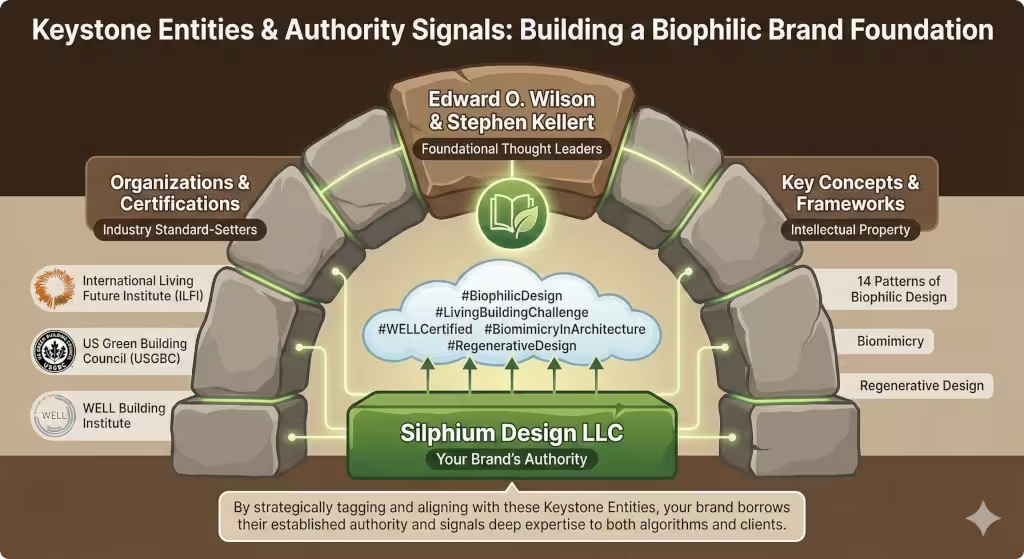
In an ecosystem, a “keystone species” is an animal that is so important that the whole ecosystem depends on it. Wolves are a keystone species. In our strategy, “Keystone Entities” are the most important names and ideas in our field. We must use them to build authority.
Mentioning Influential Entities
We should strategically tag or hash entities to associate Silphium Design with industry leaders. When we use a biophilic hashtag, we should often pair it with a mention of a person like Edward O. Wilson. He is the father of the biophilia hypothesis. Tagging him (or using his name as a tag) connects us to his legacy.
Other people include Stephen Kellert, another pioneer. By using a biophilic hashtag related to their work, we signal that we have read the books and done the research.
Organizations and Concepts
We should also tag organizations like the International Living Future Institute (ILFI) or the US Green Building Council (USGBC). These groups set the standards for green buildings. A biophilic hashtag like #LivingBuildingChallenge puts us in a very elite club of designers.
We must also use concept tags. The “14 Patterns of Biophilic Design” is a key concept. Using a biophilic hashtag for specific patterns, like #ProspectAndRefuge or #VisualConnectionWithNature, shows deep knowledge. It separates us from the amateurs.
Common Questions
When you search on Google, you often see a box that says “People Also Ask.” These are questions that real people are typing into the search bar. We can answer these questions in our posts and use a relevant biophilic hashtag to help people find the answers. This is a great way to get traffic.
“What are the 3 pillars of biophilic design?”
The answer is: Nature in the Space, Natural Analogues, and Nature of the Space. We can write a post explaining this. We would use a biophilic hashtag for each pillar. This teaches the reader the basics.
“How does biophilic design affect the brain?”
The answer involves cortisol reduction and cognitive restoration. This means it lowers stress and helps you think better. A post about this could use a biophilic hashtag like #NeuroArchitecture. This attracts people interested in psychology and health.
“Is biophilic design sustainable?”
The answer is yes. It uses passive solar energy, thermal variability, and local materials. We can use a biophilic hashtag like #SustainableDesign here. This connects the idea of nature with the idea of saving the planet.
“What is the ROI of biophilic design?”
The answer is increased productivity and reduced absenteeism. People work better and get sick less often. This is a perfect topic for LinkedIn. We would use a biophilic hashtag like #OfficeDesign along with business tags.
Analytics: Measuring the Photosynthesis (Engagement)
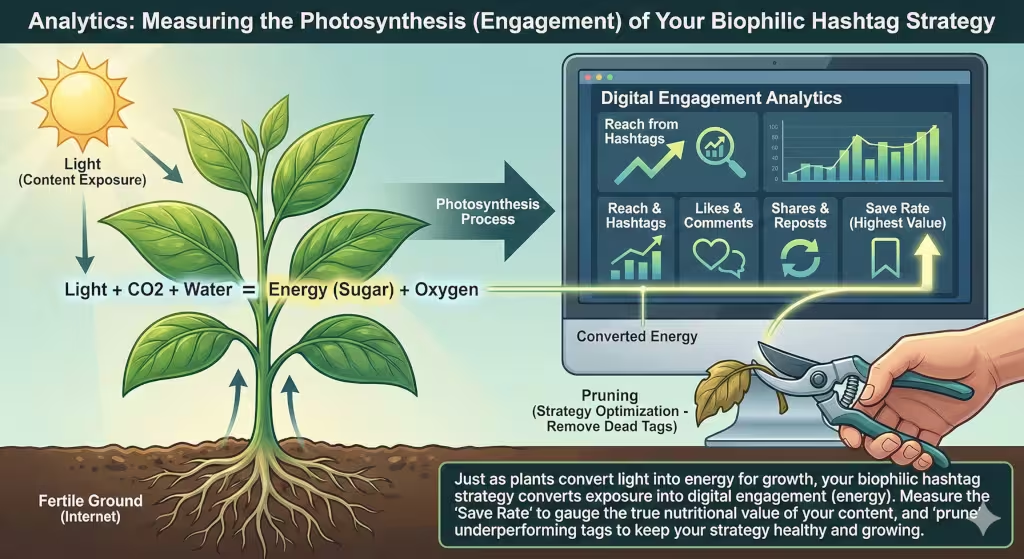
In biology, photosynthesis is how plants turn light into energy. In our digital world, engagement is how we turn views into business energy. We need to measure how well our biophilic hashtag strategy is working. We cannot just guess.
Metrics to Watch
The first metric is “Reach from Hashtags.” Instagram and LinkedIn will tell you how many people saw your post because of the tags you used. If this number is low, your biophilic hashtag choice was probably too small or too competitive.
The second metric is the “Save Rate.” This is when a user saves your post to look at later. This is the highest compliment. It means your content was so useful they want to keep it. A technical biophilic hashtag often leads to more saves because the content is educational.
Tools for Pruning
We must use data analytics tools to check our progress. This is like pruning a plant. If a leaf is dead, you cut it off so the plant can grow. If a biophilic hashtag is not bringing in views, we stop using it. We replace it with a new one.
We should rotate our tags. Do not use the exact same block of tags every time. Change them based on the season or the specific image. A biophilic hashtag that works in the summer might not work in the winter. We must be adaptable.
Conclusion: The Living Algorithm
A website or a social media profile is not a stone statue. It is a living organism. It needs to breathe, grow, and adapt. The algorithm that controls who sees our posts is also alive in a way. It changes every day. A static strategy will fail. A dynamic biophilic hashtag strategy will succeed.
We must treat our keywords like seeds. We plant them in the fertile soil of the internet. We water them with good content. We prune them with data analysis. Over time, this creates a lush, thriving digital ecosystem for for your company.
We need to be aware of seasonal shifts. For example, in the winter, people might search for relief from “Seasonal Affective Disorder.” We can use a biophilic hashtag related to light and mood to reach them. In the spring, people look for gardening tips. We can shift our strategy to match.
By understanding the connection between human nature and digital algorithms, we can build a presence that feels natural and authentic. We do not need to trick the system. We just need to feed it what it wants: high-quality, relevant content organized with a smart biophilic hashtag structure. This is the path to organic growth.