
The Texture Paradigm Shift in 2026 Digital Environments
For a long time, web designers made everything completely flat. Screens looked boring and cold. But in 2026, we are seeing a massive shift. Websites are becoming tactile again. They have depth and surface details that make you want to touch your screen. This shift brings up an important choice for creators. We must choose between two primary design styles. This is where our deep dive into biomorphic vs. skeuomorphic textures becomes essential for modern creators.
To design a great website today, you must understand how these styles compete. A true biomorphic vs. skeuomorphic textures comparison shows us how digital surfaces affect human brains. On one hand, we can make websites that look like human-made objects. On the other hand, we can make websites that look like living organisms. Our work at Silphium Design LLC shows that this choice changes how users feel about your brand. It changes how long they stay on your page. It even changes how fast your website loads. That is why we need to look closely at biomorphic vs. skeuomorphic textures to see which one wins in 2026.
The thesis of this article is simple. In 2026, web environments must choose between emulating man-made analog artifacts or generating natural, biologically inspired patterns to maximize user immersion. When we weigh biomorphic vs. skeuomorphic textures, we are weighing the past against the future. We are choosing between the old way of making screens look familiar and the new way of making screens feel alive. Let us look at the data behind biomorphic vs. skeuomorphic textures to help you make the right choice for your next web project.
Digital design cannot stay static anymore. The noise of the modern internet causes visual fatigue. Users are tired of looking at boxes that feel like cold plastic. They want texture. When we analyze biomorphic vs. skeuomorphic textures we see two different answers to this problem. One style looks backward to physical tools we used to have on our desks. The other style looks outward to the forests, clouds, and rivers. This balance of biomorphic vs. skeuomorphic textures is not just about looks. It is about how human eyes and minds interact with a glowing glass pane. Let us explore the technical details of these styles together.
Therefore, analyzing biomorphic vs. skeuomorphic textures gives us the power to build superior products. Every single biomorphic vs. skeuomorphic textures study points to a shift in how we handle visual data on the web.
Table of Contents
Decoupling the Concepts: Semantics and Syntax
To understand this topic, we must decouple the concepts and look at their definitions. Let us start with skeuomorphic textures. These are digital surfaces that copy real-world, man-made materials. Think of brushed aluminum on a tech website. Think of stitched leather on a digital calendar app.
Other modern forms include glassmorphism, which looks like frosted glass, and claymorphism, which looks like soft clay. The main goal of this style is to give users immediate familiarity. When a digital button looks like a real plastic button, you know exactly how to click it. This makes the interface easy to use right away. But when we look at biomorphic vs. skeuomorphic textures, we see that copying man-made objects is only one way to design.
Now let us define biomorphic textures. These are digital surfaces that copy or create natural, living structures. Think of the pattern of cells under a microscope. Think of the veins on a green leaf. Think of water ripples on a pond or the web-like networks of mycelium in the soil. The main goal here is to build a biophilic connection. Biophilia is our innate human love for nature. Using these patterns helps reduce user stress and makes people feel calm. Our data at Silphium Design LLC shows that choosing these patterns changes the entire user experience. When you compare biomorphic vs. skeuomorphic textures, you are comparing human tools to natural living systems.
Let us look deeper at the difference in visual language. Skeuomorphism uses shadows and highlights to make things look heavy and solid. It wants you to think there is a real piece of metal inside your phone. Biomorphism uses organic flow and growth patterns. It wants you to feel like the website is an ecosystem that breathes. Evaluating biomorphic vs. skeuomorphic textures requires us to look at how these shapes form. Human-made shapes use straight lines and perfect circles. Natural shapes use curves and repeating patterns that are never quite perfect. This difference is why biomorphic vs. skeuomorphic textures look so different to the human eye.
The semantics of design tell us how users interpret what they see. A skeuomorphic surface says, this is a tool you already know how to use. A biomorphic surface says, this is a space where you can feel comfortable and relaxed. In our ongoing study of biomorphic vs. skeuomorphic textures, we find that users respond to these messages on a deep level. They do not just see pixels. They feel a sense of place. If you want your website to feel like a high-tech factory tool, you might choose one side. If you want it to feel like a peaceful garden, you choose the other. The study of biomorphic vs. skeuomorphic textures helps us balance these goals.
When we look at a modern biomorphic vs. skeuomorphic textures framework, we see how definitions change. This specific biomorphic vs. skeuomorphic textures division helps us categorize visual styles accurately.
Mathematical and Algorithmic Complexity: How They Are Built
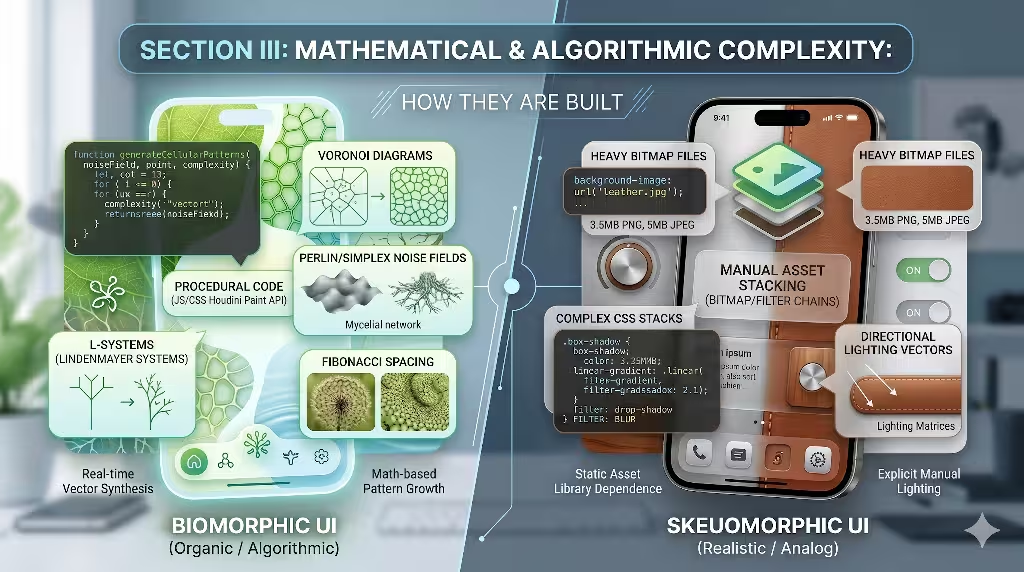
Let us dive into the mathematical and algorithmic complexity of how these surfaces are built. Making a skeuomorphic surface usually requires heavy graphics files. Designers use large bitmap images like JPEGs or PNGs to show the fine details of wood grain or leather. They also use complex CSS code to stack multiple drop-shadow vectors and lighting matrices. This tells the browser exactly how to draw light hitting a fake metal edge. It takes a lot of manual work from a designer to get these details right. When we look at biomorphic vs. skeuomorphic textures from a coding perspective, we see that the skeuomorphic approach depends heavily on static art assets.
Biomorphic surfaces are completely different. Instead of using big, heavy image files, they use pure computer math. We build these textures using procedural generation. This means the computer writes the texture in real time using algorithms like Perlin noise, Simplex noise, or Voronoi diagrams. For example, a Voronoi diagram can create a texture that looks exactly like dried mud or dragonfly wings using simple math coordinate points. We also use Fibonacci spacing and Lindenmayer systems, which are called L-systems. These mathematical rules let us grow beautiful vector patterns that scale up or down perfectly without ever losing quality or pixelating. This contrast is a huge part of the biomorphic vs. skeuomorphic textures technical debate.
Think about how a browser renders these two styles. For a skeuomorphic texture, the browser has to download a heavy file from a server, save it to memory, and paint it onto the screen. If the user changes their screen size, that image can look blurry or stretched. For a biomorphic texture, the browser just reads a few lines of math code. It calculates the curves and shades instantly on the user’s device. This makes the website incredibly light and fast. When you look at biomorphic vs. skeuomorphic textures through the lens of code efficiency, procedural math wins every single time. It gives you infinite detail with almost zero file size.
As a web designer, I find the math behind organic growth fascinating. Nature uses simple rules to build complex things. A tree branch splits using a set angle. A leaf grows its veins to spread nutrients evenly. We can write these exact same rules into our website code using JavaScript and CSS. When we compare biomorphic vs. skeuomorphic textures, we see that one tries to trick the eye with an imitation picture, while the other uses the actual laws of nature to grow a pattern. This deep difference in how we build biomorphic vs. skeuomorphic textures is changing the way modern engineering teams think about interface assets.
Our engineering team constantly tracks biomorphic vs. skeuomorphic textures data to choose the right rendering methods. Resolving the math behind biomorphic vs. skeuomorphic textures allows for cleaner codebase architecture.
Psychological and Physiological Impacts on the User
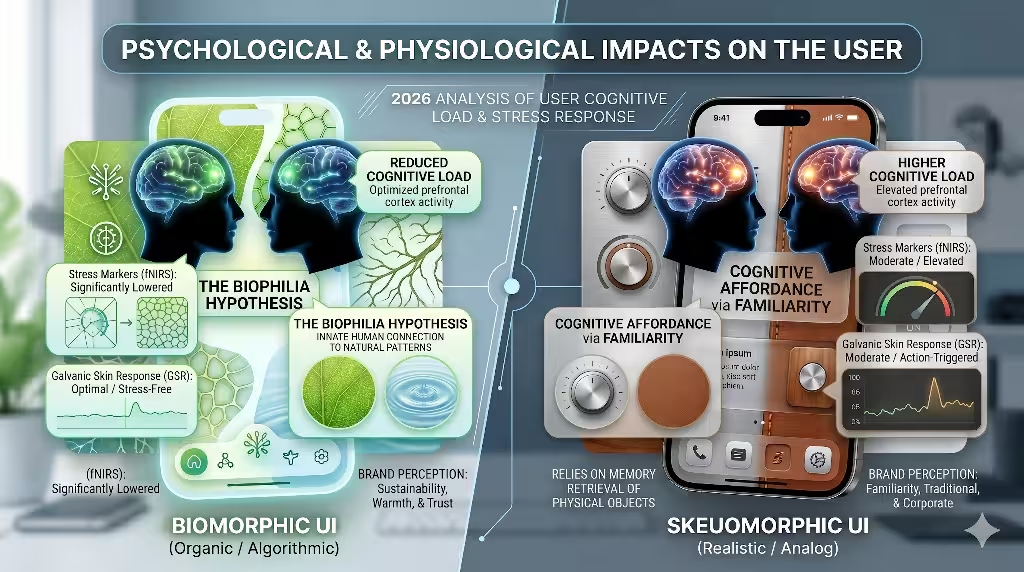
Now we must look at the psychological and physiological impacts on the user. Human brains have limited energy. Every time you open a website, your brain has to work to understand what it is looking at. We call this cognitive load. Skeuomorphic surfaces rely on your memory. Your brain sees a digital leather button, remembers what real leather feels like, and connects it to a function. This works well for familiarity, but it keeps your brain busy with memory retrieval. When we study biomorphic vs. skeuomorphic textures, we see a totally different brain reaction to organic shapes. Organic shapes do not force your brain to look through old memories to find meaning.
Biomorphic patterns tap directly into human evolutionary biology. This is tied to the famous Biophilia Hypothesis. For hundreds of thousands of years, our ancestors lived in natural environments. Their survival depended on reading the textures of plants, trees, and water. Because of this, our brains are hardwired to process natural patterns easily and without effort. Recent scientific studies using fNIRS, which measures brain blood flow, and Galvanic Skin Response, which measures skin sweat from stress, show amazing results. When people look at natural patterns, their stress levels drop significantly. This psychological difference is a major factor in the biomorphic vs. skeuomorphic textures discussion.
Let us think about how this affects a business website. If a user feels calm and relaxed on your site, they are more likely to stay. They will read your content and trust your message. Our research at Silphium Design LLC shows that biomorphic visual identity shifts how people view a brand. It makes a company look sustainable, warm, and highly competent. Skeuomorphism can sometimes feel cold, corporate, or old-fashioned. When you compare biomorphic vs. skeuomorphic textures based on user emotion, nature-inspired design creates a deeper bond of trust. It transforms a simple transaction into a pleasant experience that feels safe and good.
We also see changes in focus and attention. Natural textures give the eyes a place to rest without causing distraction. The repeating, imperfect fractals found in nature keep our minds engaged but calm. This is called Attention Restoration Theory. It proves that looking at natural patterns can actually recharge your mental battery. A fake metal or plastic screen does not do this. It keeps the brain in a state of high alert. As we weigh biomorphic vs. skeuomorphic textures for modern applications, we must prioritize user mental health. Choosing between biomorphic vs. skeuomorphic textures is really a choice between creating digital stress or digital healing.
This means that biomorphic vs. skeuomorphic textures choices directly affect user mental health. Looking at biomorphic vs. skeuomorphic textures under a microscope proves that natural structures are more relaxing.
Technical Performance & Core Web Vitals (The SEO Lens)
Let us look at technical performance and Core Web Vitals, which is our primary search engine optimization lens. Google cares deeply about how fast a website loads and how smooth it feels. If your website is slow, you will lose your search rankings and your visitors. Skeuomorphic textures create massive asset overhead. Loading multiple high-resolution textures for backgrounds, borders, and buttons bloats your total page size. It can add megabytes of data to a single page. When we examine biomorphic vs. skeuomorphic textures for speed, we see that heavy graphics slow down your site’s render speed and hurt your mobile user experience.
Let us talk about specific Google metrics. The first one is Largest Contentful Paint, or LCP. This measures how long it takes for the main content of a page to appear on the screen. If your site uses complex glassmorphism or heavy skeuomorphic textures, the browser has to spend valuable time downloading and blending those visual layers. This delays your LCP score. Biomorphic textures use lightweight, procedurally generated SVG code or native browser scripts. They compile instantly. When we run tests on biomorphic vs. skeuomorphic textures, the math-based organic textures consistently achieve much faster LCP scores. This keeps both your users and Google’s search bots very happy.
Another critical metric in 2026 is Interaction to Next Paint, or INP. This measures how fast a website responds when a user clicks a button or scrolls down the page. Heavy skeuomorphic effects often require the browser’s main thread to recalculate shadows and gradients during movement. This causes stuttering and lag, which ruins your INP score. Biomorphic vector fields do not put this heavy load on the processor. They use clean, optimized code that leaves the browser free to handle user inputs smoothly. Looking at biomorphic vs. skeuomorphic textures under heavy user interaction shows that organic code is simply superior for modern web performance.
To rank well on search engines today, you must optimize every single line of code. You cannot afford to waste performance on decorative elements that do not add functional value. This is why the technical choice between biomorphic vs. skeuomorphic textures matters so much for SEO. At Silphium Design LLC, we always design with a performance-first mindset. By replacing heavy, man-made graphic files with fast, natural mathematical textures, we give our clients a major edge in search engine rankings. In the competitive world of SEO, the technical battle of biomorphic vs. skeuomorphic textures is won by the efficiency of natural algorithms.
We cannot ignore how biomorphic vs. skeuomorphic textures affect your server costs and loading metrics. Choosing between biomorphic vs. skeuomorphic textures is a major milestone for any SEO optimization campaign.
Direct Comparative Matrix: 2026 Metrics
To make this comparison easy to understand, let us look at a direct comparative matrix for these 2026 metrics. This table breaks down exactly how these two texture philosophies perform across key technical and user experience categories. When we analyze biomorphic vs. skeuomorphic textures side by side, the practical benefits of each style become very clear for developers and business owners alike.
| Performance Attribute | Skeuomorphic Textures | Biomorphic Textures |
| Render Efficiency (DOM Overhead) | Low (Requires heavy assets and filter stacks) | High (Uses clean mathematical scripts) |
| Accessibility Compliance (WCAG 2.2) | Moderate (Shadows can blur text contrast) | High (Clear vector boundaries and scalable lines) |
| User Retention & Dwell Time | Average (Familiarity wears off quickly) | Excellent (Calming effect keeps users on page) |
| Responsive Viewport Scalability | Poor (Bitmaps stretch or pixelate on screens) | Perfect (Vectors scale infinitely with pure math) |
| Processing Cost on Main Thread | High (Triggers constant repaint storms) | Low (Calculated efficiently by hardware shaders) |
As you can see from this matrix of biomorphic vs. skeuomorphic textures, the engineering data heavily favors nature-inspired models. While copying real-world tools has a clear purpose for basic learnability, it struggles to keep up with the modern demands of responsive web design. The data points in this biomorphic vs. skeuomorphic textures chart show that organic, procedural methods fit perfectly into the lightweight framework needed for modern devices. This layout helps us see that making a website beautiful does not mean you have to make it slow or hard to use for people with disabilities.
This clear matrix of biomorphic vs. skeuomorphic textures simplifies the core choice for product owners. Every entry in this biomorphic vs. skeuomorphic textures list reflects real-world engineering trials.
The Generative AI Paradigm (2026 Technology Integration)
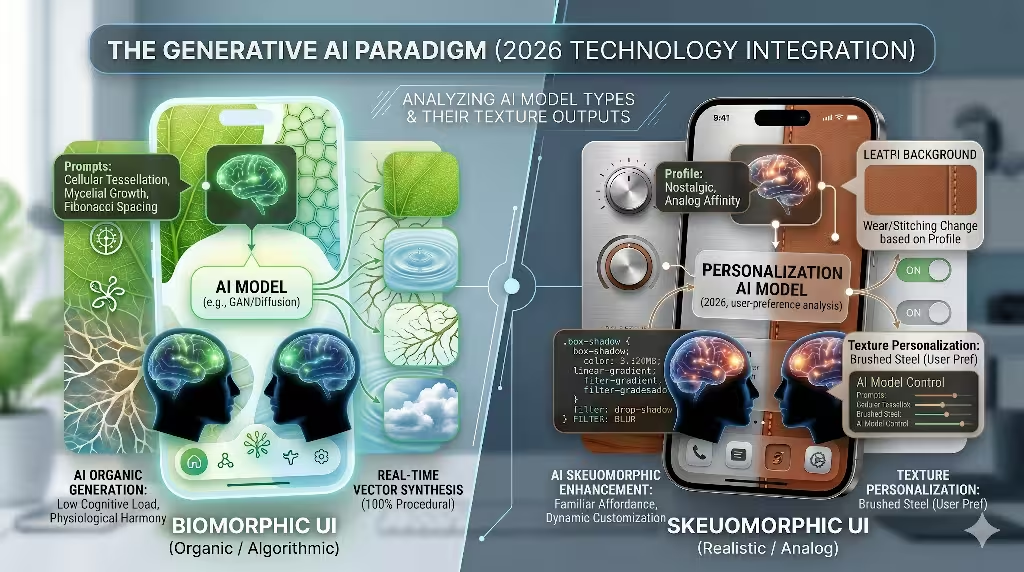
We must also explore the generative artificial intelligence paradigm and how it integrates with 2026 technology. Artificial intelligence has changed how we create design systems. We no longer have to paint every single texture by hand in a graphics program. Instead, modern generative AI text-to-image models can synthesize real-time, responsive surfaces directly inside the user interface layer. When we apply AI to the choice of biomorphic vs. skeuomorphic textures, we see incredible new possibilities for personalization. A website can now change its texture dynamically based on who is looking at it or what time of day it is.
For example, an AI system can generate a subtle skeuomorphic texture if it detects an older user who needs familiar physical clues to navigate a form. It can render soft clay buttons or a clear glass menu panel. But if the system wants to reduce user stress during a high-anxiety task like a medical booking, it can instantly switch to generating calm, fluid biomorphic textures. This adaptive use of biomorphic vs. skeuomorphic textures allows websites to be more empathetic and responsive than ever before. Artificial intelligence acts as the maestro, organizing code prompts to build custom visual layers on the fly.
This technology also changes the workflow for design teams. At Silphium Design LLC, we use localized diffusion models to test how different textures perform before we write any production code. We can ask the AI to run simulations comparing biomorphic vs. skeuomorphic textures to see which patterns capture attention without causing visual clutter. This helps us eliminate unnecessary visual theatrics before they ever reach a user’s browser. The combination of generative AI and organic math allows us to build websites that feel truly alive, changing their texture patterns just like a plant turns its leaves toward the morning sun.
The future of digital design belongs to these smart, adaptive systems. We are moving away from fixed, rigid layouts toward fluid systems of feeling. As we continue to compare biomorphic vs. skeuomorphic textures in this new AI era, we discover that natural patterns blend much more easily into generative workflows. Nature is already built on generative rules, so computer algorithms can copy and modify natural textures with incredible ease. This compatibility makes the ongoing evolution of biomorphic vs. skeuomorphic textures one of the most exciting fields in modern computer science and user experience research.
Our research into biomorphic vs. skeuomorphic textures shows that AI can automate these visual styles seamlessly. Tracking biomorphic vs. skeuomorphic textures with AI systems helps us predict user engagement scores.
Common Questions about Biomorphic vs. Skeuomorphic Textures
Let us do a deep dive into the Google People Also Ask queries to answer the most common questions users have about this topic. This section will help clarify any lingering confusion about how these styles work in the real world. By addressing these common queries, we can build a complete understanding of the biomorphic vs. skeuomorphic textures landscape.
What is the main difference between biomorphic and skeuomorphic design?
The main difference comes down to the source of inspiration and the core purpose of the design. Skeuomorphic design mimics manufactured, human-made objects like leather, metal, or glass to help users understand how an interface works through real-world familiarity. Biomorphic design mimics natural, biological structures like leaf veins, cellular shapes, and water waves to optimize visual harmony, reduce mental stress, and create a calming atmosphere. When we look at biomorphic vs. skeuomorphic textures, one builds a bridge to familiar human tools, while the other builds a bridge to the natural world.
Why are organic textures trending in 2026 web design?
Organic textures are trending because people are suffering from severe visual fatigue caused by years of looking at sterile, ultra-minimalist web layouts. Users are tired of cold, flat boxes that feel completely machine-made and disconnected from life. Organic textures provide a comforting, restorative user experience that satisfies our innate love for nature, which helps lower website bounce rates and naturally drives deeper user engagement. In the current conversation about biomorphic vs. skeuomorphic textures, organic options are winning because they bring warmth, character, and a human touch back to our digital screens.
Do skeuomorphic textures negatively affect mobile SEO?
Yes, they can easily hurt your mobile SEO rankings if they are not implemented with extreme care. Traditional skeuomorphic designs rely on heavy, unoptimized bitmap graphics or complex CSS filter drop-shadow chains that cause severe performance issues on mobile devices. These heavy files trigger excessive paint storms in the browser, which causes layout shifts and slows down your page loading times. This directly damages your Core Web Vitals scores. When comparing biomorphic vs. skeuomorphic textures for mobile performance, skeuomorphic styles often create too much technical overhead for search engine algorithms.
How do I implement biomorphic textures without slowing down my website?
The best way to implement organic surfaces without losing speed is to use procedural generation instead of static image files. You can write native SVG math code, apply WebGL or WebGPU shaders, or use runtime CSS Canvas drawing scripts to create dynamic patterns directly in the browser. This approach lets the user’s own device calculate the texture lines using simple mathematical instructions, keeping your file sizes tiny and your load times incredibly fast. Mastering this technique is a core part of resolving the biomorphic vs. skeuomorphic textures performance dilemma for modern web development.
These questions highlight why the biomorphic vs. skeuomorphic textures debate is so important for modern designers. Understanding biomorphic vs. skeuomorphic textures will help you keep your website competitive.
Practical Implementation: Silphium Design Deployment Protocol
Now let us look at practical implementation guidelines through the lens of our Silphium Design Deployment Protocol. To build a great website, you need to know how to turn these ideas into clean, working code. We will focus on how developers can inject subtle organic textures into modern component libraries like Tailwind CSS or React components without bloating the asset folder. This practical guide shows how the debate over biomorphic vs. skeuomorphic textures turns into real code that runs smoothly on every device.
First, you must replace all high-resolution background image files with vector equations. Instead of loading a three-megabyte JPEG of a wood grain or paper surface, you can use an SVG pattern filter to generate a natural, grain-like noise texture using the feTurbulence filter element. This filter uses mathematical algorithms to create a soft, organic texture directly inside the browser. It takes up less than one kilobyte of code space, which completely changes the performance math when you calculate the impact of biomorphic vs. skeuomorphic textures on your page weight.
Second, let us talk about layout shapes. Instead of using harsh rectangular boxes or perfect circles, you can use the CSS clip-path property or border-radius values based on the Fibonacci sequence to create soft, undulating curves that mimic natural forms. For interactive states like button hovers, you can write simple JavaScript functions that use Perlin noise to make the button edges ripple gently like water when a user moves their mouse over them. This creates a deeply engaging, tactile experience that proves how biomorphic vs. skeuomorphic textures can transform basic interactions into moments of natural delight.
Finally, you should always test your interface contrast and performance metrics after applying any surface details. Ensure your text layers maintain a strong contrast ratio against your organic backgrounds to comply with WCAG 2.2 accessibility standards. Use browser developer tools to verify that your procedural texture scripts are not causing unnecessary main-thread layout shifts or long task delays. By following this strict protocol, you can successfully implement the best elements of the biomorphic vs. skeuomorphic textures comparison, creating a website that is both blindingly fast and beautifully aligned with the natural world.
This protocol turns the abstract biomorphic vs. skeuomorphic textures concept into real code. Your engineering team will benefit from mastering these biomorphic vs. skeuomorphic textures rules.
Conclusion & Future Outlook
Let us conclude our technical comparison and look toward the future of web design. We have covered a massive amount of ground in this analysis of biomorphic vs. skeuomorphic textures. We looked at how these styles are defined, how they are engineered through code, and how they impact the human mind and search engine rankings. It is clear that the visual language of the internet is evolving rapidly, and design teams must make conscious, data-driven decisions about the surfaces they build.
Our final strategic recommendation from Silphium Design LLC is clear and direct. While skeuomorphism still holds a specific, niche value for concrete tactile tools like digital audio workstations, music synthesizers, or payment terminals, it is no longer the ideal choice for general web environments. Biomorphic textures represent the true scalable, high-performance future of sustainable, human-centric web design. When you choose nature-inspired math over heavy, man-made graphic files, you create an experience that honors both human biology and modern web engineering standards.
As we move forward through 2026 and beyond, the line between technology and nature will continue to blur. Websites will become increasingly adaptive, shifting their visual forms to match our emotions and our physical needs. By mastering the lessons found in this biomorphic vs. skeuomorphic textures comparison, you can position your brand at the absolute forefront of this digital revolution. We invite you to step away from the cold, sterile boxes of the past and embrace the living, breathing patterns of the natural world to build a faster, healthier, and more beautiful internet for everyone.
Our final thoughts on the biomorphic vs. skeuomorphic textures balance stress the importance of efficiency. This detailed biomorphic vs. skeuomorphic textures overview provides a roadmap for your next big redesign project.