When we think about the internet, we often think of it as something that exists in the air. We call it the cloud, but the truth is much heavier than that.
At Silphium Design LLC, we look at the internet through the eyes of a biologist and web designer. To communicate climate change properly, we must first understand that the digital world is a physical place. Every time you click a link, a computer in a large building called a data center has to work. These computers use a lot of electricity. They generate heat and need huge amounts of water to stay cool. If we want to communicate climate change through our websites, we have to start by making those websites lighter and cleaner.
Nature and technology are not separate. In 2026, we are seeing a shift where carbon-aware design is the new standard. It is no longer enough to just put a picture of a green forest on a page. A website that is slow and uses too much power is actually hurting the environment.
Therefore, our design must embody the solution. We use biophilic design, which means we bring the patterns of nature into the digital space. This helps people feel a connection to the Earth while they browse. To truly communicate climate change, a website needs to be fast, beautiful, and kind to the planet. We are building digital ecosystems that respect the biosphere. This is how we use our skills to communicate climate change in a way that leads to real action.
Table of Contents
The Materiality of the Digital World

Most people do not realize that the internet is responsible for about four percent of the world’s carbon emissions. This is a huge number. To communicate climate change effectively, we have to tell people the truth about their screens. Every video that plays automatically and every giant image file uses energy. We need to show that the internet is made of wires, metal, and cooling fans. When a designer wants to communicate climate change, they should think about the weight of their website. A heavy website is like a car that burns too much gas. A light website is like a bicycle that moves quickly and uses very little energy.
In our work at Silphium Design, we teach clients that their digital footprint matters. You cannot communicate climate change on a website that takes ten seconds to load. That loading time represents wasted electricity. We explain that the data center might be thousands of miles away, but its impact is felt right here. By reducing the size of our files, we help our clients communicate climate change by leading by example. We want the user to understand that being online has a physical cost. When we make the invisible visible, we help everyone understand the challenge we face.
Performance as Environmental Advocacy
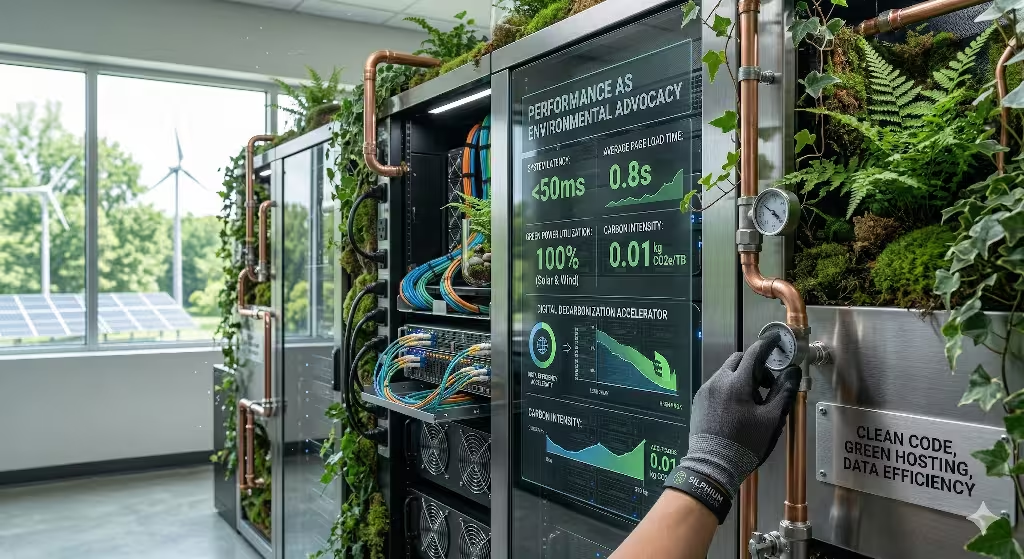
When a website is fast, it is also green. This is a core part of how we communicate climate change at our agency. We look at performance as a way to protect the planet. If a page loads in under a second, it uses less power than a page that takes five seconds. This is a technical way to communicate climate change that most people do not think about. We use clean code that does not have any extra parts. This makes the computer work less. When the computer works less, it uses less power.
We also look at how we host our websites. We only use green hosting companies. These companies use wind or solar power for their data centers. This is a powerful way to communicate climate change because it shows you care about the source of your energy. We tell our readers that where you put your website is just as important as what you say on it. If you want to communicate climate change, you should not host your site on a server that runs on coal. We help people find the best green hosts so their digital home is as sustainable as possible.
Using Better Image Formats to Save Energy
Images are usually the heaviest part of a website. In the past, people used large JPEG files that were very heavy. Now, we have better ways to communicate climate change by using modern formats like AVIF and WebP. These files are much smaller but still look great. We also use SVG files for icons and logos. An SVG is a mathematical formula for a shape, not a grid of colored dots. This means it is tiny and loads almost instantly.
When we use these smaller files, we communicate climate change by showing that we respect the user’s data and the planet’s energy. A person on an older phone in a place with poor internet will appreciate a fast site. This makes our message more inclusive. If we want to communicate climate change to everyone, we have to make sure everyone can see our website without using up all their phone data. This is a practical step that makes a big difference over time.
The Power of Dark Mode for Energy Efficiency
Many modern screens, like the ones on new smartphones, use OLED technology. On these screens, every pixel is its own light. If a pixel is black, it is turned off and uses no power. This is why dark mode is a great tool to communicate climate change. When a user switches to dark mode, their screen uses less battery. This means they do not have to charge their phone as often.
We often design websites that have an easy switch for dark mode. This invites the user to participate in saving energy. It is a small nudge that helps communicate climate change in a very personal way. People feel good when they know their choices are helping. By offering a dark version of a site, we provide comfort for the eyes and a lower carbon footprint for the device. This is biophilic because it mimics the natural cycle of day and night.
Nature-Inspired Patterns in Digital Design
Biophilic design is all about bringing the feeling of nature into human-made spaces. We can use this to communicate climate change by making websites feel like living systems. Instead of using sharp corners and stiff grids, we use organic shapes. We might use colors that you find in a forest or near the ocean. This helps the user feel calm and connected. When people feel connected to nature, they are more likely to want to protect it.
To communicate climate change, we use subtle animations. Think about how a leaf moves in a gentle breeze. It is not a perfect, repeating circle. It is a bit random and very peaceful. We can use these types of movements on a website. This keeps the user’s attention without stressing them out. Stress makes people want to leave a site. If we want to communicate climate change, we need people to stay and read our message. Biophilic patterns create a digital space where people want to spend time.
Prospect and Refuge in User Experience
In nature, animals look for places where they can see far away (prospect) but also feel safe and hidden (refuge). We use this idea to communicate climate change through our website layouts. We create clear paths for the eyes to follow. This is the prospect part. We want the user to know where they are going and what they will find. Then, we provide “refuge” areas where the text is easy to read and there are no distractions.
This balance makes a website feel natural and trustworthy. If a site is messy and loud, people get confused. You cannot communicate climate change effectively if your audience is overwhelmed. We use white space—or “breathing room”—to help the content stand out. By following these ancient human instincts, we make our digital communication much stronger. We want to communicate climate change in a way that feels safe and clear to every visitor.
Moving Away from Machine Grids to Biomorphic Forms
For a long time, websites were designed to look like spreadsheets. They were full of boxes and straight lines. To communicate climate change, we are moving toward biomorphic forms. These are shapes that look like things found in nature, like clouds, stones, or cells. These shapes feel more “alive” than a perfect square. When a website feels alive, the message about our living planet feels more urgent and real.
We use these shapes to highlight important information. For example, a button to sign a petition might be shaped like a smooth river stone. This makes the interaction feel more tactile and human. When we communicate climate change, we want to remind people that they are part of the natural world. Our websites should not look like cold machines. They should look like an extension of the biosphere. This helps us communicate climate change with more heart and soul.
Visualizing Climate Data with Impact and Clarity
One of the hardest parts of our job is to communicate climate change data. Numbers about parts per million or degrees of warming can be hard to understand. We use interactive tools to make this data come to life. Instead of just showing a chart, we might show an interactive map. A user can slide a bar to see how their own town might look if the sea level rises. This makes the data personal.
To communicate climate change effectively, the data must be easy to see. We use colors that have meaning. Blue might represent water, while orange represents heat. We keep these visuals light so they do not slow down the site. We also make sure the visuals work on mobile phones. Most people get their news on their phones now. If we want to communicate climate change to the most people, our maps and charts must be perfect on small screens.
Local Stories for Global Change
Global problems can feel too big to solve. To communicate climate change, we focus on local stories. We use our design to show how specific places are changing. This might be a forest in Vermont or a beach in Massachusetts. When people see how their own neighborhood is affected, they take it more seriously. We use high-quality photos of local plants and animals to build this connection.
A website can use location data to show the user exactly what is happening near them. This is a very direct way to communicate climate change. We tell the user about local green projects they can join. By connecting the global crisis to local action, we give people hope. We communicate climate change not just as a disaster, but as a chance for communities to grow stronger together.
Transparency Tools and Carbon Trackers
We believe in being honest about our own impact. To communicate climate change with integrity, we put carbon trackers on our websites. You might see a small badge in the footer of a site. This badge tells you how much carbon was used to load that specific page. This is a great way to communicate climate change because it shows we are taking responsibility. It encourages other designers to do the same.
We also share our “green manifestos” on our sites. We list exactly what we are doing to stay sustainable. We talk about our green hosting and our low-energy design choices. When you communicate climate change, you have to walk the walk. If we tell others to be green, we must be green first. These transparency tools build a lot of trust with our readers. They know that when we communicate climate change, we are speaking from experience.
Encouraging Green User Flows and Behaviors
The way we design a menu or a checkout page can change how people act. We use “green nudges” to communicate climate change through user behavior. For example, if a site sells products, we might make “carbon-neutral shipping” the default choice. Or, we might show the environmental cost of different options. This helps the user make a better choice for the planet.
We can also communicate climate change by rewarding good behavior. A website could give a virtual badge or a small discount to users who choose digital delivery instead of paper. These small design choices add up to big changes. When we communicate climate change in this way, we are helping people practice being sustainable every day. It makes environmentalism feel like a normal part of life, not a chore.
Why Accessibility is a Sustainability Goal
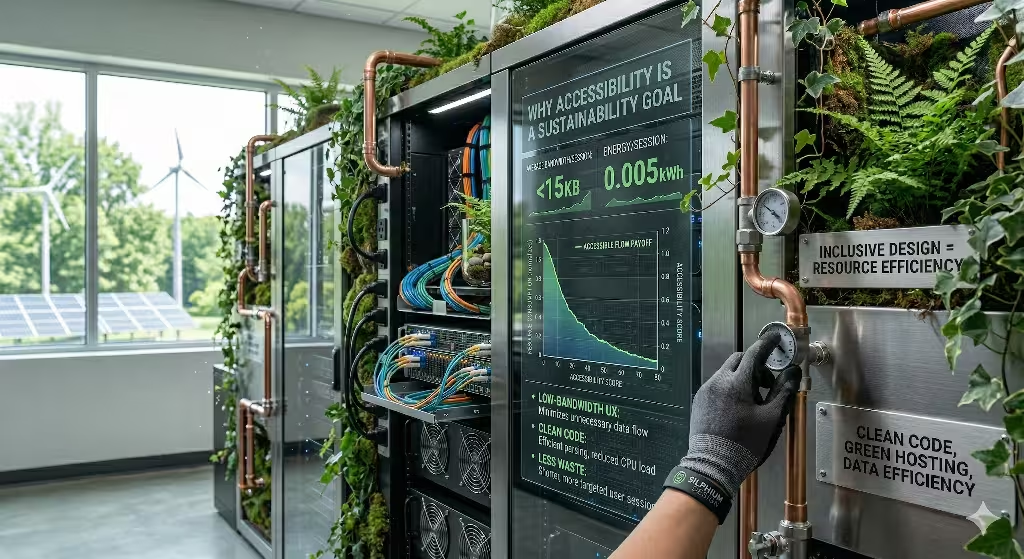
Many people do not realize that making a site accessible also makes it more sustainable. An accessible site is easy for search engines to read. It is also easy for people with slow internet or old computers to use. To communicate climate change to everyone, we must leave no one behind. A site that follows WCAG rules is usually lighter and faster. This means it uses less energy.
When we communicate climate change, we must use clear language. We avoid big words that might confuse people. We want an eighth grader or someone who is learning the language to understand us. This is part of being inclusive. If our message is only for “experts,” we will fail. We communicate climate change for the whole world. By making our designs simple and accessible, we ensure our message reaches the most people possible.
Balancing Hope and Action in Design
It is easy to feel sad when we talk about the environment. If a website is too scary, people will just close the tab. To communicate climate change effectively, we have to balance the bad news with hope. We use bright, natural colors and images of success. We show people planting trees, building solar farms, and cleaning oceans. This gives the user energy to help.
Our UI design leads the user toward “manageable actions.” We don’t just say “the world is ending.” We say “here is one thing you can do today.” This might be a button to join a local group or a link to a recycling guide. When we communicate climate change, we want to empower our audience. A hopeful design keeps people engaged for much longer than a design based on fear.
A Web Design Case Study
A web design agency recently worked on a project for a local nature group. They wanted to communicate climate change through their new website. The agency started by cutting out all the heavy video backgrounds. Instead, they used beautiful SVG illustrations of local birds. These illustrations loaded instantly and used almost no power. This was their first step to communicate climate change through better performance.
The results were amazing. The site’s traffic went up because it was so much faster on mobile phones. More people signed up for the group’s newsletter. By using biophilic colors and shapes, they made the site feel like a walk in the park. This project proved that you can communicate climate change better by doing more with less. The agency showed that a green website is also a successful website. It ranks higher in search results because Google loves fast, user-friendly pages.
Using Local SEO to Drive Environmental Action
Search engine optimization, or SEO, is a powerful tool to communicate climate change. We help our clients show up when people search for “how to help the planet” in their specific city. By using local keywords, we connect people to the problems right in their backyard. This is a very practical way to communicate climate change and get people involved in their communities.
We write blog posts about local environmental issues. These posts use biophilic design to keep readers interested. When people find these articles through search, they are often looking for answers. We provide those answers while we communicate climate change. This turns a simple search into a moment of education and action. It is one of the most effective ways we use the internet to protect the physical world.
The Future of Digital Environmentalism
As we look toward the future, the way we communicate climate change will only become more important. Every designer has a choice to make. We can continue to build heavy, wasteful websites, or we can choose a better path. At Silphium Design, we choose to communicate climate change by building a web that respects the Earth. We believe that technology should help nature, not hurt it.
In 2026 and beyond, we will see even more tools to help us. We will have better ways to track our digital carbon and better ways to visualize data. But the core mission will remain the same. We must communicate climate change with honesty, beauty, and efficiency. We must remember that every bit of data has a physical home. By designing with the planet in mind, we create a digital world that can last for generations.
Building a Digital Ecosystem for Everyone
A good website is like a healthy forest. It is diverse, efficient, and full of life. When we communicate climate change, we are trying to build that kind of world online. We want to make sure our digital spaces are kind to our eyes and our planet. This means using less power, choosing green energy, and using the beauty of nature to inspire our users.
When you communicate climate change through your design, you are telling a story. It is a story about how we can live better lives. It is a story about how we can use our tools to fix the problems we have created. We invite everyone to join us in this work. Whether you are a designer, a writer, or a business owner, you can communicate climate change through your digital choices. Together, we can make the internet a force for good.
Final Thoughts on Designing for the Planet
To communicate climate change effectively, we must change how we think about the web. It is not a separate thing from nature. It is a part of our environment. When we make a website, we are making a footprint. Our goal is to make that footprint as light as possible. We want to communicate climate change by showing that a better way is possible.
We hope this guide helps you understand the many ways you can communicate climate change through web design. From the images you pick to the servers you use, every choice matters. Let’s build a web that celebrates life and protects our home. By using biophilic design and smart technology, we can communicate climate change in a way that truly changes the world. It is time to make the digital world as green as the real one.
How does your current website help you communicate climate change to your audience?