The High-Frequency Crisis of Modern Feeds
When you scroll through your phone today, you are entering a digital jungle. But it is not the kind of jungle our ancestors knew. Instead of the gentle rustle of leaves or the sound of a distant stream, you are hit with high-frequency noise, loud music, and fast voices. This constant noise is a crisis for our brains. It creates a state of high stress. Our brains were not built to handle this much information at such a fast pace. This is why we see so much digital fatigue today. People are tired of being shouted at by ads.
The good news is that we can fix this by using nature sounds in social media marketing. At Silphium Design, we focus on making the internet feel more like the natural world. This is called biophilic design. It means bringing the outdoors into our digital spaces.
When a brand uses nature sounds, they are doing more than just picking a nice song. They are giving the user an “auditory reset.” These sounds help lower stress and make the brain feel safe. In a world where every ad is trying to be the loudest, the brand that chooses to be the most soothing is the one that actually gets heard. Using nature sounds is a smart way to respect the human brain while still reaching your marketing goals.
Table of Contents
The Biophilic Science: Why Nature Sounds Work
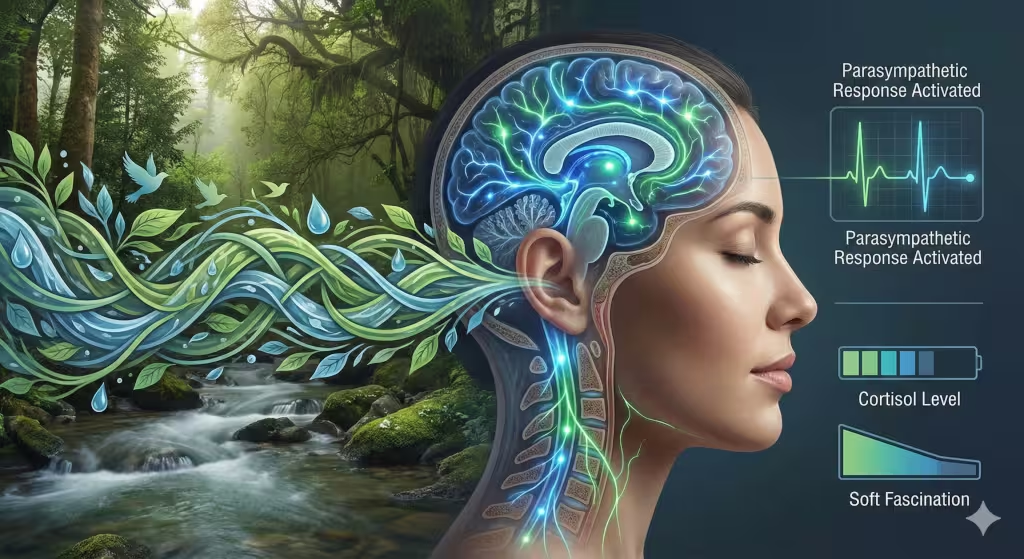
As the Design Expert at Silphium Design LLC, I find that many marketers treat audio as an afterthought. However, when we look at the evolutionary biology of the human ear, we realize that sound is our primary “warning system.” To truly understand why you should use nature sounds in social media marketing, we must look at the hard science of how our brains process the natural world versus the digital one.
The Evolutionary Roots of Audio Safety
Our ancestors lived in environments where silence was rarely truly silent. A completely silent forest is often a sign of danger—it means predators are near and the birds have stopped singing. Because of this, our brains are actually programmed to feel a slight bit of stress in total silence or in the presence of “white noise” that masks natural signals.
When we introduce nature sounds into a digital space, we are feeding the brain the data it has craved for millions of years. This is the heart of the Biophilia Hypothesis. It suggests that humans possess an innate tendency to seek connections with nature and other forms of life. When a user is scrolling through a stressful social media feed and suddenly hears the rhythmic sound of gentle waves or the specific frequency of a songbird, their brain registers a “safety signal.”
The Autonomic Nervous System Response
The most direct impact of nature sounds is on the Autonomic Nervous System (ANS). This system controls our involuntary body functions, like heart rate and digestion. It is split into two branches: the sympathetic (fight-or-flight) and the parasympathetic (rest-and-digest).+1
Most modern marketing is “sympathetic-dominant.” It uses bright colors, fast cuts, and loud, aggressive audio to grab attention by startling the viewer. While this works for a split second, it also raises the viewer’s cortisol levels. High cortisol makes people feel anxious and “on edge,” which often leads to them closing the app or scrolling away to find relief.
In contrast, nature sounds are “parasympathetic-dominant.” When these soundwaves hit the eardrum, they send a message to the amygdala (the brain’s emotional center) that the environment is secure. This shift allows the heart rate to slow down and breathing to become more regular. For a marketer, this is a gold mine. A relaxed customer is a customer who is capable of processing complex information and forming a positive emotional bond with a brand.
Spatial Awareness and the “Prospect-Refuge” Balance
In my work with biophilic design, we often talk about “Prospect and Refuge.” This is the idea that humans feel best when they have a wide view of their surroundings (prospect) but also feel physically protected (refuge). Nature sounds can actually create these feelings digitally.
- Creating Prospect: Open-air nature sounds, like the sound of wind over a plain or distant thunder, create a sense of vastness. This makes the viewer feel like they are part of something larger, which is excellent for travel or outdoor brands.
- Creating Refuge: “Close-in” nature sounds, such as rain hitting a leaf near a microphone or the crackle of a small campfire, create a sense of intimacy and safety. This is perfect for home goods, skincare, or wellness brands that want to make the user feel “tucked in” and pampered.
The Psychoacoustics of Fractal Patterns
Nature sounds are mathematically different from man-made noises. Most human-made sounds, like a car engine or a hum from an air conditioner, are “flat” or repetitive in a way that the brain finds boring yet irritating. Nature sounds, however, are “self-similar.” This means the pattern of a single wave crashing is similar to the pattern of the entire ocean over an hour.
These are known as fractal patterns. Our brains are incredibly efficient at processing fractals because our entire visual and auditory history is based on them. When you use nature sounds in your marketing, you are reducing the “cognitive load” of your audience. Cognitive load is the amount of mental effort being used in the working memory. By using nature sounds that are easy for the brain to process, you leave more “room” in the customer’s mind to focus on your actual marketing message.
Avoiding “Acoustic Masking” Fatigue
One of the biggest mistakes in digital marketing is “acoustic masking.” This happens when a video has too many overlapping sounds—loud music, a voiceover, and sound effects all playing at once. This creates a “wall of sound” that the brain perceives as a threat or a nuisance.
By integrating nature sounds as the foundational layer of your audio, you provide a “natural floor” for your content. Nature sounds can mask the harshness of a voiceover or the “tinny” quality of phone speakers. This creates a much higher quality of “perceived value.” A video that sounds like a forest feels more expensive and professional than a video that sounds like a recording studio, because it taps into the high-definition reality of the physical world.
Terms in Biophilic Audio Science
| Term | Scientific Function |
| Circadian Rhythms | Nature sounds can help align a user’s internal clock, making morning ads feel more energetic and evening ads feel more relaxing. |
| Stochastic Resonance | The phenomenon where a certain level of background “nature noise” actually helps the brain hear a primary message (like a voiceover) more clearly. |
| Thalamocortical System | The part of the brain that filters out “useless” noise. Nature sounds pass through this filter easily because they are recognized as “useful” biological data. |
| Heart Rate Variability (HRV) | A measure of health and stress. Nature sounds have been proven to improve HRV in listeners within minutes. |
By grounding your social media strategy in these biological truths, you aren’t just making “pretty” content. You are engineering a digital environment that respects the biological needs of your audience. This is the ultimate form of “Design Thinking,” using the ancient wisdom of nature sounds to solve the modern problems of digital fatigue.
Strategic Marketing Advantages: Beyond the Vibe

Using nature sounds is not just about making people feel good; it is about getting results. One of the biggest benefits is something called the “Green Nudge.” Researchers have found that when people hear nature sounds, they are more likely to buy products that are sustainable or organic. If you are selling something that is good for the earth, nature sounds act as a subconscious signal. They remind the customer of the environment and make the “green” choice feel more natural. This works especially well for food, clothing, and home goods.
Another major benefit is increased dwell time. Dwell time is the amount of time someone spends looking at your content. Most people decide to skip an ad in less than two seconds. However, nature sounds create a different reaction. Instead of triggering the urge to skip, they encourage the viewer to linger. The calming effect of nature sounds makes the “digital environment” of the social media feed feel like a place where the user wants to stay. When people stay longer, they learn more about your brand and are more likely to take action.
Sonic branding is another area where nature sounds shine. Most brands use a catchy jingle or a specific voice. But a brand can also own a specific soundscape. Imagine a skincare brand that always uses the sound of a specific forest in its videos. Over time, customers will hear those nature sounds and immediately think of that brand and the feeling of being pampered. This creates a deep, emotional connection that is much stronger than just a logo or a slogan. It builds trust because nature sounds feel honest and organic.
Common Questions About Sound in Marketing
When people start looking into this topic, they often ask: “How do nature sounds affect consumer behavior?” The answer is that they change how we make decisions. When we are stressed, we make fast, impulsive choices, or we simply avoid making a choice at all. When nature sounds help us relax, we move from “avoidance” behavior to “approach” behavior. We become more open to new ideas and more willing to look at the details of a product. This leads to better decision-making and higher satisfaction for the customer.
Another common question is: “What are the best nature sounds for advertising?” This depends on what you want to achieve. Sounds like rain or wind are called “stochastic” sounds. They are great for blocking out other noises and creating a sense of privacy and focus. “Biological” sounds, like birdsong or the sounds of animals in a forest, are better for signaling safety and happiness. If you want to sell a relaxing vacation, you might use the sound of ocean waves. If you want to sell a productive tool for work, the sound of a gentle rain might be better because it helps with focus.
People also wonder if background noise can improve marketing. It is important to know the difference between “noise” and a “soundscape.” Noise is usually annoying and random, like traffic or a loud office. A soundscape made of nature sounds is designed and balanced. It shouldn’t be too loud. If the nature sounds are blaring, they will have the opposite effect and cause stress. The goal is to use nature sounds at a level where they are felt more than they are heard.
Tactical Implementation: How to Use Nature Sounds Effectively
To get the best results, you need to know how to add nature sounds to your content correctly. The first rule is to match the audio with the visuals. In biophilic design, we talk about “Prospect and Refuge.” A “prospect” view is a wide-open space, like a mountain top. If your video shows a wide view, you should use nature sounds like the wind or birds that sound far away. “Refuge” is a cozy, protected space, like a small cabin in the woods. For these visuals, you might use the sound of a crackling fire or rain on a roof. When the eyes and the ears match, the brain believes the experience is real.
You also have to be careful with the volume. Nature sounds should be a subtle layer in your video. They are meant to sit in the background and support your message, not distract from it. If a customer has to turn down their volume because your birdsong is too loud, you have lost the benefit. The best way to use nature sounds is to fade them in gently at the beginning of the video. This helps the user transition from the noisy feed into your calm space.
It is also important to give the user control. Many social media apps start videos on mute. You should design your video so that it still looks beautiful without sound, but has a “sound on” icon that invites people to listen. You might even use text on the screen that says, “Listen to the forest,” to encourage them to click. This makes the nature sounds feel like a gift rather than an interruption.
Many people confuse ASMR with biophilic sounds. ASMR stands for Autonomous Sensory Meridian Response. It usually involves very close-up sounds like whispering or tapping that give people a “tingle” feeling. While ASMR can be relaxing, nature sounds are different. Nature sounds are about “restoration.” They aim to heal the mind and restore focus, rather than just providing a physical sensation. For most brands, nature sounds are a safer and more professional choice than ASMR.
Case Studies: Nature Sounds in the Real World
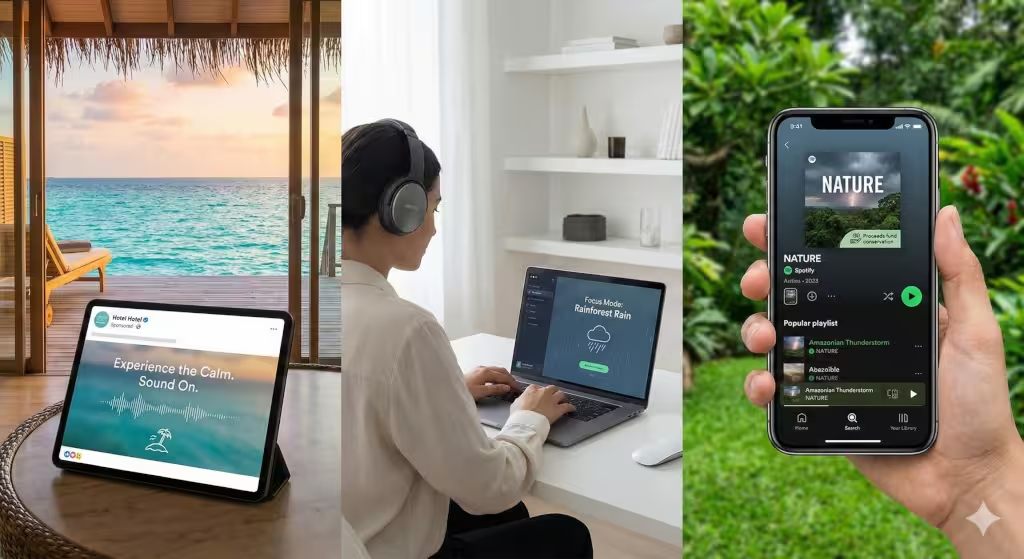
We are starting to see some amazing examples of brands using nature sounds in social media marketing. One of the best examples is the “Sounds Right” campaign by the Museum for the United Nations and Spotify. They officially named “NATURE” as an artist on the streaming platform. This means that when you listen to tracks featuring nature sounds, like rain or rainforest noises, the money from those plays goes toward helping the environment. This campaign worked because it turned something people already liked doing—listening to nature sounds—into a way to help the planet.
In the hospitality industry, hotels often use nature sounds in their social media ads to show how peaceful their locations are. Instead of just showing a picture of a room, they will post a 15-second video of a balcony with the real nature sounds of the ocean or the mountains. This helps the customer “feel” like they are already there. It makes the dream of a vacation feel much more real than a static photo ever could.
Even tech companies are starting to use nature sounds. Some apps that help people focus or work better use “Brown Noise” or “Pink Noise,” which are similar to the sounds of heavy rain or a waterfall. By using these nature sounds in their marketing, they show that they understand how the human brain works. They are positioning themselves as a tool for health and productivity, not just another piece of software.
Engineering the Future of Digital Biophilia
As we look toward the future, the internet is only going to get busier. More brands are fighting for a smaller piece of our attention. This is why using nature sounds is such a powerful strategy. It allows you to step away from the noise and speak to your customers in a way that is kind to their brains. By choosing to use nature sounds in social media marketing, you are showing that you value the well-being of your audience.
At Silphium Design LLC, we believe that the best design is always human-centered. We have to remember that we are biological beings. We were made to thrive in the presence of nature. When we bring nature sounds into our digital lives, we are closing the gap between technology and our natural selves. This leads to more trust, better engagement, and a more sustainable way of doing business. Whether you are selling a product or sharing a story, nature sounds can help you create a digital space that feels like home.
Related Terms
| Entity | Role in Social Media Marketing |
| Cortisol | The stress hormone that nature sounds help to reduce. |
| Soft Fascination | A mental state that allows the brain to rest while listening to nature sounds. |
| Biophilia Hypothesis | The idea that humans have an innate love for nature and nature sounds. |
| UX Design | The practice of making digital experiences better using nature sounds. |
| Green Nudge | A way to encourage eco-friendly buying habits through nature sounds. |
By following these principles, you can turn your social media presence into a restorative oasis. Start experimenting with different nature sounds today and see how your audience responds to the power of the natural world.