
The Bio-Digital Convergence
Have you ever felt like you have been inside for way too long? Maybe you have spent all day looking at a glowing screen in a room with no windows. Your eyes feel tired, your head hurts, and you just feel “off.” This is a real problem for many people today. Most of us spend nearly all our time indoors. We are slowly losing our connection to the trees, the wind, and the sun. This loss of connection is what some experts call a nature deficit. But what if the same screens that keep us inside could also bring us back to nature?
This is where the magic of biophilia comes in. The word biophilia means a love of life or living systems. It is the idea that humans have a built-in need to be near nature. At Silphium Design LLC, we believe that we do not have to choose between technology and the natural world. We can use them together. By exploring biophilia in virtual reality experiences, we are finding new ways to help people feel better. We are building digital gardens and virtual forests that trick your brain into feeling like you are actually outside.
Virtual reality, or VR, is not just for video games anymore. It is becoming a powerful tool for wellness. When you put on a VR headset, you can step out of your office and into a mountain meadow. You can hear the birds and see the grass sway. Even though it is made of pixels, your body starts to relax.
In this article, we will look at how this works and why it is the future of design. We will explore the science, the tools, and the many ways that biophilia can change our digital lives for the better.
Table of Contents
The Science of Virtual Restoration
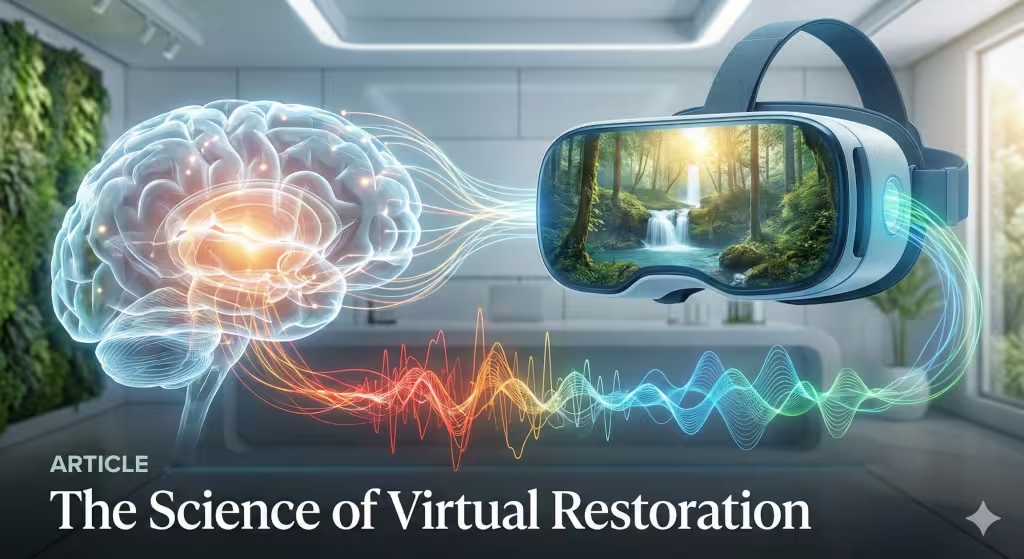
To understand why biophilia works in a headset, we have to look at how our brains are wired. For thousands of years, humans lived outside. Our eyes and ears evolved to process the patterns of the forest and the sounds of the ocean. When we see these things, our bodies naturally calm down. This is the heart of biophilia. It is not just a “nice to have” feeling; it is a biological requirement.
One big theory in this field is called Attention Restoration Theory. It says that the kind of focus we use at work—like staring at a spreadsheet—tires out our brains. But when we look at nature, we use a different kind of focus. This is called “soft fascination.” It is the feeling of watching clouds drift or leaves flutter. This type of focus lets our brains rest and recharge. When we use VR for biophilia, we are giving people a way to find that soft fascination anywhere.+1
Another science point is Stress Recovery Theory. Scientists have found that just looking at pictures of nature can lower your heart rate. In VR, this effect is even stronger. Because VR surrounds you, your brain starts to believe you are actually there. This is called “presence.” When you feel present in a virtual forest, your body reacts as if it were a real forest. Your stress levels drop and your mood improves. This shows that the benefits of biophilia are not limited to the physical world.
The Pillars of Biophilic VR Design
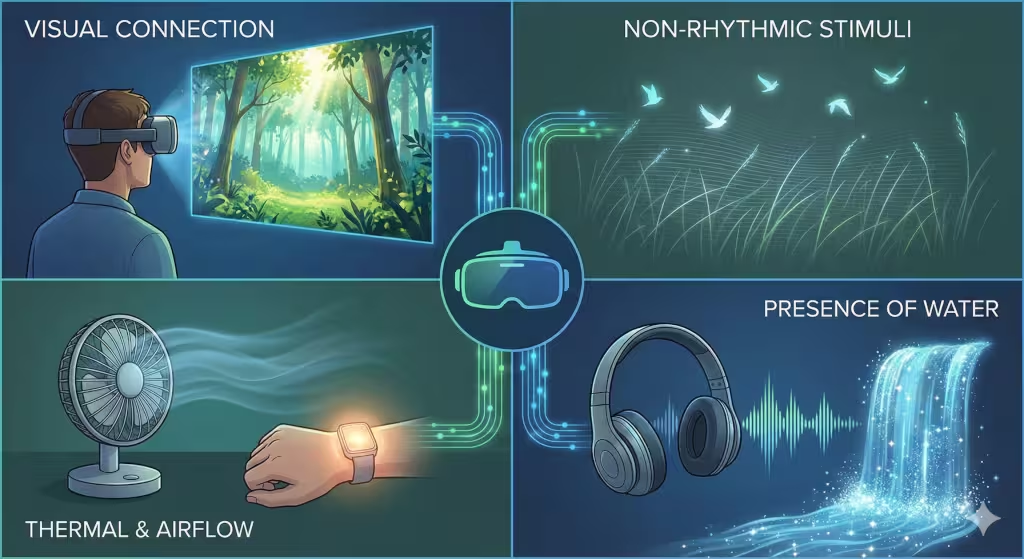
When a designer produces a biophilic experience, they follow a few main rules. These rules help make the virtual world feel real to your body. The first rule is a visual connection with nature. This means the trees and plants must look alive. They should not be static like a painting. They need to move.
The second rule is called non-rhythmic sensory stimuli. In the real world, nature is always moving in ways we cannot predict. A bird might fly by, or a leaf might fall. If a VR world is too perfect or still, it feels fake. By adding these small, random movements, we satisfy the brain’s need for biophilia.
The third rule is about the other senses. While VR is mostly about sight, we also use spatial audio. This is sound that seems to come from a specific spot. If you turn your head, the sound of the waterfall should move to follow your ears. We also look at things like “virtual” air and heat. Some high-tech setups use fans to blow a light breeze on you while you are in the headset. This mix of senses makes the biophilia experience much deeper and more helpful for your health.
Implementing “The 14 Patterns” in Virtual Spaces
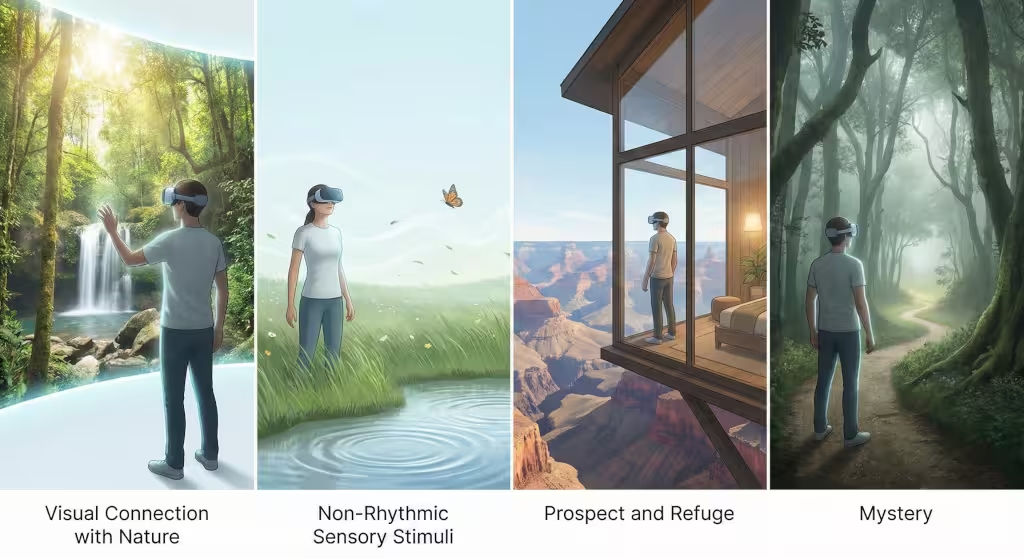
There is a famous list called the 14 Patterns of Biophilic Design. These are tricks that architects use to make buildings feel more natural. We use these same patterns when exploring biophilia in virtual reality experiences. One of the coolest patterns is fractals. Fractals are shapes that repeat themselves in different sizes, like the branches of a tree or the veins in a leaf. Our brains love fractals because they are common in nature. In VR, we can create perfect digital fractals that make a space feel very biophilia friendly.
Another pattern is “Prospect and Refuge.” This is the feeling of being in a safe, cozy spot (refuge) while looking out over a big, open area (prospect). Think of a cave looking out over a valley. This makes us feel safe and powerful at the same time. In a virtual world, we can design a small cabin with a huge glass window looking at the mountains. This uses biophilia to make the user feel secure and relaxed.
We also use patterns like “Complexity and Order.” Nature is very busy, but it is not messy. It has a hidden order. We make sure our virtual gardens have lots of details, like different types of grass and small insects, so the brain stays interested. By using all 14 patterns, we can create a digital world that feels just as restorative as a real park.
Technical Applications and Case Studies
So, where do people actually use this? One big area is healthcare. Hospitals can be scary and gray. Many patients cannot go outside. By using VR headsets, doctors are helping patients escape to a virtual beach. This use of biophilia helps lower pain and anxiety without using extra medicine. It is a form of “digital sedation” that is making a huge difference in how people recover.
In the corporate world, offices are using biophilia to help workers. Some companies have “restorative break rooms” where employees can put on a headset for ten minutes. They step into a quiet forest, breathe deeply, and then go back to work feeling fresh. This isn’t just a trend; it’s a way to fight burnout.
City planners are also using these tools. Before they build a new park or a biophilia inspired building, they can test it in VR. They can see how the light hits the plants or how people feel walking through the space. This helps them create better, more natural cities for everyone to live in. At Silphium Design LLC, we see these case studies as proof that biophilia belongs in every part of our lives.
The Hardware of Biophilia
To get the most out of biophilia in VR, the equipment has to be good. It is not just about the screen. Spatial audio is one of the most important parts. If you hear a bee buzzing behind your left ear, you will truly feel like you are in a garden. This kind of sound makes the biophilia experience feel 3D and real.
There is also new technology called haptic feedback. This involves vests or gloves that let you “feel” things. Imagine reaching out to touch a virtual tree and feeling the rough bark on your fingertips. Or imagine feeling the “thump” of a raindrop. This physical touch takes biophilia to a whole new level. It closes the gap between the digital and the physical.
We are even seeing the start of olfactory technology. This is “digital scent.” A small device on the headset can release the smell of pine needles or salty sea air. When you combine sight, sound, touch, and smell, the biophilia effect is incredibly strong. It is like a vacation for your brain that you can take without leaving your chair.
Questions Answered about Biophilia and Virtual Reality
Many people have questions when they first hear about exploring biophilia in virtual reality experiences. Here are some of the most common ones:
Can VR nature really replace real nature?
The short answer is no. Nothing can truly replace the feeling of real sunlight and fresh air. However, biophilia in VR is a great “supplement.” If you are stuck in a hospital or a city with no parks, VR is much better than nothing. It provides a real biological “reset” for your brain.
Does it cause motion sickness?
Some people do feel a bit dizzy in VR. However, biophilic environments are usually very calm. There are no fast movements or roller coasters. This makes them much easier for most people to enjoy.
How long do I need to stay in VR to feel better?
Research shows that even five to ten minutes of a biophilia rich environment can lower your stress. It is like a “power nap” for your nervous system. You don’t need to spend hours in the headset to see the benefits.
Challenges: The Multisensory Gap
While we love the potential of biophilia in VR, there are still some hurdles. One is the “realism paradox.” Sometimes, if a virtual tree looks too real but doesn’t move quite right, it can feel creepy. This is called the “uncanny valley.” We have to be careful to design things that feel natural, even if they aren’t perfect copies of reality.
Another challenge is the “multisensory gap.” This happens when your eyes see one thing but your body feels another. For example, if you see a warm sun in the VR world but your room is freezing cold, your brain might get confused. This can break the feeling of biophilia. Designers have to work hard to make sure everything matches up.
We also have to think about the ethics. We don’t want people to stop caring about real forests because they have a “perfect” one in their headset. The goal of biophilia in VR should be to remind us how much we love nature so that we want to protect the real world even more.
The Future: AI-Generated Ecosystems
The future of exploring biophilia in virtual reality experiences is very exciting. We are starting to use Artificial Intelligence (AI) to build these worlds. Instead of a designer drawing every leaf, an AI can grow a forest that changes every time you visit. This makes the biophilia feel more like the real world, where nothing stays exactly the same.
We can also use “Generative Biophilia.” This means the virtual world can listen to your body. If a sensor sees that your heart rate is high, the VR world can become calmer. The sun might set, the music might get softer, and more flowers might bloom. The environment actually heals you in real-time.
This kind of smart biophilia will make digital spaces feel like living partners. Your “home” in the metaverse could be a garden that grows and changes based on your mood. At Silphium Design LLC, we are working to make sure these future worlds are built with the heart of nature in mind.
Reconnecting in a Disconnected World
In the end, biophilia is about remembering who we are. We are creatures of the earth, even when we live in a world of glass and steel. Exploring biophilia in virtual reality experiences gives us a bridge. It lets us bring the healing power of the forest into the spaces where we spend most of our time.
Whether it is a hospital room, a busy office, or a small apartment, VR can open a window to the wild. It reminds us that nature is not just “out there”—it is a part of us. By using the science of biophilia, we can design a digital future that is healthy, happy, and full of life. The pixels on our screens don’t have to keep us away from the world; they can be the very things that lead us back to it.
A List of Hardware for VR Experiences
At Silphium Design LLC, we know that the right tools are just as important as the design itself. To truly feel the benefits of biophilia, you need hardware that can keep up with the beauty of nature. The following list features the best gear for anyone exploring biophilia in virtual reality experiences.
The “Eyes”: High-Resolution VR Headsets
To see a digital forest and believe it is real, your screen needs to be crystal clear. These headsets offer the best visual fidelity for biophilia enthusiasts.
The Meta Quest 3 is the best all-around choice for biophilia. It has a fast processor and high-resolution screens that make every leaf and flower look sharp. It also lets you see your real room at the same time, which is great for “mixed reality” biophilia where you can place virtual plants on your actual desk.
For those who want the absolute best, the Apple Vision Pro is like a “spatial computer” for your face. It has a micro-OLED display with millions of pixels, making virtual nature look nearly indistinguishable from the real thing. It is the ultimate splurge for a high-end biophilia setup.
The “Body”: Haptic Vests for Tactile Nature
A big part of biophilia is the sense of touch. If you can feel the rain hitting your shoulders or the rumble of a distant thunderstorm, your brain will relax even more.
The Woojer High-Fidelity Haptic Vest 4 uses special vibrations to let you “feel” sound. When you wear this in a virtual forest, you can feel the low-frequency sounds of wind and wildlife moving through your body. This makes the biophilia experience feel much more “physical.”
The “Ears”: Spatial Audio Headphones
Sound is a major trigger for biophilia. You need headphones that can place sounds all around you, so that a bird chirping behind you actually sounds like it is behind you.
The Sony WH-1000XM6 is a top-tier choice because of its amazing noise canceling. It blocks out the “unnatural” noises of your house, like the fridge or the AC, so you can focus entirely on the sounds of nature. It also supports spatial audio, which is vital for biophilia.
Another fantastic option is the Bose QuietComfort Ultra. These are widely considered the most comfortable headphones available, which is perfect for long, relaxing sessions in a virtual garden. Their “Immersive Audio” mode makes nature sounds feel like they are coming from the room around you.
The “Nose”: Scent Dispensers
While harder to find, digital scent technology is the “final frontier” for biophilia. A company called OVR Technology makes a device called the ION. It is a small gadget that clips onto your headset and releases precise scents like pine needles, fresh rain, or sea salt. Adding the sense of smell makes biophilia in VR feel 100% complete.
Our Final Tip
If you are just starting out, I recommend beginning with a good headset and a comfortable pair of headphones. You can always add the haptic vest later! The goal is to remove as many “digital” distractions as possible so your brain can fully embrace the biophilia effect.
I can also look into specific VR software or “virtual nature apps” that work best with this hardware if you’d like. Would you like me to find the top-rated apps for nature meditation and stress relief?