
As an expert in Biophilic Design with a background in Web Design and Biology, I look at space the way a scientist looks at a cell. Every part must have a job. Every empty spot must serve a purpose. In my work at Silphium Design LLC, I have seen how the right layout can change how we feel and how we work. Whether it is a house in the woods or a website on a screen, the way we use space matters for our health and our success.
Table of Contents
The Biological Basis for Minimalism

The biological basis for minimalism is found in how our brains and bodies have evolved over millions of years. Nature is the ultimate teacher of efficiency. In the wild, no animal or plant wastes energy on something that does not help it survive. Every thorn on a rose or feather on a bird has a job. This is the main concept of minimalist design.
The Law of Energy Conservation
In biology, we often talk about metabolic cost. This is the amount of energy a body needs to stay alive. Our brains are very “expensive” to run. Even though the brain is small, it uses about 20% of all the energy our body makes. When we enter a room filled with clutter, or look at a website with too many flashing ads, our brain has to work overtime to sort through all that data.
Minimalist design reduces this energy cost. By using a minimalist design, we remove the “noise” that the brain has to filter out. This leaves more energy for important things, like making decisions or relaxing. This is why you feel a sense of relief when you walk into a clean, empty room. Your brain is literally using less electricity to process the view.
The Concept of Visual Homeostasis
Homeostasis is a biological state of balance. Your body wants its temperature and heart rate to stay in a safe range. Your mind also seeks a visual balance. When an environment is too complex, it creates a state of high arousal or stress. This triggers the release of cortisol, which is the body’s stress hormone.
A minimalist design helps maintain visual homeostasis. It uses clean lines and open spaces to keep the nervous system calm. Digital environments act just like physical ones. A website using minimalist design creates a “soft fascination,” which is a term we use in environmental psychology. It means the environment holds your attention without making you feel tired. This is one of the biggest benefits of minimalist design in space utilization.
Fractal Efficiency and Neural Processing
While minimalist design often looks “plain” to some, it actually relies on the math of nature. Nature uses fractals, which are patterns that repeat at different sizes. Our eyes are tuned to find these patterns instantly. When we use minimalist design to highlight a few natural patterns, like the grain in a wood floor or the way light hits a wall, we are speaking a language our DNA understands.
If a space is too crowded, these natural patterns get lost. By using minimalist design, we clear the stage so these restorative patterns can shine. This is why biophilic design and minimalist design work so well together. They both aim to create a space that feels “right” to a biological being. Whether we are building a house in Boston or a new interface for Silphium Design LLC, we are trying to match the design to the way human biology actually works.
The Adaptive Response to Space
Finally, we have to look at how humans evolved in the African savanna. We prefer spaces that offer “prospect and refuge.” This means we like to see what is coming (prospect) while feeling safe and tucked away (refuge).
A minimalist design provides excellent prospect because there are no piles of clutter blocking the view. It allows the eyes to sweep across a room or a screen and understand the layout in milliseconds. This speed of understanding makes us feel safe and in control. When we use minimalist design to organize space, we are satisfying a deep, ancient need for clarity and safety.
Would you like me to dive deeper into how “Visual Homeostasis” can be specifically measured using eye-tracking software on a minimalist website?
Spatial Efficiency: Maximizing Physical ROI
In the world of buildings, ROI stands for Return on Investment. Usually, this means money. But in minimalist design, ROI also means how much joy and use you get out of every square foot. One of the best ways to get a high ROI is through an open floor plan. By taking down walls, we let light and air move freely. This is a core part of minimalist design. It makes a small house feel much bigger than it really is.
Negative space is another big tool. People often think negative space is just “empty” space. But in minimalist design, negative space is like the silence between notes in music. It gives the eye a place to rest.5 It also makes it easier to walk through a room. This is what we call physical flow. When you don’t have to dodge a chair or a pile of books, you feel more relaxed.
We also use multifunctional geometry. This means furniture that does two or three jobs. A bed might have drawers underneath. A table might fold up against the wall. This kind of minimalist design helps us keep only what we need. It makes our spaces denser with purpose but lighter in feel. When every item has a clear job, the room becomes a tool for better living.
Digital Space Utilization: UX and Cognitive Load
As a web designer, I know that minimalist design is just as important on a screen as it is in a house. We call the space on a website “white space.” Just like negative space in a room, white space helps the user focus. If a website has too many buttons and pictures, the user gets confused. This is called cognitive load. It means the brain is carrying too much weight.
Minimalist design for websites is a technical strategy. It is not just about looking “cool.” When a site uses minimalist design, the code is often cleaner. This makes the page load faster. Speed is very important for search engines like Google. They track things like PageSpeed Insights and Core Web Vitals. If your site is slow because it has too much “digital clutter,” people will leave. A minimalist design helps keep the “bounce rate” low because users can find what they need quickly.
This is also great for AEO, or Answer Engine Optimization. Today, many people ask robots like Alexa or Siri for answers. These robots like simple, clear data. A website that uses minimalist design is easier for these robots to read. By focusing on the essentials, you make your content easier to find and easier to understand.
The Biophilic Bridge: Natural Minimalism
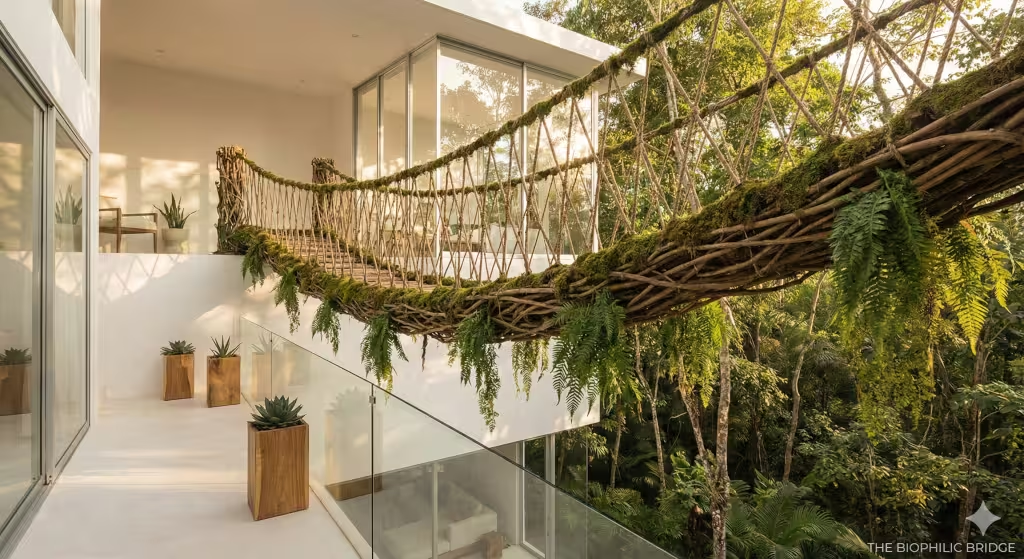
The biophilic bridge is the connection between the human need for nature and the clean focus of minimalist design. At Silphium Design LLC, I often tell clients that minimalism is the canvas, and biophilia is the paint. Without minimalist design, the beauty of nature gets lost in the noise. When we use space well, we create a bridge that lets the outdoors come inside, which is vital for our health as biological beings.
The Power of Material Honesty
Minimalist design works best when it does not try to fake anything. Material honesty means letting a piece of wood look like wood and a stone floor look like stone. We do not need extra paint, wallpaper, or plastic covers.
When you use minimalist design to highlight raw materials, you are practicing biophilia. Humans have a deep, genetic connection to natural textures. Touching a smooth wooden desk or seeing the grain in a marble counter can actually lower your heart rate. By using minimalist design to clear away plastic and synthetic clutter, we make room for these honest materials to speak to our senses.
Circadian Lighting and Spatial Transparency
One of the most technical benefits of minimalist design in space utilization is how it handles light. As a biologist, I know that our bodies have an internal clock called the circadian rhythm. This clock tells us when to wake up and when to sleep based on the blue and yellow light from the sun.
Minimalist design often uses large, unobstructed windows and open floor plans. This is not just for looks. It allows natural light to reach deep into a building. When we remove heavy curtains and unnecessary walls, we maximize the amount of sunlight that hits our eyes. This keeps our sleep cycles healthy and our moods high. In a digital sense, we can mimic this on a “natural website” by using colors that shift slightly based on the time of day, creating a screen experience that feels in sync with the real world.
Fractal Patterns in Simple Spaces
Nature is full of patterns called fractals. You see them in the way a tree branches out or the way a snowflake forms. Our brains are hard-wired to process these patterns very quickly and easily. When a room is crowded with too many different shapes, the brain gets tired.
A minimalist design allows us to pick one or two natural patterns and give them the space they need. For example, a single large plant in a minimalist room creates a focal point that is easy for the brain to digest. Because the rest of the space is simple, the complex beauty of the plant stands out. This “fractal efficiency” is a core part of how we use minimalist design to make spaces feel restorative rather than draining.
The Role of Indoor Air and Vegetation
You cannot have a true biophilic bridge without plants. However, in minimalist design, we do not just throw plants everywhere. We use them as part of the architecture. A “living wall” or a few well-placed pots can act as natural air filters. They take in carbon dioxide and release oxygen, making the air in the room fresher.
By using minimalist design to limit the number of objects in a room, we actually improve the air quality. Less furniture and less “stuff” means fewer places for dust and allergens to hide. This makes the space healthier to breathe in. In the digital world, we think of this as “clean code.” Just as a minimalist room has fresh air, a minimalist website has a “clean” feel that allows the user to breathe and think clearly.
Prospect and Refuge: The Savanna View
As I mentioned earlier, humans evolved on the open plains. We like to feel protected but also able to see a long way. Minimalist design is the best way to achieve this. By keeping a layout open, we provide “prospect.” By using simple, sturdy materials and cozy corners, we provide “refuge.”
This balance is why minimalist design feels so right to us. It satisfies an ancient biological urge to be aware of our surroundings without being overwhelmed by them. Whether I am designing a physical office or a digital interface for Silphium Design LLC, I always use minimalist design to build this bridge. It connects our modern lives back to the natural world we came from.
Economic and Environmental Impact

Using minimalist design is good for the planet too. When we build or buy less stuff, we save resources. This fits into standards like LEED or WELL. These are rules for making buildings that are healthy for people and the Earth. By choosing high-quality items instead of many cheap ones, we reduce waste.
There is also a local benefit. In busy cities like Boston or Burlington, space is expensive. Minimalist design helps people live comfortably in smaller apartments. This is part of what we call sustainable urbanism. It means making cities work better for everyone without using up all the land.
For businesses, minimalist design can help with local SEO. If your shop or office looks clean and professional, people are more likely to visit and leave good reviews. Search engines see these reviews and show your business to more people. Whether it is a physical store or an online shop, simplicity builds trust.
Common Questions About Minimalist Design
People often have questions when they start thinking about minimalist design. Here are some of the most common ones I hear:
How does minimalist design improve well-being?
It reduces the amount of information your brain has to deal with. This lowers a stress hormone called cortisol. When you have less to look at, your mind can finally quiet down. This leads to better focus and a happier mood.
Is minimalist design practical for small living spaces?
Yes, it is the best choice for small spaces. By using vertical space and multi-use furniture, you can make a tiny room feel open. The goal is to get rid of things that don’t add value so you have more room to move.
What are the SEO advantages of a minimalist website?
A minimalist website loads much faster. Google likes fast sites. Also, because the layout is simple, it works better on mobile phones. Since most people use phones to search, having a mobile-friendly minimalist design is a huge win for your rankings.
The Benefits of Minimalist Design in Space Utilization
When we sum it all up, the benefits of minimalist design in space utilization are about freedom. You are free from the mess. You are free from the stress of having too much to do and too much to clean. In a world that is always trying to give us more, choosing less is a powerful act.
Minimalist design helps us focus on what is truly important. Whether you are designing a kitchen or a homepage, start by asking: “Do I really need this?” If the answer is no, let it go. What is left will be stronger, clearer, and more beautiful.
This approach is the future of design. As we use more technology and live in more crowded places, we need the peace that minimalist design provides. It is a way to bring the balance of nature into our modern lives.
Summary Table: The ROI of Minimalism
| Feature | Physical Space Benefit | Digital Space Benefit |
| Negative Space | Better walking flow and less stress. | Lower cognitive load and better focus. |
| Simple Lines | Easier cleaning and timeless look. | Faster page load and better mobile view. |
| Natural Materials | Connection to nature (Biophilia). | High-quality “natural” brand feel. |
| Functional Focus | Every item has a clear purpose. | Higher conversion rates (more sales). |
Technical Glossary for Design Excellence
- Cognitive Load: The amount of mental effort being used in the working memory.
- Spatial ROI: The value gained from the way a physical area is organized.
- AEO (Answer Engine Optimization): The process of optimizing content for voice assistants and AI.
- Biophilic Design: A way of designing buildings and websites that connects people to nature.
- Crawlability: How easy it is for a search engine robot to navigate your website.
The move toward minimalist design is not just a trend. It is a smarter way to build the world around us. By using these principles, we can create environments that help us thrive both online and off.