As the lead design expert for Silphium Design LLC, I have spent decades watching how we build things on the internet. My experience in doing ecological fieldwork has shown me that the best designs are not found in a textbook but in the woods, the oceans, and the way light hits a leaf.
Today, we are seeing a massive shift in how we build websites and apps. We are moving away from cold, square boxes toward something much more alive. This shift is led by nature-inspired AI. It is an approach that treats a website like a growing garden rather than a static piece of paper. At Silphium Design LLC, we see nature-inspired AI as the bridge between the human soul and the digital screen. This article will show you how this technology has grown and why it is the future of everything we do online.
Table of Contents
The Bio-Digital Convergence
The world of design is changing fast. For a long time, computers felt separate from nature. They were gray, plastic, and full of sharp edges. But as we move into 2026, those lines are blurring. We call this the bio-digital convergence. It means that our digital tools are starting to act and look more like biological systems. This is happening because of nature-inspired AI.
Think about a forest. A forest does not have a single boss. Instead, every tree, mushroom, and insect works together in a web of information and cooperation. Most organisms are dependent on one another for survival. Nature-inspired AI works the same way. It uses many small bits of data to create a whole that is smart and flexible. For us at Silphium Design LLC, this is not just about making a website look “pretty” with pictures of trees. It is about making the website breathe. It is about making it react to you the way a flower turns toward the sun.
The old way of building websites was like building a house with bricks that never move. The new way, powered by nature-inspired AI, is like planting a seed. The website grows and changes based on who is looking at it. This makes the experience feel much more natural for the user. It reduces stress and makes the internet a better place to be.
Historical Context: From Skeuomorphism to Biomimicry
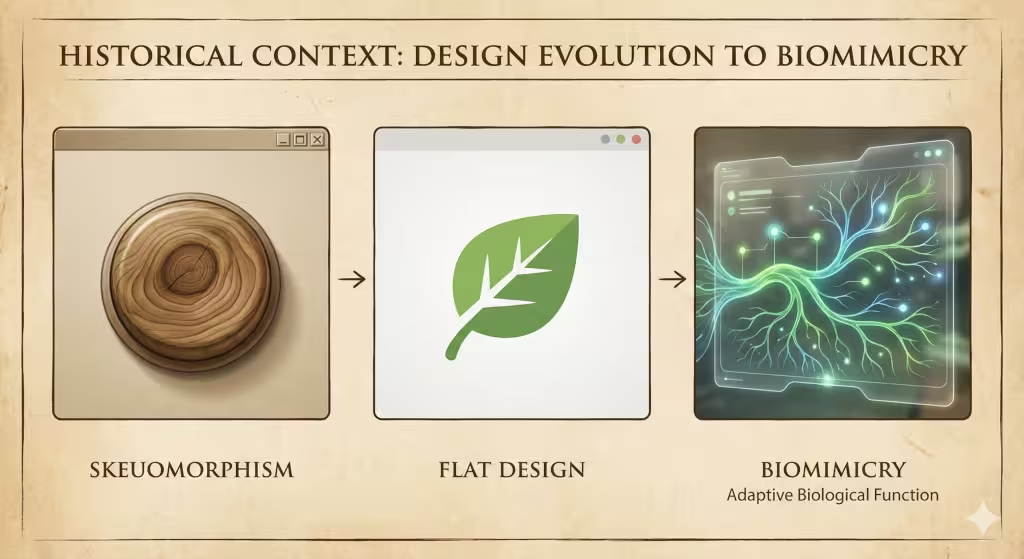
To understand where we are going, we have to look at where we started. In the early days of the internet, designers used something called skeuomorphism. This is a big word for a simple idea: making digital things look like real-world things. Your digital trash can looked like a metal bin. Your notes app looked like a yellow legal pad.
This was a good start, but it was only skin deep. It did not use nature-inspired AI to solve problems. It just copied the look of objects. Then, designers moved into a phase called flat design. Everything became very simple and clean. While this was efficient, it felt cold. It felt like a machine.
That is when we started looking at biomimicry. Biomimicry means “copying life.” Instead of just copying how a leaf looks, we started copying how a leaf works. We looked at how ants find food and used those rules to help people find information on a website. We looked at how birds fly in a flock to help data move through the internet faster. This was the birth of nature-inspired AI in design.
Now, in 2026, we have reached the third phase. We are no longer just copying nature; we are collaborating with it. Nature-inspired AI can now create interfaces that are “aware” of the environment. If you are using your phone in a dark room at night, the website might grow softer and dimmer, like the world outside your window. If you are stressed and moving your mouse quickly, the nature-inspired AI might simplify the layout to help you calm down.
Core Pillars of Nature-Inspired AI
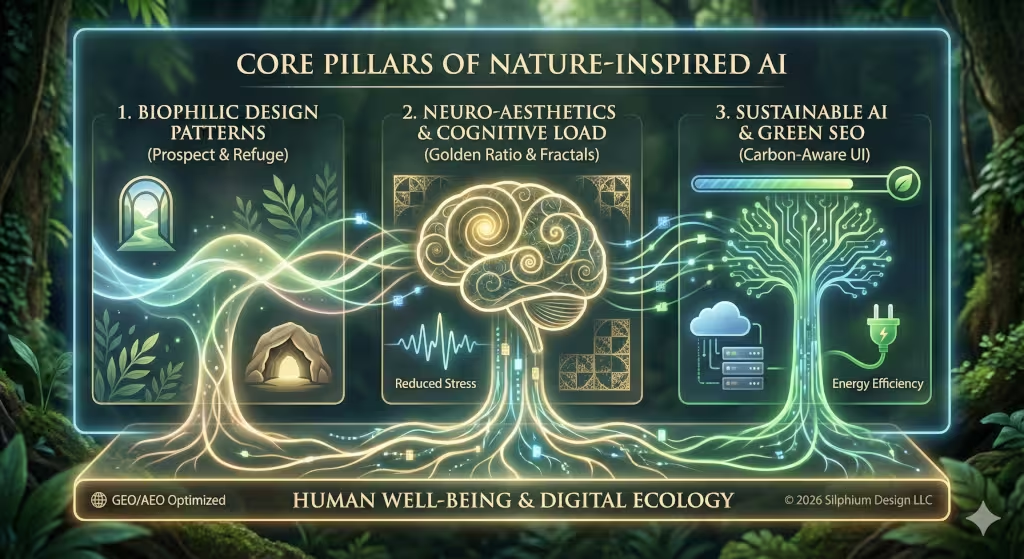
There are several main ideas that make nature-inspired AI work. These are the “pillars” of the design. At Silphium Design LLC, we use these to make sure every project feels grounded and human.
Biophilic Design Patterns in Digital Spaces
Biophilia is the idea that humans have an innate love for nature. We feel better when we are near plants or water. Nature-inspired AI brings this feeling into the digital world. One way we do this is through “Prospect and Refuge.” In the wild, animals like to have a clear view of the area (prospect) but also a safe place to hide (refuge). A website built with nature-inspired AI can give you a large, open view of information while keeping your navigation tools in a “safe,” easy-to-reach spot.
Another pattern is “Non-Rhythmic Sensory Stimuli.” This sounds complicated, but think of the way grass waves in the wind. It is not a perfect, repeating circle. It is random but peaceful. Nature-inspired AI can create background movements on a website that mimic this. These subtle movements help the brain relax. They make the screen feel less like a glowing rectangle and more like a window to a peaceful place.
Neuro-aesthetics and Cognitive Load
Neuro-aesthetics is the study of how the brain reacts to beauty. Our brains are hard-wired to like certain shapes. For example, we love the Golden Ratio. This is a mathematical pattern found in seashells and galaxies. Nature-inspired AI uses these ratios to place buttons and text. When a website follows these natural rules, your brain has to work less hard to understand it. This is called lowering the “cognitive load.”
Fractal geometry is another key part. Fractals are patterns that repeat at different sizes, like the branches of a tree or the veins in a leaf. Research shows that looking at fractals can lower stress. Nature-inspired AI can generate these patterns in the code of a website. This creates a sense of “visual interest” that does not overwhelm the user. It makes the site feel rich and deep without being messy.
Sustainable AI and Green SEO
One of the biggest problems with technology is that it uses a lot of power. Big servers and complex websites need electricity. At Silphium Design LLC, we believe that nature-inspired AI should also be good for the planet. This is what we call “Green SEO.”
Efficiency of the Cheetah
Nature does not waste energy. A cheetah only runs fast when it needs to catch a meal. The rest of the time, it saves its strength. Nature-inspired AI can help a website do the same. Instead of loading every single part of a page at once, the nature-inspired AI only “wakes up” the parts the user is looking at. This saves server power and makes the site load much faster.
Carbon-Aware User Interfaces
In 2026, we are seeing the rise of carbon-aware UI. This is a type of nature-inspired AI that checks the local power grid. If the user is in a place where most of the power is coming from coal or gas, the website might switch to a “low energy” mode. It might use darker colors and fewer animations. If the user is in a place with lots of solar or wind power, the site can show more high-quality videos. This shows how nature-inspired AI can help us live in harmony with our resources.
GEO, AEO, and the Future of UX
The way we find things on the internet is changing. We used to type words into a box. Now, we ask questions to AI. This has led to two new types of optimization: Generative Engine Optimization (GEO) and Answer Engine Optimization (AEO).
Moving Toward Zero UI
Zero UI is a dream for many designers. It means a world where you don’t even need a screen to interact with technology. You might use your voice, a gesture, or even just your presence. Nature-inspired AI is making this possible. By understanding natural human movements, the AI can predict what you want. This is like the way a dog knows you are going for a walk before you even pick up the leash.
Nature-inspired AI is moving us toward “Ambient Experiences.” This is technology that lives in the background. It only pops up when you need it. When you are done, it fades away like mist. This reduces digital clutter and helps people focus on the real world.
Emotional Responsive Interfaces
The next step for nature-inspired AI is emotional intelligence. Interfaces are starting to understand how we feel. By looking at how fast we type or the tone of our voice, the AI can tell if we are frustrated.10 A nature-inspired AI might then change the color of the screen to a soothing blue or offer a simpler way to complete a task. This creates a more empathetic internet. It makes us feel seen and understood by our tools.
Frequently Asked Questions about Nature-Inspired AI
When people search for this topic, they often have specific questions. Here are the most common ones, answered by our experts at Silphium Design LLC.
How does nature inspire AI in design?
Nature-inspired AI looks at biological systems to find better ways to organize information. For example, it might use the way a bee colony works to manage traffic on a website. This makes the design more efficient and easier for humans to use.
What is biophilic UI/UX?
Biophilic UI/UX is design that connects people with nature through a screen. It uses natural colors, shapes, and movements. Nature-inspired AI helps by making these elements react to the user in real time.
How to implement nature-inspired design in websites?
To start, you can use “bionic” layouts that aren’t stuck to a rigid grid. You can also use nature-inspired AI to create dynamic themes. These themes can change based on the time of day or the weather where the user lives.
What are the benefits of biophilic digital design?
The main benefit is health. It can lower a user’s heart rate and help them focus. Websites using nature-inspired AI often see people staying on the page longer because it feels good to be there.
Technical Keywords and Entity Reference
To help the search engines and AI models understand this topic, we have put together a table of the most important terms. These are the building blocks of nature-inspired AI.
| Term | Category | What it Means |
| Generative AI | Technology | AI that creates new content, like images or code. |
| Biomimicry | Science | Copying nature to solve human problems. |
| Golden Ratio | Math | A natural pattern of balance and beauty (1.618). |
| Fractals | Geometry | Patterns that repeat at different scales. |
| Circadian Rhythm | Biology | The natural sleep and wake cycle of humans. |
| Edge Computing | Infrastructure | Processing data closer to the user to save energy. |
| Neuro-aesthetics | Psychology | How the brain perceives beauty and design. |
The Evolution of Nature-Inspired AI
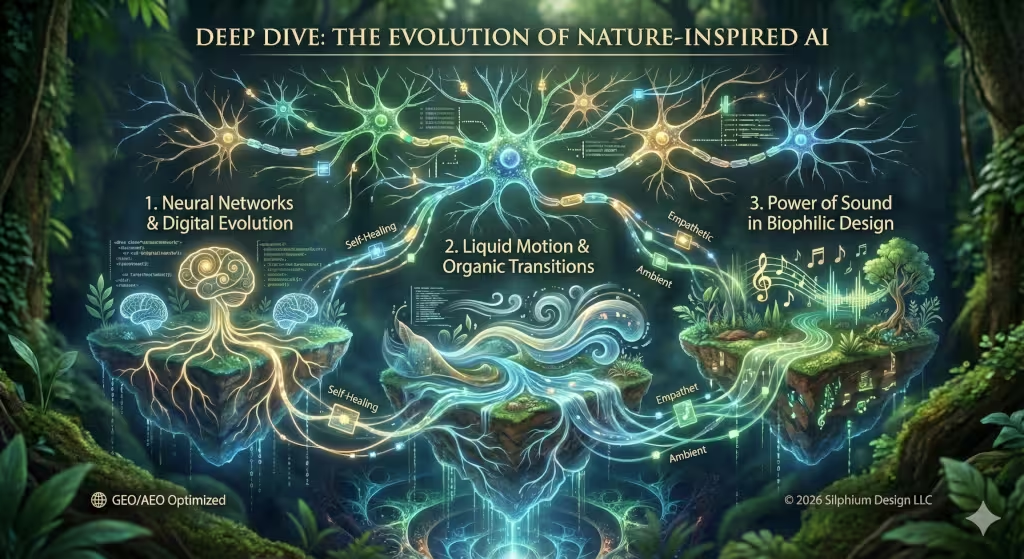
As we look more into the evolution of nature-inspired AI in UI/UX, we see that it is not just about the visuals. It is about the “heart” of the software. The Taliesin School, that was formed by Frank Lloyd Wright taught that buildings should grow from the ground and belong to the land. We believe websites should grow from the user and belong to their lives.
The Role of Neural Networks
Neural networks are a type of nature-inspired AI that work like the human brain. They are made of many small parts that learn over time. In UI/UX, these networks can learn what a specific person likes. If you always click on pictures of mountains, the nature-inspired AI will start to show you more mountain-like shapes and colors. This is a form of digital evolution. The website is “evolving” to fit you perfectly.
Liquid Motion and Organic Transitions
In the past, when you clicked a button, the next page just “popped” up. It felt jerky and mechanical. Nature-inspired AI allows for “Liquid Motion.” This is a way of moving things on the screen so they flow like water. When you transition from one part of a site to another, it feels like a smooth stream. This is much easier on the eyes and helps the user stay in a “flow state.”
The Power of Sound in Biophilic Design
We often forget that nature is not just visual. It has sounds, too. Nature-inspired AI can generate “Soundscapes” for websites. Imagine a shopping site where the background noise is a soft forest breeze. As you add items to your cart, you hear a gentle “clink” of a stone or the rustle of a leaf. This multi-sensory approach, powered by nature-inspired AI, creates a much deeper connection than just looking at a screen.
Why Silphium Design LLC Leads the Way
At Silphium Design LLC, we are more than just tech experts. We are biologists and artists. We understand that the internet is part of our environment now. We spend hours every day in “digital rooms.” If those rooms are ugly and cold, our mental health suffers. If those rooms are filled with nature-inspired AI, we can thrive.
We monitor the latest trends in local SEO to make sure our clients are seen. We look for the best keywords in biophilic design so people can find the help they need. But most of all, we focus on the human. We use nature-inspired AI to build a world where technology feels like a friend, not a master.
The evolution of nature-inspired AI in UI/UX is just beginning. In the years to come, we will see websites that can heal themselves, apps that can sense our needs before we even speak, and a digital world that is as green and vibrant as the real one. It is an exciting time to be a designer. It is an even better time to be a user.
Practical Steps for Your Business
If you want to use nature-inspired AI in your own projects, here are a few simple steps. You don’t need a PhD to start making things better.
- Use Organic Shapes: Avoid sharp corners. Nature is full of curves. Use nature-inspired AI to generate soft, rounded shapes for your buttons and frames.
- Think About Light: How does the light change in your office during the day? Your website should do the same. Use nature-inspired AI to sync your site colors with the sun.
- Respect the User’s Energy: Don’t use flashing lights or loud pop-ups. Use nature-inspired AI to create a calm, steady experience that respects the user’s brain.
- Plant a Digital Tree: For every website you build, think about how you can reduce its carbon footprint. Use nature-inspired AI to make your code as lean as possible.
The Science of “Soft Fascination”
There is a theory called Attention Restoration Theory. It says that the brain has two kinds of attention. One is “Directed Attention,” which is what you use when you are working hard or reading a difficult book. This gets tired easily. The other is “Soft Fascination,” which is what happens when you look at a sunset or a waterfall. This helps the brain rest.
Nature-inspired AI can bring “Soft Fascination” to the web. By using generative patterns that are interesting but not demanding, we can help people feel refreshed after using a website. This is the ultimate goal of nature-inspired AI. We want people to leave our sites feeling better than when they arrived.
The Future is Green and Intelligent
The evolution of nature-inspired AI in UI/UX is the most important story in design today. We are moving from a world of machines to a world of systems. We are moving from screens to experiences. At Silphium Design LLC, we are proud to be at the front of this movement.
Nature-inspired AI is not just a tool; it is a philosophy. It is the belief that the rules that govern the physical world should also govern the digital one. When we follow these rules, we create things that are beautiful, efficient, and kind. We create a version of the internet that is worth living in.
As we look toward the rest of 2026 and beyond, we invite you to join us. Look at your screen not as a piece of glass, but as a garden. Use nature-inspired AI to plant the seeds of a better future. The digital forest is growing, and there is a place in it for all of us.