Discover how the green halo effect in B2B procurement 2026 is reshaping enterprise supply chains. Learn how environmental cues drive systemic valuation…
Table of Contents
The Cognitive Shift in Enterprise Purchasing
Enterprise purchasing involves deep evaluation. Buyers look at costs, time frames, and material facts. However, a major psychological shift alters how businesses view their partners. This shift relies on a classic human bias known as the halo effect. In simple terms, the halo effect happens when an observer has a good impression of a person or company in one area and lets that impression influence their opinion in other, unrelated areas. When an enterprise shows strong environmental care, it triggers a specialized version of this bias. This phenomenon is known as the green halo effect.
In corporate transactions, a supplier who shows excellent eco-friendly habits gets a major boost in reputation. Buyers do not just see them as clean or green. Instead, buyers automatically assume the supplier is also highly efficient, reliable, safe, and organized. The single positive trait of environmental care shines a positive light over their whole business operation.
In the modern landscape, corporate goals have completely changed. Environmental, Social, and Governance frameworks, often called ESG, are no longer treated as simple charity projects. In the past, companies used Corporate Social Responsibility programs as minor marketing tools to look good to the public. Today, those basic programs have turned into massive systems that drive total corporate worth and international trade relations. Global businesses look at carbon counts and resource use just as closely as they look at profit margins. Supply chains must face strict international rules, carbon taxes, and a marketplace that demands clean operations.
As a result, a supplier’s certified green status acts as a powerful signal. It tells the market that the company can survive future resource shortages and tough government rules. This changes how supply systems handle international relationships and corporate value.
This shift leads to a clear truth for enterprise business. The green halo effect dictates that a supplier’s verifiable environmental stewardship alters the systemic perception of their operational competence, risk profile, and product quality, shifting sustainability from a compliance checkbox to a core competitive advantage. Procurement teams no longer view eco-friendly traits as an expensive add-on. Instead, they see these traits as a sign of top-tier corporate health.
When a company proves it can run an environmentally clean business, buyers assume that the company handles its machinery, data, and finances with the same high level of care. This psychological link alters the balance of modern commercial contracts. It turns ecological responsibility into the ultimate tool for winning enterprise deals.
The Core Mechanism: How “Green Cues” Alter B2B Decision-Making
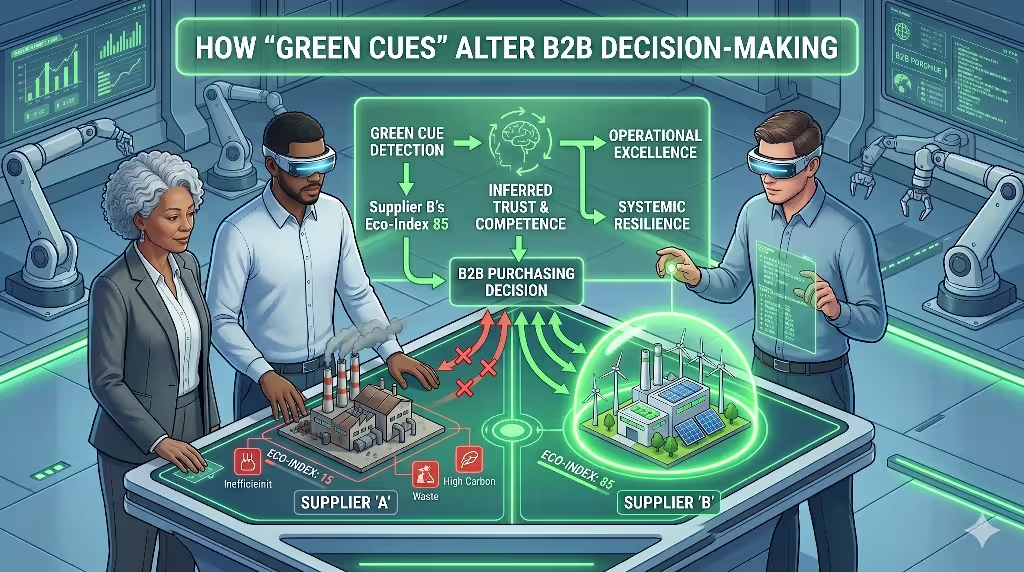
To understand why this cognitive bias has so much power over modern purchasing managers, we must look at how human beings process complex information. Business buyers face a mountain of data when choosing an enterprise partner. They must read long financial statements, look at production charts, and check safety records. Because analyzing every single detail takes a huge amount of time, the brain looks for shortcuts.
This process is explained by cue utilization theory. The theory states that individuals use visible, easy-to-read signals, called extrinsic cues, to guess the quality of hidden, hard-to-read traits, called intrinsic cues.
[Extrinsic Cue: Eco-Credentials] ---> Triggers Green Halo Effect ---> [Inferred Intrinsic Cue: Efficiency/Reliability]
In corporate purchasing, green assets serve as the ultimate extrinsic cue. A business might show off its zero-waste factories, its circular economy setup, or its carbon-neutral shipping paths. These features are highly visible and easy to prove through third-party audits. When a purchasing manager sees these green credentials, the green halo effect starts to work immediately. The manager does not just think the supplier is good for the planet. They use that green signal to infer that the supplier possesses top-tier internal discipline, precise logistics, and low operational waste. The visible green trait becomes a shorthand explanation for total business quality.
This mental process creates strong benefits that spread across the entire supply chain. When a buying enterprise partners with a sustainable supplier, the supplier’s clean image rubs off on the buyer. This process is called a collective reputation spillover. If an enterprise uses parts or services from a supplier known for high pollution, the buyer faces major public criticism and legal risks.
On the other hand, by choosing an eco-friendly partner, the buyer protects its own corporate image from sudden public backlashes. This connection creates value. Studies show that a corporate buyer can lift its own customer satisfaction and drive higher sales numbers simply by publicizing the green traits of its upstream supply partners. The green halo effect does not stop at the supplier’s front door; it travels down the line, adding value to the final product and building deep trust with the ultimate consumer.
It is critical to distinguish how this bias works in business-to-business deals versus business-to-consumer sales. In consumer markets, the green halo effect often builds a warm, emotional feeling. A shopper might buy a product in paper packaging because it makes them feel good about their personal footprint, or because the paper packaging gives the item an earthy, premium look. This reaction is largely based on personal feelings and quick lifestyle choices.
In enterprise purchasing, the green halo effect operates on strict risk management and structural safety. Corporate buyers do not buy things to feel good. They use the green halo effect because a supplier with advanced eco-friendly practices presents a much lower risk profile. A clean supplier is far less likely to get shut down by new environmental laws, hit with sudden carbon fees, or caught up in a public relations crisis. In the enterprise world, the green halo effect is a tool used to clear out upstream operational flaws, secure long-term parts supplies, and protect the corporation from financial shocks.
Structural Drivers of the Procurement Landscape

The rise of the green halo effect is deeply tied to massive structural changes in how companies build their supply systems. Chief among these changes is the shift toward circular business models. For nearly a century, global manufacturing followed a simple linear line: take raw resources out of the ground, make a product, and then throw the waste away. This old approach creates massive financial exposure as raw materials become harder to find and trash disposal costs skyrocket.
Modern enterprise networks use closed-loop systems instead. In a closed-loop system, every piece of manufacturing waste, discarded packaging, or used product is captured, broken down, and fed back into the production cycle.
| Linear Model | Circular Model (2026) |
| Take materials to Make product to Dispose waste | Capture waste to Recycle materials to Remanufacture |
| High exposure to resource shortages | Insulated from raw material shocks |
| High carbon tax penalties | Earns carbon offsets and tax breaks |
When a supplier masters this circular setup, it triggers a powerful green halo effect. Purchasing agents realize that a company running a closed-loop system is highly insulated from raw material shocks. The supplier does not rely completely on volatile global commodity markets because it reuses its own assets. This operational safety makes the supplier look incredibly competent and secure.
At the same time, companies are completely redesigning their physical supply chains. In the past, industrial logistics relied on classical facility location models. These older math models had one simple goal: minimize short-term transportation costs and warehouse rents. They did not care about carbon output, smoke emissions, or resource destruction. Today, that narrow focus causes major financial trouble. High carbon taxes and strict regional rules mean that high emissions translate directly into heavy financial penalties.
Modern logistics systems optimize networks based on total system-wide greenhouse gas emissions and total life-cycle footprints. This means companies are shifting away from cheap, distant, highly polluting factories. Instead, they choose decentralized, local production hubs that use clean energy. When a supplier updates its distribution network to slash emissions, purchasing managers take note. The green halo effect leads them to see that supplier as an innovative leader capable of outperforming outdated competitors.
This modern outlook matches a famous business concept known as the natural-resource-based view of the firm. Developed by management scholars like Stefan Hart, this framework argues that a company’s long-term market edge depends on its relationship with the natural world. The framework breaks this relationship down into three key stages:
[Pollution Prevention] ---> [Product Stewardship] ---> [Sustainable Development]
First comes pollution prevention, which focuses on cutting down waste right at the source rather than cleaning it up later. This saves money on materials and lowers waste fees.
The second stage is product stewardship. Here, a company looks at the entire life-cycle of its goods, from raw extraction to final disposal, making sure every step is clean.
The final stage is deep sustainable development. This happens when a firm alters its entire core strategy to help replenish the environment while growing its operations.
When an enterprise supplier moves through these three stages, it builds rare, hard-to-copy internal skills. Other companies cannot easily replicate these advanced green methods overnight. When a purchasing team encounters a supplier with these deep roots in the natural-resource-based view, the green halo effect spreads across the entire evaluation. The buyer recognizes that the supplier has superior engineering talent, better worker retention, and excellent forward-looking leadership. The environmental commitment proves that the firm possesses the deep structural strength needed to handle complex enterprise demands.
Frequently Asked Questions about the Green Halo Effect
What is the Green Halo Effect in corporate procurement?
In corporate purchasing, the green halo effect is a strong cognitive bias where a supplier’s verified environmental record causes buyers to look at their entire business with high favor. When an organization demonstrates excellent eco-friendly habits, purchasing managers automatically assume the company excels in other areas like product durability, operational speed, and fiscal safety.
This bias acts as a major mental shortcut. Instead of spending weeks verifying every single hidden capability of a vendor, corporate buyers use the clear signal of sustainability to judge the overall health of the company. It transforms environmental care from a basic compliance rule into a powerful corporate asset that changes how contracts are priced and awarded.
How do suppliers leverage the Green Halo Effect to win enterprise contracts?
Suppliers win major enterprise contracts by highlighting their verified environmental data right at the start of the bidding process. During the Request for Proposal stage, top-tier vendors do not just list their prices and delivery dates. They include clear metrics like zero-waste factory certifications, audited carbon footprint reports, and data showing their use of circular materials.
By putting these verifiable green facts upfront, they activate the green halo effect in the minds of the procurement committee. The buyers look at these clean records and immediately view the supplier as a low-risk, highly reliable partner. This trust allows the supplier to stand out against cheaper, dirtier competitors and helps them win long-term corporate deals.
Can the Green Halo Effect backfire or cause “Greenwashing” penalties?
Yes, the green halo effect can backfire dramatically if a company’s green claims do not match its true operational footprint. When a corporation brags about being eco-friendly but gets caught hiding waste or using dirty factories, it triggers a sudden negative reaction. In business psychology, this is known as the reverse halo effect or the devil’s horn effect.
[Fake Green Claims Exposed] ---> Triggers Reverse Halo Effect ---> [Total Corporate Reputation Loss]
When a green deception is exposed, buyers do not just punish the company for the single environmental lie. They lose faith in the supplier’s entire business, assuming that if the company lied about its carbon footprint, it is likely cutting corners on product safety, accounting, and legal compliance as well. In the enterprise sector, unverified or deceptive marketing claims result in dropped contracts, heavy legal fines, and severe long-term damage to the company’s brand.
Strategic Implementation for B2B Procurement Teams

To use the green halo effect without falling into costly traps, modern enterprise purchasing teams are upgrading their technology systems. They no longer rely on paper surveys or unverified self-reports from vendors. Instead, they build algorithmic supplier screening systems directly into their Enterprise Resource Planning, or ERP, software. These advanced digital systems connect directly to a supplier’s factory sensors and logistics databases using automated application programming interfaces, or APIs.
When a vendor bids on a contract, the buyer’s computer system automatically pulls real-time operational data. The algorithm tracks variables like energy efficiency, raw material origins, and local waste volumes. By automating this screening, purchasing teams can instantly spot which vendors have the genuine operational strengths that generate a true green halo effect, while filtering out firms that only offer empty marketing talk.
[Supplier ERP Database] --(Real-Time API Connection)--> [Buyer Algorithmic Screening] ---> [Instant Risk & Halo Valuation]
However, managing a sustainable supply network requires handling difficult real-world trade-offs. One of the biggest challenges involves balancing decentralized, low-emission shipping networks with traditional inventory costs. To cut down on long-distance transportation emissions, many companies are moving away from massive, centralized mega-warehouses. Instead, they use a network of smaller, localized distribution centers located close to their final customers.
While this shift drops transport emissions and builds a strong green halo effect, it disrupts classical supply chain math. When you split inventory across many small locations, you lose the benefit of risk pooling. This means the enterprise must maintain higher safety stock levels across the entire system to prevent stockouts, which inflates total warehouse holding costs. Procurement teams must use advanced predictive models to find the sweet spot where environmental savings and reputational benefits outweigh the extra cost of holding more local stock.
[Decentralized Local Hubs] ---> Slashes Transport Emissions (Green Halo) ---> Loses Risk Pooling ---> [Inflates Total Inventory Costs]
To keep these systems financially sound, purchasing departments must use strict verification protocols. The cognitive bias of the green halo effect is a helpful starting point, but every piece of environmental data must be tied to verified operational realities. Enterprise buyers require suppliers to present clear certifications from respected third-party groups, such as the International Organization for Standardization, or ISO.
Furthermore, leading firms use secure digital ledgers to trace the exact life-cycle of raw materials, ensuring that recycled plastics or sustainably harvested woods are tracked accurately from the source to the factory floor. Grounding the green halo effect in unchangeable, real-time data allows purchasing managers to capture the deep commercial advantages of sustainability while completely protecting their organization from compliance gaps and operational disruptions.
The Permanent Paradigm Shift
The green halo effect has evolved into a fundamental law of enterprise commerce. Environmental performance is no longer an isolated metric managed by a separate public relations team. Instead, it functions as an essential shorthand that corporate buyers use to evaluate the entire inner health, operational safety, and long-term viability of a prospective partner. When a supplier proves it can run a clean, carbon-efficient, and circular operation, it sends a powerful signal across the entire business world. It demonstrates that the firm possesses the superior engineering skills, technological tools, and forward-thinking leadership required to thrive in a highly regulated, resource-constrained global market.
This cognitive shift alters the financial balance of modern supply line development. Investing in sustainable technologies, zero-waste machinery, and localized clean logistics is no longer a net drain on corporate capital. Instead, these green practices serve as a valuable corporate asset that elevates the collective reputation of both the buyer and the supplier. Enterprises that embrace this reality can command premium positions in the marketplace, build deep commercial resilience, and protect their networks from sudden regulatory changes.
On the flip side, vendors who cling to old, high-pollution manufacturing models will find themselves locked out of major enterprise contracts, as corporate buyers refuse to take on the operational and reputational risks of dirty supply lines.
For modern procurement executives, the path forward requires an immediate update to traditional vendor evaluation strategies. Corporate purchasing teams must look beyond short-term unit pricing and basic delivery speeds. They must systematically update their Request for Proposal matrices to quantify and exploit the long-term value created by environmental stewardship. By integrating automated data screening, demanding third-party certifications, and calculating the financial benefits of reputation spillovers, enterprise buyers can build highly secure, efficient supply chains. Embracing the green halo effect allows purchasing leaders to protect the natural world while driving deep, sustained competitive advantages for their organizations.