
The world of web design is often too bright and too harsh. Most websites use colors that hurt our eyes because they do not match the patterns found in nature. This is where biophilic design comes in. It is the practice of bringing the peace of the natural world into our digital spaces.
One of the best tools we have for this is the use of solarized palette hex codes. These colors were made to work with the way the human eye actually sees light. Instead of using a bright white that feels like looking at a light bulb, or a deep black that feels like a void, these colors use soft tones. By using solarized palette hex codes, we can create websites that feel like a walk in a garden. They help people stay focused without getting tired.
In this article, I will show you how to use these special colors to make your website better for everyone. We will look at why these specific solarized palette hex codes are so good for our brains and how you can put them into your own code today.
Table of Contents
Why Solarized is the Peak of Digital Biophilia
Biophilia is a big word that just means our love for living things. Humans evolved in forests and fields, not in front of glowing glass boxes. When we look at a screen that has too much contrast, our eyes have to work very hard. This is called digital glare. If you use standard solarized palette hex codes, you are choosing a system that respects your biology.
The creator of this palette, Ethan Schoonover, spent a lot of time making sure the colors had the right amount of contrast. He did not just pick colors that looked pretty. He used math to find colors that mimic how light hits objects in the real world. This makes the screen feel more natural.
When we use solarized palette hex codes, we are helping the user feel more relaxed. Think about how it feels to read a book under a shady tree. The paper is not a glowing white, and the ink is not a harsh black. There is a soft balance between them. This is what we try to do with solarized palette hex codes in web design. We want to stop the digital glare that causes headaches. Using solarized palette hex codes is a way to tell your users that you care about their health. It is not just about fashion. It is about how our bodies react to light.
Technical Breakdown: Solarized Palette Hex Codes for CSS
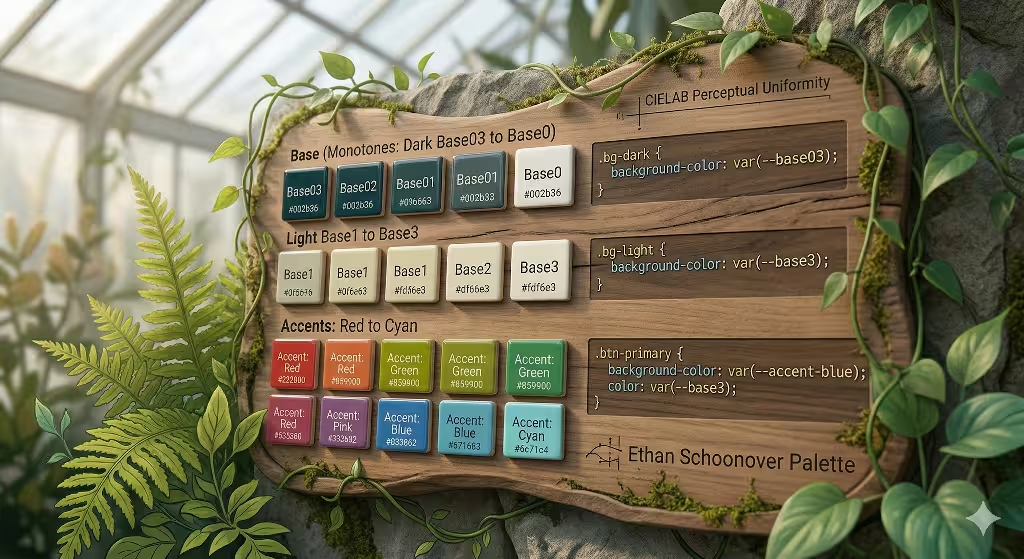
To use this system, you need to know the specific numbers that make up the colors. These are called hex codes. In CSS, these codes tell the browser exactly which color to show. There are sixteen main colors in this system. They are split into two groups. The first group is the monotone base colors. These are used for the background of the page and the main text. The second group is the accent colors. These are used for links, buttons, and highlighting important things.
The first four solarized palette hex codes are Base03, Base02, Base01, and Base00. Base03 is #002b36 and it is a very dark blue-green. It is great for a dark mode background. Base02 is #073642 and is slightly lighter. Base01 is #586e75 and Base00 is #657b83. These are the colors you use for content and secondary text when you are using a dark theme. Using these specific solarized palette hex codes ensures that the text stays easy to read.
The next four solarized palette hex codes are Base0, Base1, Base2, and Base3. Base0 is #839496 and Base1 is #93a1a1. These are used for main text in light mode. Base2 is #eee8d5 and Base3 is #fdf6e3. Base3 is a beautiful cream color that looks like old paper. It is much better for your eyes than a pure white background. When you use these solarized palette hex codes, you are giving the eye a break from the harsh blue light of a standard screen.
Then we have the eight accent solarized palette hex codes. These are the colors that pop. Yellow is #b58900. Orange is #cb4b16. Red is #dc322f. Magenta is #d33682. Violet is #6c71c4. Blue is #268bd2. Cyan is #2aa198. Green is #859900. Each of these solarized palette hex codes was chosen to have the same level of brightness relative to the background. This means that if you switch from dark mode to light mode, the colors still look correct. This kind of balance is very hard to find in other color sets. Using solarized palette hex codes makes your work look professional and polished.
The Mathematics of Harmony: CIELAB and Color Theory
You might wonder how these colors were chosen. It was not a random guess. The person who made these solarized palette hex codes used a system called CIELAB. Most computers use a system called sRGB, but sRGB does not match how humans actually see. Our eyes are more sensitive to certain colors than others. For example, a bright yellow and a bright blue might have the same power on a computer, but the yellow looks much brighter to our eyes.
The solarized palette hex codes were picked using the CIELAB model to make sure the contrast was even. This is called perceptual uniformity. It means that the difference you see between two colors stays the same even if the colors change. This is very important for people who might have trouble seeing some colors. By using solarized palette hex codes, you are making your website more accessible. You are using science to help everyone read your content better.
The math behind solarized palette hex codes is based on the idea of color distance. In the CIELAB space, you can calculate how far apart two colors are. This distance is what makes text easy or hard to read. Ethan Schoonover made sure that the distance between the text color and the background color was always the same in both light and dark modes. This is why people love using solarized palette hex codes for coding and long articles. It feels consistent and safe for the brain.
Implementing Solarized in Modern CSS
Adding these colors to your website is very easy. The best way is to use CSS variables. This lets you define the solarized palette hex codes once and use them everywhere. You can create a list of variables at the top of your CSS file. For example, you can write –base03: #002b36. Once you have defined all the solarized palette hex codes, you can apply them to your headers, paragraphs, and buttons.
One great thing about solarized palette hex codes is how well they work with a theme switcher. You can set up a light theme and a dark theme using the same variables. Because the solarized palette hex codes are balanced, you just need to swap which variable is used for the background and which is used for the text. This makes the user experience very smooth. If a user is reading your site at night, they can switch to the dark solarized palette hex codes to save their eyes from strain.
You can also use these solarized palette hex codes in smaller parts of your design. Maybe you just want to use the green for a “Success” message or the red for an “Error” message. Because these solarized palette hex codes are built to work together, they will not clash with each other. They create a sense of harmony on the page that other palettes often lack. Using solarized palette hex codes helps you build a design system that is robust and flexible.
Is the Solarized Palette Good for Your Eyes?
Many people ask if these colors really help with eye health. The answer is yes. Most of the eye strain we feel comes from looking at high-contrast light. Imagine someone shining a flashlight in your eyes while you try to read a tiny note. That is what a pure white screen feels like to your nervous system. By using the cream and dark teal found in solarized palette hex codes, you reduce that light pressure.
The solarized palette hex codes are also helpful because they reduce the amount of blue light. Blue light is known to keep people awake at night. The light mode of the solarized palette hex codes uses a warm cream color (#fdf6e3). This color has less blue light than a standard white. By choosing these solarized palette hex codes, you are helping your readers maintain their natural sleep patterns. This is a key part of biophilic design. We want our technology to fit into our lives without breaking our biological clocks.
Who Created the Solarized Color Scheme?
Ethan Schoonover is the person we have to thank for these solarized palette hex codes. He is a designer who wanted to solve a problem for people who spend all day looking at code. He noticed that most color schemes were either too bright or had colors that did not work well together. He spent months researching color theory and testing different hex values until he found the perfect set.
He released the solarized palette hex codes for free so that everyone could use them. Since then, they have become some of the most popular colors in the world of programming. You can find these solarized palette hex codes in text editors like VS Code, Vim, and even in computer terminals. People use them because they work. Schoonover’s work shows that when we use science and art together, we can make tools that help people do their best work.
How Do I Use Solarized in VS Code or Vim?
If you are a developer, you can start using solarized palette hex codes right now. In VS Code, you can go to the extensions market and search for Solarized. There are many versions, but the official ones follow the original solarized palette hex codes perfectly. Once you install it, your code will be highlighted in those soft, natural tones.
For people using Vim, you can add a small bit of code to your configuration file to enable the solarized palette hex codes. This will change the colors of your terminal to match the system. It makes long nights of coding much easier on the eyes. Many people find that once they start using solarized palette hex codes, they can never go back to standard high-contrast themes. The comfort they provide is simply too good to give up.
What is the Difference Between Solarized Light and Dark?
The interesting thing about solarized palette hex codes is that the light and dark modes use the exact same sixteen colors. They just change how they are used. In the dark mode, the dark blue-green colors are used for the background. In the light mode, the cream colors are used for the background. The accent solarized palette hex codes stay the same in both.
This is a very clever way to design. Most color palettes require you to pick new colors for dark mode. But because these solarized palette hex codes are so well balanced, they work in both settings. This symmetry is part of what makes the system so brilliant. It creates a unified look for your brand or your website. No matter which mode the user chooses, they are still seeing the same core solarized palette hex codes.
Digital Wellness: The UX Impact
User experience, or UX, is all about how a person feels when they use your website. If your website makes their eyes hurt, they will leave. If your website feels calm and easy to navigate, they will stay. Using solarized palette hex codes is a simple way to improve your UX. It shows that you have thought about the user’s physical comfort.
Digital wellness is a growing trend. People are becoming more aware of how much time they spend on screens. They want tools that do not make them feel tired or stressed. The solarized palette hex codes are a perfect match for this movement. They provide a “low-stress” visual environment. When you build a site with solarized palette hex codes, you are creating a digital sanctuary. This is especially important for sites that have a lot of text, like blogs or news sites.
Circadian Rhythm Preservation
Our bodies have an internal clock called the circadian rhythm. This clock tells us when to wake up and when to sleep. It is mostly controlled by the light we see. If we see a lot of bright, blue light at night, our brain thinks it is daytime. This can make it hard to fall asleep. The solarized palette hex codes help with this.
The warm tones in the solarized palette hex codes are much closer to the light of the setting sun or a candle. This is much better for our internal clocks. By using solarized palette hex codes, you are helping your users wind down at the end of the day. This is a very deep way to connect your website design with human biology. It is a true example of how solarized palette hex codes can be used for biophilic design.
Accessibility (WCAG) and Solarized
Accessibility means making sure everyone can use your website, including people with vision problems. There are rules for this called the Web Content Accessibility Guidelines, or WCAG. These rules say that there must be enough contrast between the text and the background. The solarized palette hex codes were designed with this in mind.
While some of the lighter accents might need to be adjusted for very strict accessibility rules, the core solarized palette hex codes are very strong. They provide a clear visual hierarchy. This means the user’s eye knows exactly where to look. By using solarized palette hex codes, you are helping people with color blindness and other visual challenges. The consistent contrast levels make the text stand out without being overwhelming.
Using Solarized Palette Hex Codes in Branding
You do not have to be a coder to love these colors. Many companies use solarized palette hex codes for their logos and brand designs. The colors feel modern yet organic. They do not look like the “tech” colors of the 1990s. Instead, they feel like they belong in the modern world. Using solarized palette hex codes can give your company a friendly and smart image.
When you use solarized palette hex codes in your branding, you can be sure the colors will look good on all devices. Because they are based on how we see, they are very stable across different screens. A logo using these solarized palette hex codes will look just as good on an old phone as it does on a brand new computer monitor. This reliability is very valuable for any business.
The History of Digital Color and the Need for Solarized
In the early days of computers, we did not have many choices for colors. Screens were often just black with green or amber text. These were high-contrast, but they were also very limited. As computers got better, we got millions of colors. But just because we have many colors does not mean we should use them all at once. The move to bright white backgrounds was a mistake that ignored our history as humans.
The solarized palette hex codes were a reaction to this mistake. They take us back to a more natural way of seeing. They acknowledge that our eyes are part of our bodies, and our bodies are part of nature. By looking back at how we evolved to see light in the forest, we can make better choices for our screens today. The solarized palette hex codes are a bridge between our ancient past and our digital future.
Why Green is Special in the Solarized Palette
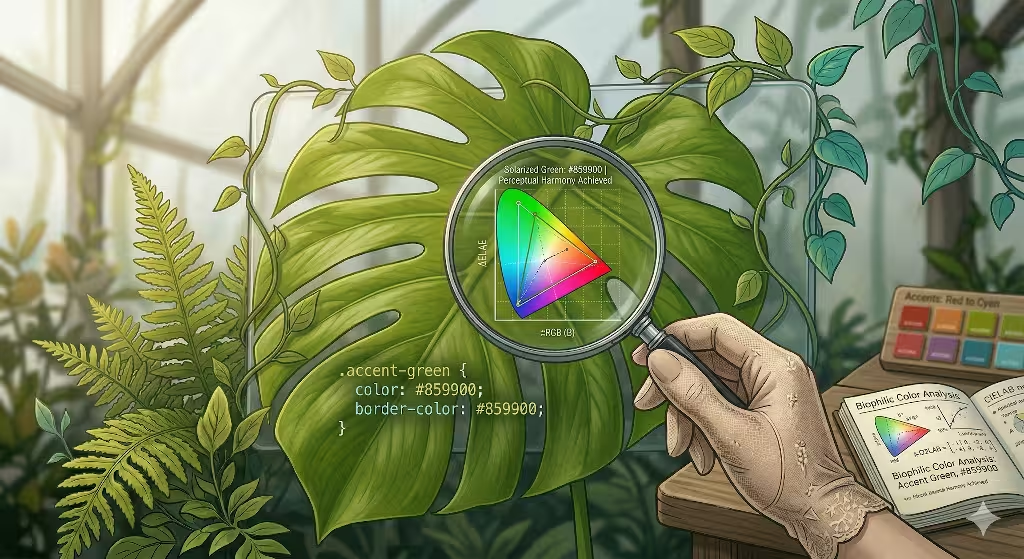
One of the most important accent colors in the system is green (#859900). In nature, green is everywhere. Our eyes are very good at seeing many different shades of green. In the solarized palette hex codes, the green is used to show growth, success, or positive action. It is a very calming shade. It does not look like a neon sign. It looks like a leaf.
Using this specific green from the solarized palette hex codes helps create a biophilic feeling. It reminds the brain of plants and the outdoors. This can actually lower a person’s heart rate and make them feel more at ease. This is the power of using the right solarized palette hex codes. You are not just changing a color; you are changing how a person feels.
The Blue and Cyan Tones of Solarized
Blue and cyan are also very important in this palette. Blue (#268bd2) is often used for links and important information. In the solarized palette hex codes, the blue is deep and clear, like a lake. Cyan (#2aa198) is a bit lighter and is great for highlighting code or small details. These colors feel cool and refreshing.
In nature, we see these colors in the sky and the ocean. They represent vastness and clarity. When you use these solarized palette hex codes on your website, you are bringing that sense of space to the screen. It makes the website feel less cluttered. Even if you have a lot of information on the page, these solarized palette hex codes help keep it organized and calm.
Red and Orange: Using Heat Wisely
Most websites use a very bright, angry red for errors. The solarized palette hex codes use a more muted red (#dc322f) and a warm orange (#cb4b16). These colors still get your attention, but they do not feel like an emergency. They feel more like the colors of an autumn forest or a sunset.
This is important because we want our users to feel in control. If a user makes a mistake on a form, a bright neon red can make them feel stressed. But the red from the solarized palette hex codes feels more like a gentle correction. It is another way that using solarized palette hex codes creates a better emotional experience for your visitors.
Magenta and Violet: Adding a Touch of Mystery
The last two accent colors are magenta (#d33682) and violet (#6c71c4). These are colors we do not see as often in the wild, but they are very beautiful when we do. They are found in flowers and rare minerals. In the solarized palette hex codes, these colors are used for special elements that need to stand out from the rest.
Violet is often used for comments in code or for metadata on a website. It is a quiet color that stays in the background until you look for it. Magenta is more energetic. By using these solarized palette hex codes together, you can create a very rich and complex design that still feels unified. It adds a layer of sophistication to your work.
Building a Biophilic Website from Scratch

If you want to build a truly biophilic website, you should start with the solarized palette hex codes. Begin by choosing Base3 (#fdf6e3) for your background if you want a light theme. This will immediately make your site feel warmer and more inviting. Then, use Base00 (#657b83) for your main text. This combination is much easier to read than black on white.
Next, use the accent solarized palette hex codes for your buttons and links. Use the green (#859900) for things you want people to click, like “Sign Up” or “Buy Now.” Use the blue (#268bd2) for links within your text. This creates a natural flow that guides the user’s eye across the page. By sticking to the solarized palette hex codes, you ensure that every part of your site works together.
Finally, consider adding images of nature that match these colors. Pictures of forests, mountains, or stones often have colors that are very close to the solarized palette hex codes. This creates a deep connection between the content and the design. It makes the entire website feel like a single, living entity. This is the goal of biophilic design.
Testing Your Design with Real Users
Once you have built your site using solarized palette hex codes, it is important to test it. Ask people how they feel when they look at your site for ten minutes. Most people will say they feel more relaxed than they do on other sites. This is the hidden benefit of using solarized palette hex codes. It is a physical feeling of comfort.
You can also use tools to check the contrast ratios of your solarized palette hex codes. There are many websites where you can plug in your hex codes to see if they pass accessibility tests. Most of the time, the solarized palette hex codes will perform very well. If you find a spot that is hard to read, you can simply switch to another color in the palette that has more contrast. The system is very flexible.
The Future of Biophilic Web Design
As we move forward, more designers will start to realize the importance of biology. We cannot keep ignoring how our bodies work. The solarized palette hex codes are just the beginning. In the future, we might have websites that change their colors based on the time of day or the season. But even then, the core ideas behind the solarized palette hex codes will remain important.
The need for balance, harmony, and natural contrast will never go away. By learning how to use solarized palette hex codes today, you are preparing yourself for the future of the web. You are becoming an expert in a type of design that truly helps people. Whether you are a developer, a designer, or a business owner, these solarized palette hex codes are a powerful tool in your kit.
The Final Word on Solarized Palette Hex Codes
In conclusion, the solarized palette hex codes are more than just a set of colors. They are a scientific solution to a digital problem. They help us connect with the world around us even when we are looking at a screen. By reducing eye strain and respecting our biological rhythms, these solarized palette hex codes make the internet a better place to be.
We have looked at the sixteen main colors and how they work. We have seen the math and the biology that makes them special. We have also discussed how to put them into your own projects using CSS. If you want your website to stand out, do not choose the brightest colors. Choose the smartest ones. Choose the solarized palette hex codes. Your eyes, and your users’ eyes, will thank you for it.
At Silphium Design LLC, we believe that the best designs are those that mimic nature. The solarized palette hex codes are the perfect example of this philosophy. They are innovative, creative, and highly competent. They prove that you do not have to sacrifice beauty for function. With the right solarized palette hex codes, you can have both. Start using them today and see the difference for yourself. The world of digital biophilia is waiting for you, and it all starts with these sixteen perfect colors.
Remember that every time you use solarized palette hex codes, you are making a choice for health and clarity. You are choosing to be part of a movement that values the human experience. Keep exploring the world of color and never stop looking for ways to bring nature into your work. The solarized palette hex codes are your map to a better, more beautiful digital world. Using solarized palette hex codes is the first step toward a design that truly lives and breathes.
In the end, the solarized palette hex codes are a gift to all of us who work on the web. They show us that there is a better way to build things. They remind us that even in a world of code and pixels, we are still human. And as humans, we deserve to see the world in its most natural light. That is the true power and the lasting legacy of the solarized palette hex codes.