At Silphium Design, when we build for the web, we are not just writing code. We are planting seeds in a digital garden. Today, we are looking at how to make the internet a better place by focusing on the best ways to build product filters that are kind to the earth and easy for people to use.
We often think of the internet as something that does not take up space. But the truth is that every website lives on a server. Those servers use a lot of power. When a website is messy or slow, it wastes energy. This is called crawl waste. It happens when search engine bots get lost in your site. It also happens when users cannot find what they want.
By using biophilic design, which means design inspired by nature, we can fix this. We want to make your product filters feel like a clear path through a forest. This helps people find what they need without getting tired or wasting electricity.
Table of Contents
The Concept of Digital Sustainability
Digital sustainability is about making sure our online world does not hurt our physical world. Every time someone uses product filters on a site, a computer somewhere has to work. If those product filters are built poorly, that computer works too hard. This uses more coal or gas to make electricity. At Silphium Design, we believe in making things efficient.
Nature uses a rule called prospect and refuge. This means people like to see what is ahead of them (prospect) while feeling safe (refuge). Good product filters give users this feeling. They show the user all the choices clearly. They also make the user feel in control. When you use the right product filters, you are helping the planet by making the search process faster and cleaner.
Information Architecture: The Taxonomy of Nature
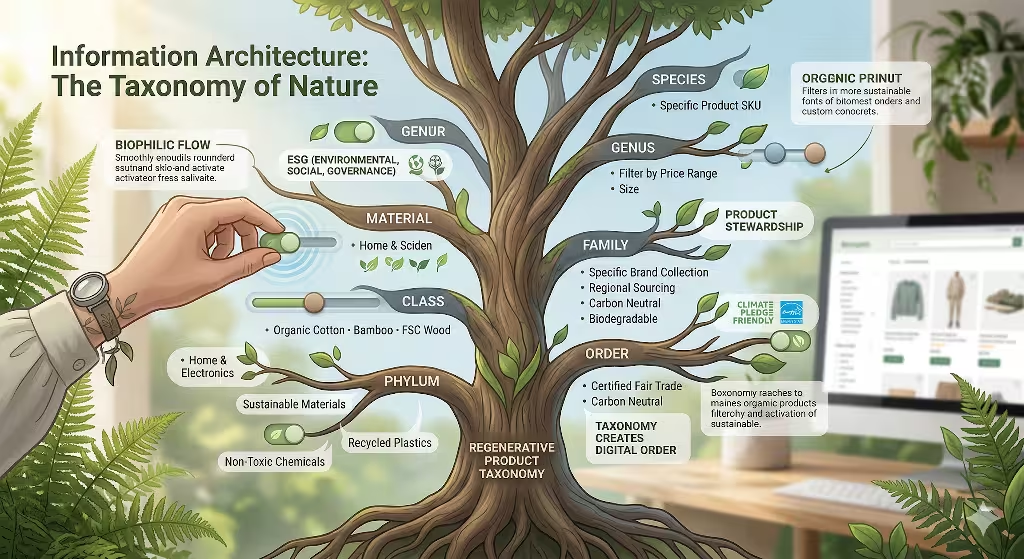
In the world of biology, we use a system called taxonomy to keep track of every living thing. This system was started a long time ago by a man named Carolus Linnaeus. He realized that if we do not have a clear way to name and group things, we cannot understand them. At Silphium Design, we apply this same logic to the way we build product filters. When you go into a forest, your brain is already working to categorize what you see. You see tall trees, low bushes, and soft moss. Your brain does this naturally because it helps you survive. We believe that your website should work the same way.
The Taxonomic System of Life
The structure of your product filters should follow the same rules as the tree of life. In nature, we start with a broad category like a Kingdom. In an online store, the Kingdom might be the main type of item you sell, such as Clothing or Home Goods. From there, we move down to Phylum, Class, Order, Family, Genus, and Species. Each step gets more specific.
Your product filters should lead the user down a similar path. If someone is looking for a shirt, they start broad. Then they use product filters to choose the material, like organic cotton. Then they use more product filters to choose the size and color. This flow feels right to the human mind because it mimics the way we explore the physical world.
Information Architecture
When we build these paths, we focus on something called Information Architecture. This is a fancy way of saying we plan where all the information goes. If your Information Architecture is messy, your product filters will be messy too. A site with bad product filters is like a forest where the trees are growing upside down. It is confusing and makes people want to leave.
We want to create a digital ecosystem that is easy to navigate. This means every category must be clear. You should not have product filters that overlap or mean the same thing. For example, having a filter for “Green Products” and another for “Eco-friendly Items” is redundant. It clutters the screen and wastes the user’s time.
Specific Entities
We also look at specific entities that matter in 2026. One of these is ESG. This stands for Environmental, Social, and Governance. These are a set of standards that socially conscious shoppers use to screen potential investments or purchases. By including ESG options in your product filters, you are speaking the language of the modern consumer.
You are showing them that you care about more than just making a sale and about how the product was made and who it helps. This is part of what we call Product Stewardship. It is the idea that a company is responsible for a product from the moment it is created until it is no longer useful. When you allow users to sort by these values using your product filters, you are building trust.
Trust is a very important part of biophilic design. In nature, animals trust environments that provide what they need without hidden dangers. On the internet, users trust websites that are transparent and easy to use. If your product filters are hidden or hard to find, the user feels a sense of unease. They might worry that you are hiding something. But if you provide clear, detailed product filters that let them see exactly what they are getting, they feel safe. They feel like they are in a well-ordered garden where every plant is labeled. This reduces their stress and makes them more likely to buy from you.
Another part of this natural taxonomy is the use of LSI keywords. LSI stands for Latent Semantic Indexing. These are words that are mathematically related to your main topic. For a site about eco-friendly shopping, these might include words like “sustainable,” “biodegradable,” or “carbon-neutral.”
When you include these words in the labels of your product filters, you are helping search engines understand your site better. Search engines are like digital botanists. They crawl through the “undergrowth” of the web to find the best content. If your product filters use the right terminology, the search engine will recognize your site as a high-quality resource. This helps you show up higher in search results, which brings more people to your digital garden.
Physical Layout
We must also talk about the physical layout of these product filters. In biophilic design, we prefer horizontal or vertical layouts that mirror natural horizons. A vertical sidebar of product filters can look like a row of trees on the edge of a field. It provides a boundary that makes the main content feel protected.
This goes back to the idea of prospect and refuge. The user has a clear view of the products (prospect) while the product filters provide a stable place to make choices (refuge). This balance is key to a good user experience. If the product filters are floating all over the page, it feels chaotic. It feels like a storm. We want to provide a calm, steady experience for every visitor.
Voice Search
As we move further into 2026, we are also seeing more people use voice search to find things. Someone might say, “Show me the best product filters for recycled plastic shoes.” Your website needs to be ready for this. This means your back-end data needs to be as organized as your front-end design. Each of your product filters should be tied to a clear data point. We use something called structured data to do this.
This is code that tells the computer exactly what a piece of information means. If you have a filter for “recycled material,” the structured data tells the search engine, “This item is made from recycled material.” This makes your product filters much more powerful. It allows them to work across different platforms and devices.
Finally, we should consider the concept of “clines” in biology. A cline is a gradual change in a species over a large area. We can use this idea in our design by making our product filters feel like a smooth transition. For example, instead of just having “Cheap” and “Expensive” as price options, you can have a sliding scale.
This sliding scale is one of the most natural types of product filters. It lets the user choose exactly where they want to be. It feels more like the real world, where things are rarely just one way or the other. Most things in nature exist on a spectrum. Your product filters should reflect that.
By following these rules of nature, you can create a website that is not only beautiful but also very effective. You are building a system that respects the user’s brain and the planet’s resources. Good product filters are the secret to a successful online store. They are the roots that hold everything together and the paths that lead your customers to what they need. At Silphium Design, we are proud to use these biophilic principles to help you grow. We believe that by looking to the natural world, we can find the best ways to build the digital world.
Technical SEO and the Root System
Think of your website like a tree. The homepage is the trunk, and the product filters are the roots. If the roots grow in every direction without a plan, the tree gets sick. In the world of websites, this is called a combinatorial explosion. This happens when your product filters create millions of different pages that all look the same.
Search engines have a limit on how much of your site they will look at. This is called a crawl budget. If your product filters create too many pages, the search engine bot gets tired and leaves. This means your best products might never be found. To fix this, we use a tool called a canonical tag. This tells the search engine which page is the most important one. It helps keep the bot on the right path.
In 2026, we also use something called Incremental Static Regeneration. This is a fancy way of saying we make the page update quickly without making the whole server restart. This makes your product filters work fast. When your product filters are fast, people stay on your site longer. They do not get frustrated. A fast site is a green site because it uses less processing power.
Visual Biophilia in UI Design
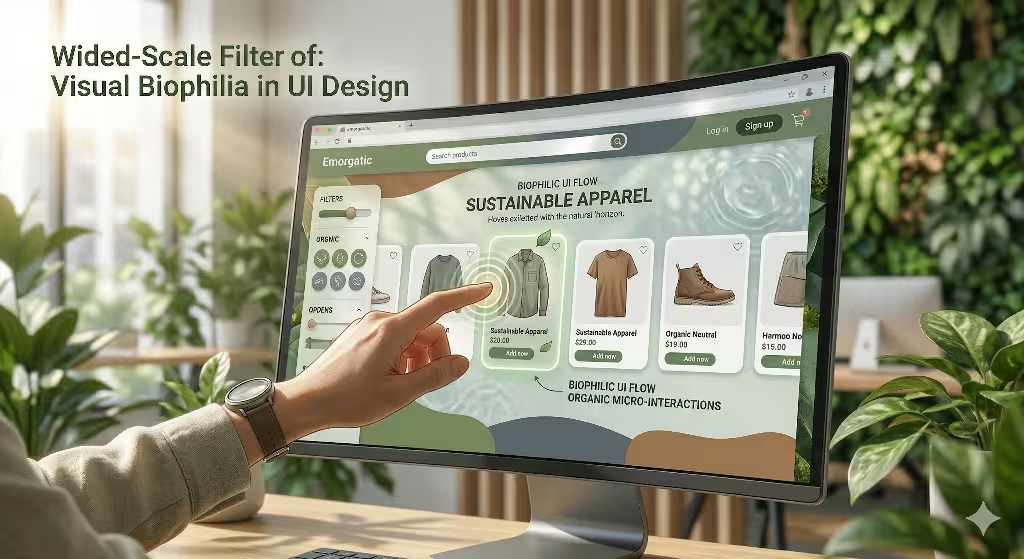
Biophilic design is not just about pictures of trees. It is about how a website feels. Most product filters look like a list of boxes and sharp lines. This can feel cold and stressful. At Silphium Design, we like to use organic shapes. These are shapes that look like things you find in nature, like clouds or stones.
We also use earthy colors. Think of the green of moss, the gray of a river rock, or the blue of a summer sky. These colors make people feel calm. When people are calm, they make better choices. Your product filters should use these soft colors.
We also look at how things move. When someone clicks on one of your product filters, the change should be smooth. It should look like a leaf falling or a ripple in water. We call these micro-interactions. If the screen jumps or flashes, it breaks the peaceful feeling. Smooth product filters keep the user happy and focused.
Digital Carbon Footprint and Performance
Every bit of data has a weight. Big files and heavy code make a website heavy. A heavy website takes more energy to move across the cables of the internet. This creates a carbon footprint. To keep your product filters eco-friendly, you must use lean code.
Lean code means you only use the scripts you really need. Many sites use too much JavaScript for their product filters. This makes the user’s phone or computer get hot and use more battery. Instead, we try to use simple CSS and light scripts.
We also suggest using green web hosting. These are companies that use wind or solar power to run their servers. When you combine green hosting with efficient product filters, you are doing a great job for the environment. You want to make sure your images are in the AVIF format. This is a new way to save pictures that makes them very small but still look great. Small images mean your product filters load in the blink of an eye.
Credibility through Green Standards
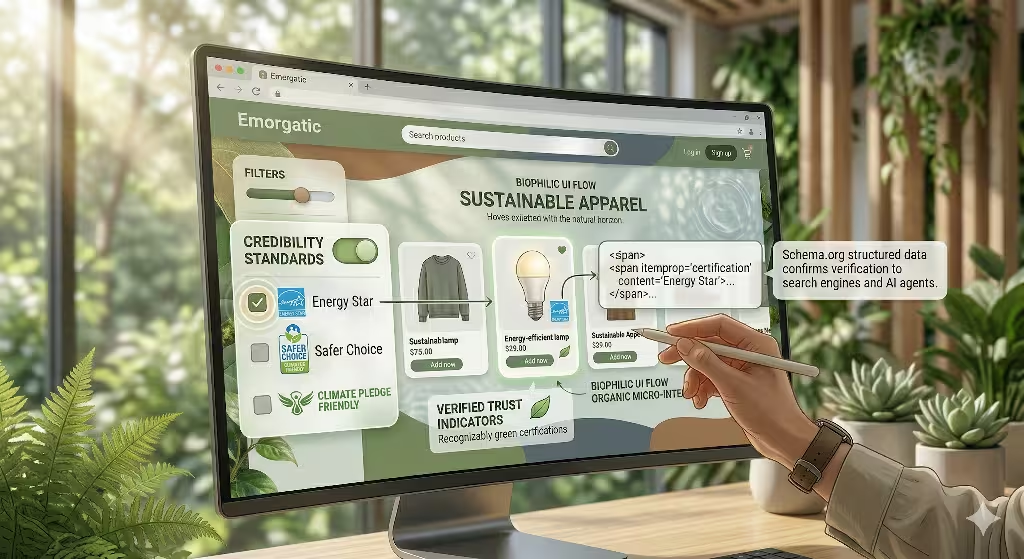
People want to know they can trust your site. One way to show this is to use filters for official green labels. You can include product filters for Energy Star items. You can also have product filters for things that have the Safer Choice or Climate Pledge Friendly badges.
By adding these to your product filters, you show that you care about quality. It also helps with something called Schema. This is a special code that tells search engines exactly what your product is. If you use Schema for your product filters, your items might show up with little badges in the search results. This makes more people want to click on your site. It makes your digital ecosystem stronger.
Common Questions about Product Filters
Many people ask how to make the best product filters. They wonder if having too many choices is a bad thing. The answer is yes. If you have too many product filters, the user gets confused. This is called choice paralysis. It is like being in a forest with too many paths and no signs.
Another common question is whether product filters hurt SEO. They only hurt if you do not manage them well. If you use the right tags to tell Google which pages to ignore, your product filters will actually help you. They create long-tail keywords. For example, a user might search for “organic cotton blue shirt size large.” If your product filters are set up right, you will have a perfect page for that search.
Some people also ask if web design can really save the planet. While one website is small, millions of websites add up. If everyone used better product filters and cleaner code, we could save as much energy as a whole city uses.
Preparing for AI Search Engines
It is 2026, and the way people find things is changing. Many people now use AI agents to shop for them. These AI agents do not look at a website the same way a human does. They look for data they can easily grab. This is why the way you build your product filters is so important.
We use a method called Retrieval Augmented Generation. This means we make sure our product filters have clear labels and data that an AI can read. If an AI asks, “What is the most eco-friendly water bottle on this site?”, your product filters should provide the answer instantly.
You should also use the BLUF method. This stands for Bottom Line Up Front. It means putting the most important information at the top of your product filters. This helps both humans and AI agents understand your site faster. When you make it easy for AI, you get more traffic from the newest search engines.
Auditing Your Digital Garden
Just like a real garden, a website needs to be checked often. You should use tools to see how your product filters are doing. One tool is called Screaming Frog. It acts like a little robot that crawls through your site and tells you if your product filters are making too many empty pages.
Another tool is Lighthouse. This tool checks how fast your site is and if it uses too much energy. You should check your product filters to see if they are slowing down your mobile score. Most people shop on their phones now. If your product filters are hard to touch or slow to load on a phone, you will lose customers.
Check your Google Search Console too. Look for the “Indexing” report. If you see thousands of pages that say “Excluded,” it might mean your product filters are creating digital weeds. You need to pull those weeds by using better settings in your robots.txt file.
The Future of Sustainable Design
The goal of Silphium Design is to move away from design that just takes things. We want to move toward design that gives back. We call this regenerative design. By using the best product filters, you are creating a site that is easy to use and good for the planet.
You are making a digital space where people can breathe. You are helping them find products that match their values. This builds a bond between you and your customers. They will come back to your “garden” because it feels better than the noisy, messy sites of your competitors.
In the end, the best product filters are the ones that disappear. They should be so natural and easy that the user does not even think about them. They just find what they need and feel good about their purchase. This is the heart of biophilic design. It is about bringing the harmony of the natural world into the digital world.
Summary of Best Practices
To make sure your site stays healthy, remember these points about your product filters. Use clear categories that match how people think. Keep your code light so you do not waste electricity. Use colors and shapes that make people feel at peace. Always tell search engines which pages are the most important.
If you follow these steps, your product filters will be a powerful tool for your business. They will help you rank higher in search results and save money on hosting. Most importantly, they will show your customers that you care about the future of our world.
At Silphium Design LLC, we are always here to help you plant these digital seeds. Whether you are building a new site or fixing an old one, focus on your product filters. They are the roots of your success. Let us work together to make the internet a greener, more beautiful place for everyone.
Thank you for taking the time to learn about these important ideas. The world is changing, and our websites must change with it. By choosing to use eco-friendly product filters, you are taking a step toward a better tomorrow. Keep your garden growing, keep your code clean, and always look to nature for the best answers.