Have you ever looked at a spider web and wondered how something so thin could be so strong? Or have you seen a leaf and thought about how it turns sunlight into food without any noise or smoke? Nature has been solving problems for billions of years. At Silphium Design LLC, we think it is time we started listening.
When we talk about comparing traditional design with biomimetic approaches, we are really talking about two different ways of looking at the world. For a long time, humans have designed things by using “brute force.” This means we use a lot of energy, heavy machines, and heat to bend materials to our will. We make things the way we want them to be, often without thinking about the environment around us.
On the other hand, a biomimetic way of thinking is like having nature as a teacher. Instead of forcing our ideas onto the world, we look at how plants, animals, and ecosystems already solve the same problems. This is not just about making things look like nature. It is about making things work like nature.
When designing websites, nature is the best engineer to follow. This is something called biophilic design and it is something we specialize in here at Silphium Design.
In this article, we will dive deep into how these two ways of designing compare. We will see how this shift in thinking can change everything from the buildings we live in to the websites we browse every day.
Table of Contents
Philosophical Underpinnings: Brute Force vs. Biological Logic
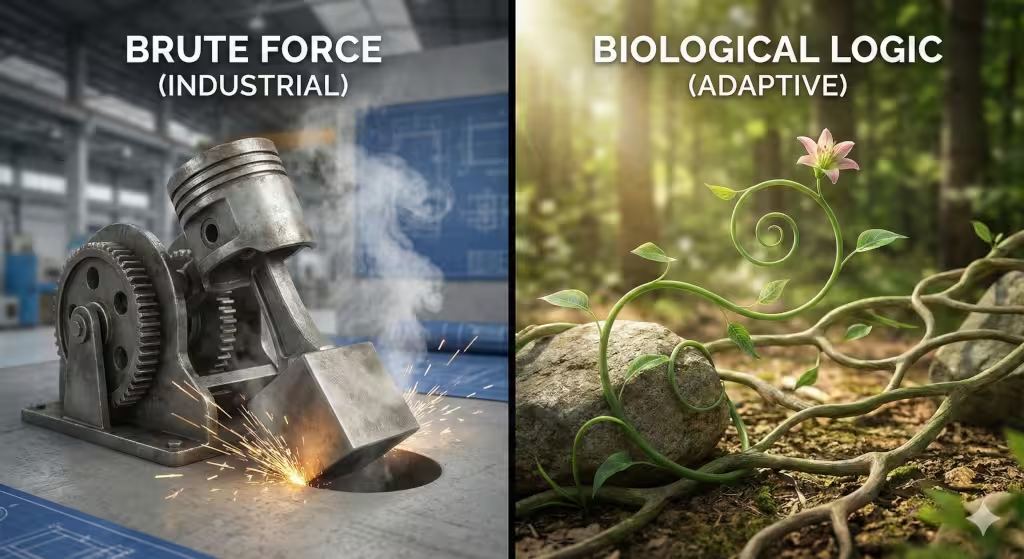
The way we have built things for the last two hundred years is often called the “Industrial Age” model. In this traditional way of thinking, humans are at the center of everything. We find a problem, and we solve it by using more power or more stuff. If a building is too hot, we build a giant air conditioner. If we need a bridge to be stronger, we use more steel. This is a very direct way of working, but it often wastes a lot of energy and creates a lot of trash.
The biomimetic approach is much different. It starts with the idea that life has already faced almost every problem we have. Whether it is staying cool, moving fast, or staying safe, something in nature has already figured it out. A biomimetic designer looks at a bird or a tree and asks, “How did nature solve this?”
This is a shift from being “anthropocentric” (human-centered) to being “ecocentric” (nature-centered). In a traditional model, we take things from the earth, make something, and then throw the waste away. In a biomimetic model, there is no such thing as waste. Just like in a forest, where a fallen tree becomes food for the soil, every part of a biomimetic system is meant to be reused or recycled. This is often called a “closed-loop” system.
When we use a biomimetic lens, we stop seeing nature as just a place to get wood or stone. We start seeing it as a library of brilliant ideas. This biological logic is much more clever than our old brute force methods because it uses very little energy to get amazing results.
Structural Comparison: Form, Process, and Ecosystem
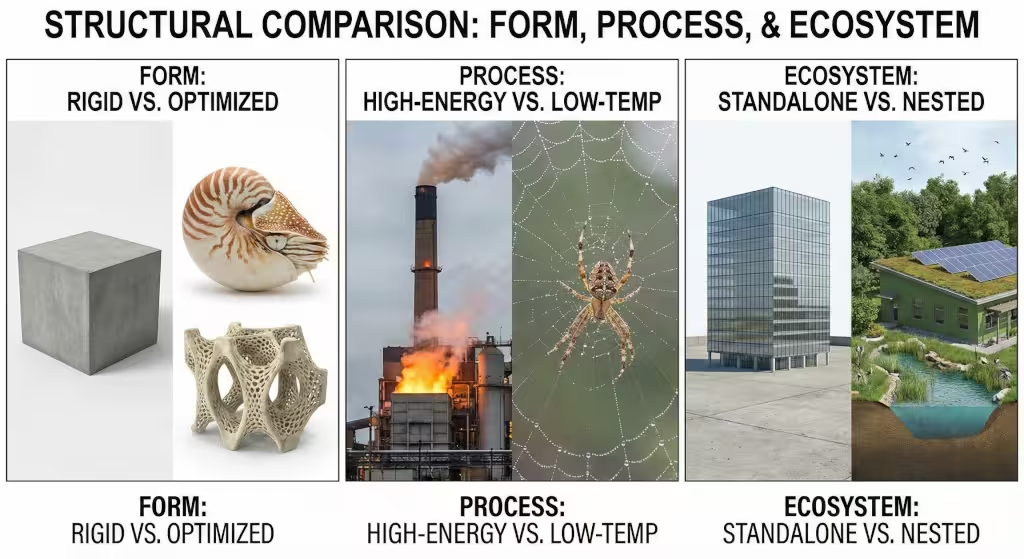
When we look at the physical parts of design, the differences between these two styles are very clear. Traditional design loves straight lines and right angles. Think about most of the houses and office buildings you see. They are mostly boxes. While boxes are easy to build with machines, they are not always the most efficient way to use space or materials.
In contrast, biomimetic shapes are often more complex and curved. Nature rarely uses a perfect square. Instead, it uses shapes like the Fibonacci sequence or the curves of a seashell. These shapes are not just for looks. A curved shell is actually stronger than a flat plate of the same weight. By using biomimetic forms, we can build things that are lighter but even tougher than what we make with traditional methods.
The process of making things is also very different. Traditional manufacturing usually involves high heat and toxic chemicals. We melt metal or cook plastic to get the shapes we want. Nature does not have big ovens or chemical plants. A spider makes silk that is stronger than steel, but it does so at room temperature using only water and protein. A biomimetic process tries to copy this “low-energy” way of creating things.
Finally, we have to look at the ecosystem. A traditional building or tool is often a standalone object. It sits on the land but does not really interact with it in a helpful way. A biomimetic design is meant to be part of a “nested system.” This means it helps the things around it. For example, a biomimetic building might collect rainwater to help local plants grow, or it might help clean the air. It provides what we call “ecosystem services,” just like a real forest does.
Key Performance Metrics: The Value Proposition
Why should we bother comparing traditional design with biomimetic approaches? The answer comes down to how well things work. We can measure this using “performance metrics.”
One big metric is resource efficiency. Traditional design uses a lot of material to make sure things do not break. A biomimetic engineer, however, learns how to put the material only where it is truly needed. Look at our own bones. They are not solid all the way through; they have a porous, honeycomb-like structure inside. This makes them light so we can move, but strong so we do not break. When we use a biomimetic design for a car or a plane, we can use much less material, which saves money and fuel.
Another metric is adaptability. Most traditional designs are static. Once a bridge is built, it stays the same. If the weather changes or the ground shifts, the bridge might crack. But biological systems are adaptive. Your skin heals when it is cut, and trees grow thicker bark if the weather gets colder. A biomimetic system tries to build this kind of “smart” behavior into our technology. Imagine a website that changes its layout based on how a user is feeling, or a building that opens its windows by itself when it “senses” fresh air is needed.
We also have to talk about sustainability versus regeneration. Traditional sustainable design is about “doing less harm.” It means using less water or electricity. While that is good, a biomimetic goal is even bigger: regeneration. This means the design actually makes the world better. A biomimetic factory would not just “pollute less”; it would actually clean the water it uses before putting it back into the river. This is the ultimate value of using a biomimetic strategy.
Common Questions About Traditional and Biomimetic Design
When people first hear about these ideas, they often have the same questions. Let’s look at some of the common questions being asked on Google and their answers.
What is the main difference between traditional and biomimetic design?
The main difference is where the ideas come from. Traditional design comes from human imagination and the tools we have made. Biomimetic design comes from looking at the natural world and copying the strategies that have worked for millions of years. It is the difference between making a bird out of plastic and learning how a bird actually flies to make a better airplane.
Is biomimetic design more expensive than traditional design?
Sometimes it can cost more at the very beginning. This is because we have to do more research to understand how nature works. We also might need new types of machines to build these complex shapes. However, over time, a biomimetic project usually saves a lot of money. Because it uses less energy and less material, the “long-term” costs are much lower. It is like buying a high-quality pair of boots that lasts ten years instead of cheap ones you have to replace every six months.
How does biophilic design relate to biomimetic design?
These two sounds similar, but they are different. Biophilic design is about our love for nature. It is about putting plants in offices or having big windows so we can see the trees. It makes us feel happy and healthy. Biomimetic design is about how things function. It is about using the “math” of nature to solve a problem. You can have a building that is both, which is what we strive for at Silphium Design LLC.
Case Studies: Real-World Examples
To really understand the power of a biomimetic approach, we need to see it in action. Let’s look at some famous examples where nature-inspired thinking beat traditional methods.
One of the most famous stories is about the Shinkansen Bullet Train in Japan. The original train was very fast, but it had a big problem. When it went through tunnels, it created a loud “sonic boom” that bothered the people living nearby. Traditional engineers tried many things to fix the noise, but nothing worked. Then, an engineer who loved birds noticed how a Kingfisher can dive into water without making a big splash. He redesigned the front of the train to look like the Kingfisher’s beak. Not only did the noise go away, but the train also used 15% less electricity! This is a perfect example of a biomimetic solution.
Another great example is the Eastgate Centre in Zimbabwe. Most large buildings in hot climates use huge air conditioning systems that eat up a ton of power. The architect of Eastgate, Mick Pearce, looked at termite mounds instead. Termites are tiny, but they build mounds that stay at a steady temperature even when it is boiling hot outside. They do this by using a system of vents that open and close to let air flow. Pearce built the Eastgate Centre to work the same way. It uses 90% less energy for cooling than a normal building.+4
In the world of materials, we have Velcro. A man named George de Mestral was walking his dog and noticed how burrs from plants stuck to the dog’s fur. He looked at the burrs under a microscope and saw tiny hooks. He copied those hooks to create Velcro. Today, we use it for everything from shoes to space suits. This simple biomimetic idea changed how we fasten things forever.
Things Related to Biomimetic Design
When we talk about this field, there are many important terms and people to know. If you are doing research, you might see words like “bio-inspired engineering” or “regenerative architecture.” These are just other ways of describing the work we do.
Some of the big names in this field include Janine Benyus. She wrote the book “Biomimicry: Innovation Inspired by Nature” in 1997, which really started the modern movement. Another expert is Neri Oxman, who works on “material ecology.” She looks at how we can grow buildings rather than just building them.
You might also hear about “evolutionary algorithms.” This is a computer science term. It means writing code that “evolves” and gets better over time, just like animals do in the wild. This is very important for the biomimetic work we do in web design. We use these ideas to make websites that are easier for people to use and that load much faster.
Other key terms include:
- Self-healing materials: Plastics or metals that can fix themselves when they get a scratch.
- Carbon sequestration: Taking extra carbon out of the air, just like trees do.
- Biomorphic forms: Shapes that look like living things.
- Closed-loop systems: A way of making things where nothing is ever thrown away.
The Digital Frontier: Biomimicry in Web Design
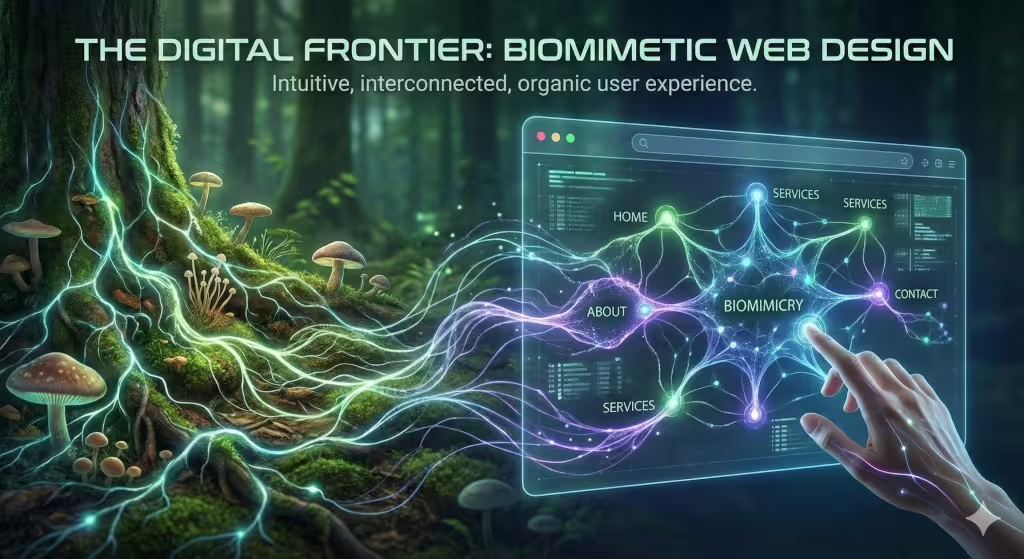
You might be wondering, “What does a forest have to do with a website?” As a specialist at Silphium Design LLC, I can tell you that the answer is: everything.
Traditional web design is often very rigid. It follows a strict hierarchy, like an old-fashioned filing cabinet. But the internet is not a filing cabinet; it is a giant web. When we use a biomimetic approach to websites, we look at things like “mycelial networks.” Mycelium is the underground part of a mushroom. It is a massive, invisible map that connects trees and shares nutrients.
We can build websites that work like this. Instead of making a user click through ten pages to find what they need, we can create a “rhizomatic” navigation. This means everything is connected in a way that feels natural and fast.
Even the way search engines work is becoming more biomimetic. Google used to just look for specific words. Now, it uses “neural networks” to try and understand what you actually mean. It is trying to think more like a human brain. By using a biomimetic strategy for SEO (Search Engine Optimization), we make sure your content doesn’t just look good to a machine, it provides real value to a person.
We also look at “Life’s Principles” when designing a user interface. For example, nature is very good at giving feedback. If you touch something hot, you feel it instantly. A biomimetic website gives the user clear, instant signals so they never feel lost or confused. This reduces “cognitive load,” which is just a fancy way of saying it makes the site easier to use.
The Evolutionary Imperative
When we spend time comparing traditional design with biomimetic approaches, it becomes clear that we are at a turning point. Our old way of building things—the brute force way, is starting to fail. We are running out of resources, and the planet is getting warmer. We cannot keep using the same old “Industrial Age” tools to solve “Information Age” problems.
The biomimetic path is not just a “nice to have” idea. It is an “evolutionary imperative.” This means we must change if we want to thrive. By learning from nature’s 3.8 billion years of research and development, we can create a world that is not only efficient but also beautiful and healthy.
Whether we are building a train, a skyscraper, or a website for a local business, the goal is the same. We want to move from being “less bad” to being “truly good.” We want to create designs that fit into the world as naturally as a leaf fits on a tree.
At Silphium Design LLC, we are excited to be part of this change. We believe that the best technology doesn’t look like a cold machine. It feels like a living part of our lives. The future of design is not something we have to invent from scratch; it is something that has been right outside our window all along.
References and Further Reading
If you want to learn more about how a biomimetic way of thinking can help your business or your life, here are some great places to start:
- “Biomimicry: Innovation Inspired by Nature” by Janine Benyus. This is the “bible” of the movement and a great read for anyone.
- The Biomimicry Institute. This organization has a website called AskNature.org where you can look up a biological problem and see how nature solves it.
- “Material Ecology” by Neri Oxman. For those who want to see the future of building materials, her work at MIT is mind-blowing.
- Silphium Design LLC Blog. We regularly post about how to use biophilic and biomimetic ideas to improve your digital presence and SEO.
The move toward a biomimetic future is happening now. Are you ready to join us?