
The Digital Ecosystem and Local Vitality
When we talk about measuring the impact of social media on local engagement, we are really talking about how a digital presence acts like a root system for a local business.
Think of a forest for a moment. A tree is not just a single thing standing alone. It is part of a deep network under the ground. Social media acts in the same way for a shop in Boston or a cafe in Burlington. It connects the business to the people living nearby. My background in biology from Princeton and my work at Harvard in computer science have taught me that everything is connected. If you want your business to grow, you have to treat social media like a habitat. You must make sure it is healthy so that people want to live and shop there.
In the year 2026, we do not just look at how many people like a post. That is a shallow way to measure health. Instead, we look at how social media moves people in the physical world. Does a post on social media lead to someone walking through your front door? Does a comment on social media turn into a loyal customer who tells their neighbors about you?
These are the real questions. We use biophilic design, which means using nature-inspired ideas, to make these digital spaces feel better for humans. When a digital space feels natural, people stay longer. They trust the brand more.
In this guide, I will show you how to measure these deep connections using clear data and a bit of common sense.
Table of Contents
Core Entities and Keyword Integration for 2026
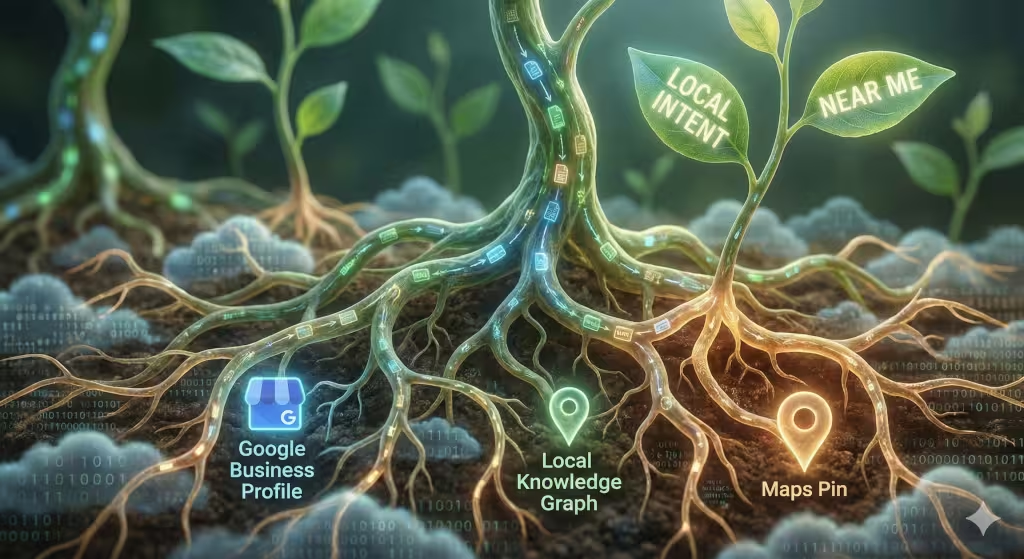
To understand how to measure your success, we must look at the specific parts that make up the local web. In the world of search engines and social media, these parts are called entities. An entity is a “thing” that a computer can understand, like a person, a place, or a specific business name. When you use social media to talk about your local business, you are feeding information to these computers.
One of the most important entities is your Google Business Profile. Think of this as your digital storefront. When you post a photo on social media and tag your location, you are sending a signal. This signal tells the internet that your business is active in a specific spot. This is what we call local intent. People searching for “coffee near me” are looking for help right now. Your social media helps prove that you are the best answer to their problem.
We also look at something called the Local Knowledge Graph. This is like a giant brain that the search engines use to remember facts about your town. If many people are talking about your business on social media, the “brain” starts to see you as an important part of the neighborhood. This makes it more likely that you will show up when people search for services in your area. Using this form of media correctly means you are not just shouting into the void. You are building a reputation that the internet can measure and reward.
Quantitative Measurement: The Mathematical Infrastructure
Now we get to the technical part. I love numbers, but I also know that they must mean something. To measure the impact of social media, we need a framework. We start with the Local Share of Voice. This tells you how much of the “conversation” in your town belongs to you. If there are 1,000 posts about “pizza” in your city this month, and 200 of them mention your shop, your share of voice is 20 percent.
We also use a specific formula for engagement. We do not just count likes because likes are easy to give and easy to forget. We want to see people taking action. We calculate the engagement rate by looking at likes, comments, shares, and saves. Shares and saves are much more important in 2026. A save means a person wants to remember you for later. That is a very strong signal of interest.
Engagement Rate = Total Engagements (Likes + Comments + Shares + Saves)/Total Reach X 100
Beyond this, we track how many people click a link in your social media post to visit your website. This is called referral traffic. If you see that your social media is sending hundreds of people to your site every week, you know it is working. We also look at “Store Visit” conversions. Modern phones can tell when a person saw an ad and then physically walked into the store. This is the ultimate way to measure impact. It shows that your digital work is creating real-world movement.
Qualitative Analysis: Biophilic UX and Sentiment
While numbers are great, they do not tell the whole story. We also need to look at the quality of the interactions. This is where my love for biophilic design comes in. In my work at Silphium Design LLC, I help create websites and social media assets that use natural patterns. We use colors from the earth, like soft greens and browns. We use shapes that are curved and organic, not sharp and robotic.
Why do we do this? Because it reduces stress. When a person looks at your social media, they should feel a sense of peace. If your page is cluttered and loud, they will leave quickly. We measure this through “dwell time.” This is a fancy word for how long someone stays on your page. If you use natural design on your social media, people tend to stay longer. They read more of what you have to say.
We also perform sentiment analysis. This is a way of using AI to read comments and see if people are happy, sad, or angry. If people are leaving happy comments about your local shop on social media, your sentiment score goes up. This is a qualitative measure, but it is very powerful. It tells us if your brand is helping the community or just taking up space. A healthy digital ecosystem is one where the interactions are positive and helpful.
Questions Answered about Social Media
When people search for information about local business and social media, they often ask the same questions. I have looked at the data and found the most common ones. Here are the answers to help you understand the impact of your work.
How do you measure the success of a local social media campaign?
You measure success by looking at actions. Do people ask for directions to your shop? Do they call your phone number directly from a social app? These are the best signs of success. You should also watch your “check-ins.” If people are tagging your business when they are physically there, your social media is doing its job.
What are the most important metrics for local engagement?
In 2026, the most important metrics are shares, saves, and local comments. A local comment is when someone from your town asks a question, like “Are you open on Sunday?” This shows real interest. Likes are still okay, but they do not lead to sales as often as shares do.
Can social media engagement improve local SEO rankings?
Yes, it can. While social media does not directly change your rank, it does change how people behave. If many people find you on social, they will start searching for your brand name on Google. This tells the search engine that you are popular and important. That will help you rank higher for other local searches.
What tools are best for tracking local social impact?
I recommend using Google Business Profile insights first. It is free and very accurate for local data. You should also use tools like GA4 (Google Analytics 4) to see where your website visitors are coming from. If you want to get more advanced, tools like Hootsuite or BrightLocal can help you see what your competitors are doing on social media.
The 2026 Technical Edge: AI and Local Discovery

The world of search is changing fast. In 2026, we use something called neural matching. This is a type of AI that tries to match what a person is thinking with the best possible result. This AI does not just look at the words you type. It looks at the photos you post on social media. It can “see” the vibe of your restaurant. If someone searches for a “cozy place for tea,” the AI might show your shop because your social media photos look cozy.
Measurement in 2026 also involves video. Short videos like those on TikTok or Instagram Reels are very important for local discovery. We measure how many people watch a video all the way to the end. If people watch your whole video, it tells the social media algorithm that your content is valuable. This makes the app show your video to even more people in your local area.
We also talk about “circadian posting.” This means posting at times that match the natural rhythm of your town. For example, a coffee shop should post early in the morning when people are waking up and thinking about breakfast. A bar might post in the late afternoon. By matching your social media to the biological clock of your customers, you get much better engagement.
Actionable Optimization: A Step-by-Step Audit
If you want to start measuring and improving your local impact today, follow these steps. This is the same process I use at Silphium Design LLC to help our clients.
Step 1: Audit your geo-tags. Go through your old posts on social media. Make sure every single one has a location tag. This helps the search engines link your digital content to your physical address. If you forget to tag your location, you are losing out on local engagement.
Step 2: Use biophilic imagery. Look at the photos you are using on social media. Do they feel cold and corporate? Try adding some plants, natural light, or textures like wood and stone. This makes your brand feel more human and inviting. We have found that these types of images get more saves and shares.
Step 3: Listen to your local community. Set up alerts for your business name and your city. When people talk about your town on social media, join the conversation. Do not just try to sell things. Be a helpful neighbor. This builds trust, and trust is the most important thing you can measure.
The Importance of Consistency in Social Media
When we look at how social media works over a long time, we see that consistency is the most important factor. You cannot post once and expect a miracle. You must treat your social media like a garden. You have to water it and care for it every day. If you stop posting, your “digital plants” will wither. People will forget you exist, and the search engines will stop showing your business to new customers.
We measure this by looking at your posting frequency. At Silphium Design LLC, we suggest posting at least three to five times a week. This keeps your brand at the front of people’s minds. It also gives the social media apps more data to work with. The more you post, the more the computer learns about who likes your business. This helps it find more people just like them in your local area.
Consistency also builds a history. In 2026, the search engines look at how long you have been active. A business that has been helpful on social media for three years is seen as more trustworthy than one that just started yesterday. This history is a form of digital “old growth.” Just like an old forest is stronger than a new one, an established social media presence is harder to beat.
Understanding Your Audience on Social Media
To measure your impact, you must know who you are talking to. Every local area is different. The people in Boston might care about different things than the people in Burlington. We use audience demographics to understand this. Social media platforms provide data on the age, gender, and location of your followers.
If you are a toy store, but most of your social media followers are teenagers who do not have kids, you have a problem. Your impact is low because you are talking to the wrong people. You want to see that your followers match your actual customers. We look at this by comparing your social data to your real-world sales data. When these two things match, you know your social media strategy is working.
We also look at “interest categories.” Social media apps can tell us if your followers like gardening, sports, or cooking. You can use this information to make better posts. If you own a hardware store and you see that your followers love gardening, you should post more about garden tools. This creates a stronger connection and leads to higher engagement.
The Role of User-Generated Content
User-generated content, or UGC, is when your customers post about you on social media. This is one of the best things that can happen to a local business. It is like a digital “word of mouth.” When a customer shares a photo of their meal at your restaurant, their friends see it. This is much more powerful than when you post a photo yourself.
We measure the impact of UGC by tracking how many times your business is tagged by other people. We also look at the reach of those posts. If a local influencer with 5,000 followers tags you, that is a huge boost for your local engagement. It introduces you to a whole new group of people who live nearby.
To get more UGC, you should make your physical business “Instagrammable.” This means adding biophilic elements that look great in photos. A wall covered in green leaves or a beautiful wooden table can encourage people to take out their phones. When they post those photos on social media, they are doing your marketing for you. This is a very efficient way to grow your local presence.
How Social Media Drives Local Traffic
The main goal for most local businesses is to get people to visit them in person. Social media is a great tool for this. We can track how social media leads to foot traffic in a few ways. One way is to use special offers. For example, you can post a coupon on social media that people have to show at the register. By counting how many people use the coupon, you can measure exactly how much money that post made for you.
Another way is to look at “intent signals.” When someone clicks the “Get Directions” button on your social media profile, they are planning to visit you. This is a very high-value action. We track these clicks every month to see if our social media is working. If the number of direction requests goes up, we know our impact is increasing.
In 2026, we also see people using social media as a search engine. Instead of going to Google, they might search for “best sushi in Boston” directly on Instagram or TikTok. This means your social media profile needs to have all your important information, like your address and hours. If a person can find everything they need on social media, they are much more likely to visit you.
The Psychological Impact of Natural Design
As a biophilic design expert, I focus on how the brain reacts to what it sees. Most of our modern world is full of concrete and screens. This can make people feel tired and stressed. When we use natural elements on social media, we are giving people a “digital break.” This is very important for building a good relationship with your customers.
When people feel good while looking at your social media, they associate those good feelings with your business. This is a psychological trick that works very well. We measure this through brand loyalty. Loyal customers are those who come back again and again. They are also the ones who defend you if someone leaves a bad review.
By using soft colors and organic patterns, you make your social media a place where people want to spend time. This is the opposite of many “loud” brands that try to grab attention by being annoying. At Silphium Design LLC, we believe that being calm and natural is a better way to win in the long run. It leads to deeper engagement and a much stronger local community.
Integrating Social Media with Your Website
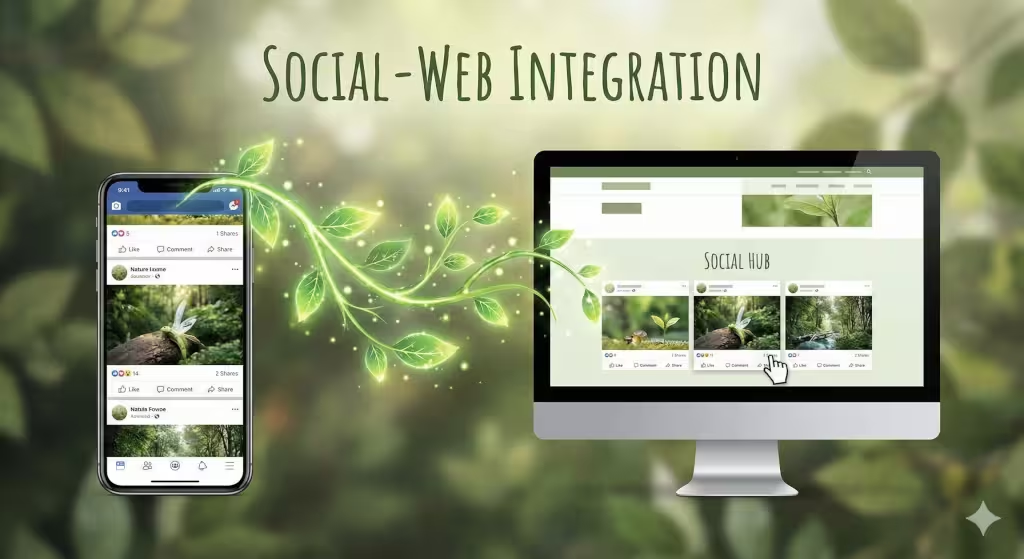
Your social media and your website should work together like two parts of the same plant. The social media acts like the leaves, catching the sun and drawing people in. The website is like the roots, holding everything together and providing deep information. If these two parts do not work together, the plant will not grow.
We measure this by looking at how many people move from social media to your website. This is called a “click-through.” Once they are on your website, we want them to stay there. This is why we use biophilic design on the website too. If the transition from social media to the website feels smooth and natural, people are less likely to leave.
You should also have social media links on your website. This allows people who find you through search engines to follow you on social media. This keeps them in your “ecosystem.” The more ways you have to contact a person, the better your chances of making a sale. We track these “cross-platform” movements to see how well our digital strategy is working as a whole.
Measuring Social Media Return on Investment (ROI)
At the end of the day, every business owner wants to know if their social media is making money. This is what we call ROI. To calculate this, we look at how much you spend on social media and how much you make from it. Spending includes the time you take to make posts, any tools you pay for, and any money you spend on ads.
Social Media ROI = Profit from Social Media – Cost of Social Media/Cost of Social Media X 100
Measuring the profit can be tricky for local businesses, but it is not impossible. As I mentioned before, you can use coupons, track direction requests, or use “Store Visit” data. When you have these numbers, you can see if your social media is worth the effort. In my experience, a well-run social media account for a local business has a very high ROI. It is often much cheaper than traditional advertising like newspapers or billboards.
In 2026, the ROI of social media also includes “brand equity.” This is the value of your reputation. A business with a great social media presence is worth more than one without it. If you ever decide to sell your business, having a large and engaged social media following will increase the price. This is a long-term impact that is very important to measure.
The Future of Local Social Media Engagement
Looking ahead, the world of social media will only get more local. We are seeing a move toward smaller, more private groups. Instead of posting for the whole world to see, people are talking in neighborhood groups on apps like WhatsApp or Discord. For a local business, being part of these smaller communities is a huge opportunity.
Measurement in these private spaces is harder, but it is still possible. We look at “referral codes” or “mentions.” If someone in a neighborhood group recommends your shop, that is a gold mine. We also see more use of Augmented Reality (AR). This allows people to see what a product would look like in their home using their phone camera. For local furniture stores or art galleries, this is a game-changer.
We will also see more AI tools that help small businesses manage their social media. These tools can help you schedule posts, answer common questions, and even suggest what photos to take. This makes it easier for a busy shop owner to stay active online. As these tools get better, the gap between big brands and small local shops will get smaller.
Social Media and Local Networking
Social media is not just for talking to customers. It is also for talking to other local businesses. When you follow and interact with other shops in your town, you are building a professional network. This can lead to partnerships and joint events. For example, a local bakery and a local coffee shop could team up for a “breakfast special” and promote it on both of their social media accounts.
We measure the impact of this networking by looking at “co-branding” metrics. How many people follow both businesses? How much engagement do the joint posts get? This type of collaboration is great for local engagement because it brings two different audiences together. It shows that you are a part of the local community and that you support other small businesses.
Networking also helps with local SEO. When other local businesses link to your website or tag you on social media, it tells the search engines that you are a trusted part of the area. These “local citations” are very important for ranking in the map pack. By being social on social media, you are helping your technical SEO at the same time.
Managing Your Social Media Reputation
Your reputation is everything in a small town. One bad review on social media can hurt your business if you do not handle it well. We measure reputation by looking at your “star rating” and your “response rate.” How quickly do you answer when someone leaves a comment or a review? In 2026, people expect a fast response.
If you get a bad review, do not panic. Use it as an opportunity to show how much you care. Answer politely and try to fix the problem. This shows other people that you are a responsible business owner. We have found that businesses that respond to all their reviews, even the bad ones, have much higher levels of trust and local engagement.
You should also keep an eye on “mentions” that are not tagged. Sometimes people talk about you without using your official handle. We use social listening tools to find these conversations. This allows you to jump in and help out or thank people for their kind words. By being proactive, you can manage your reputation and keep your local impact positive.
Using Social Media for Local Events
If your business hosts events, social media is your best friend. Whether it is a sale, a workshop, or a live music night, you can use social media to get the word out. We measure the success of event promotion by looking at “RSVPs” or “Interested” clicks on platforms like Facebook. These are good indicators of how many people might show up.
During the event, you should encourage people to post on social media. You can create a special “photo booth” area with natural elements to make it look great. You can also use a specific hashtag for the event. This creates a “digital footprint” for the event that can be measured later. We look at how many people used the hashtag and what kind of photos they shared.
After the event, you can share the photos and videos on your social media. This keeps the engagement going even after the event is over. It also shows people who didn’t come what they missed, which makes them more likely to attend the next one. This “FOMO” (Fear Of Missing Out) is a powerful way to drive local engagement over time.
The Role of Storytelling in Social Media
People love stories. They do not want to be sold to all the time. They want to know the “who” and the “why” behind your business. As a 50-year-old with a long career, I know that people connect with people, not logos. Use social media to tell your story. How did you start your business? What are your values? Who are the people who work for you?
We measure the impact of storytelling by looking at “story completion rates” on apps like Instagram. If people watch your entire story from beginning to end, they are truly interested in what you have to say. Storytelling creates an emotional connection that “salesy” posts cannot match. It makes people feel like they know you.
When you tell stories, use biophilic language. Talk about growth, roots, and community. Use imagery that shows the human side of your work. This makes your social media feel like a conversation between friends, not an advertisement. In the long run, this is the best way to build a loyal local following that will support you for years.
Growing Your Local Digital Habitat
Measuring the impact of social media on local engagement is not just about checking boxes. It is about understanding the health of your digital ecosystem. By using the frameworks and biophilic principles I have shared, you can see how your online work is changing your real-world business. Remember to look at both the numbers and the feelings. A successful social media presence is one that is consistently active, naturally designed, and deeply connected to the local community.
At Silphium Design LLC, we are always looking for new ways to blend nature and technology. I hope this guide helps you grow your business and reach your neighbors in a meaningful way. Social media is a powerful tool, but like any tool, it works best when used with care and intention. Keep your eyes on the data, but keep your heart in your community.