Selecting the right place to share your professional voice is one of the most important choices you can make in 2026. For years, LinkedIn has been the king of the mountain for business networking. However, a new challenger called Mastodon has changed how people think about online communities. Many business leaders now ask themselves about mastodon vs. linkedin for B2B thought leadership. At Silphium Design, we spend our days looking at data and trends to help people grow their influence.
This guide will help you understand where to put your energy so you can get the best results for your career.
Thought leadership is not just about being famous. It is about being a trusted source of help for others in your industry. When you share smart ideas, you build a brand that makes people want to work with with you. In the world of B2B, which stands for business to business, trust is the most important thing. If people trust your thought leadership, they are more likely to buy your products or hire your company.
But the two platforms we are looking at today work in very different ways. LinkedIn is like a giant convention center where everyone is trying to hand out business cards. Mastodon is more like a group of small, private clubs where people have deep talks.
In this article, we will look at how to use both sites for your thought leadership. We will talk about the math behind the screens and the ways people talk to each other. We will also answer common questions people ask on search engines. By the end, you will know exactly how to build your thought leadership in a way that lasts.
Table of Contents
LinkedIn: The Institutional Titan

LinkedIn is the biggest professional network in the world. With more than one billion users, it is the first place most people go for thought leadership. In 2025, the platform changed its rules to help experts even more. The computer systems that decide what you see, known as the algorithm, now look for deep knowledge. If you write a post that teaches someone a new skill, LinkedIn will show it to more people. This is a great chance for anyone focused on thought leadership to reach a huge audience.
One of the best things about LinkedIn is the way it organizes people by their job titles. If you want to talk to CEOs or marketing managers, LinkedIn knows exactly where they are. This makes it very easy to focus your thought leadership on the right group. You can write long articles, send out weekly newsletters, or post short videos. These tools help you show off your thought leadership to people who are looking for solutions to their business problems.
However, LinkedIn is also very crowded. Because so many people use it, there is a lot of noise. To stand out, your thought leadership must be very high quality. You cannot just post a link and expect people to care. You need to share a unique point of view. For example, if you work in green energy, don’t just say that solar power is good. Talk about a specific problem you solved with a new type of solar panel. That kind of deep thought leadership is what the platform rewards today.
Mastodon: The Decentralized High-Trust Niche

Mastodon is different from almost every other social site. It is not owned by one big company. Instead, it is made of many small servers. This is called the Fediverse. For B2B thought leadership, this might sound confusing at first. But for an expert, it is a dream come true. On Mastodon, there are no ads and no secret computer rules that hide your posts. If you post something, the people following you will see it in the order you sent it.
This platform is perfect for thought leadership because it values real talk over flashy ads. The people on Mastodon are often very smart and care about privacy. Many of them work in tech, science, and education. If your thought leadership is about these topics, you might find a much more active group here than on LinkedIn. People on Mastodon love to ask questions and debate ideas. This means your thought leadership can grow through real conversations instead of just “likes.”
To succeed on Mastodon, you have to find the right server. Think of a server like a neighborhood. Some neighborhoods are for tech workers, and others are for writers. When you join a neighborhood that fits your work, your thought leadership will reach the people who care most. You also own your data on Mastodon. This means no one can take your followers away or change the rules on you. For long-term thought leadership, that kind of safety is very valuable.
Strategic Comparison: Measuring Your Impact
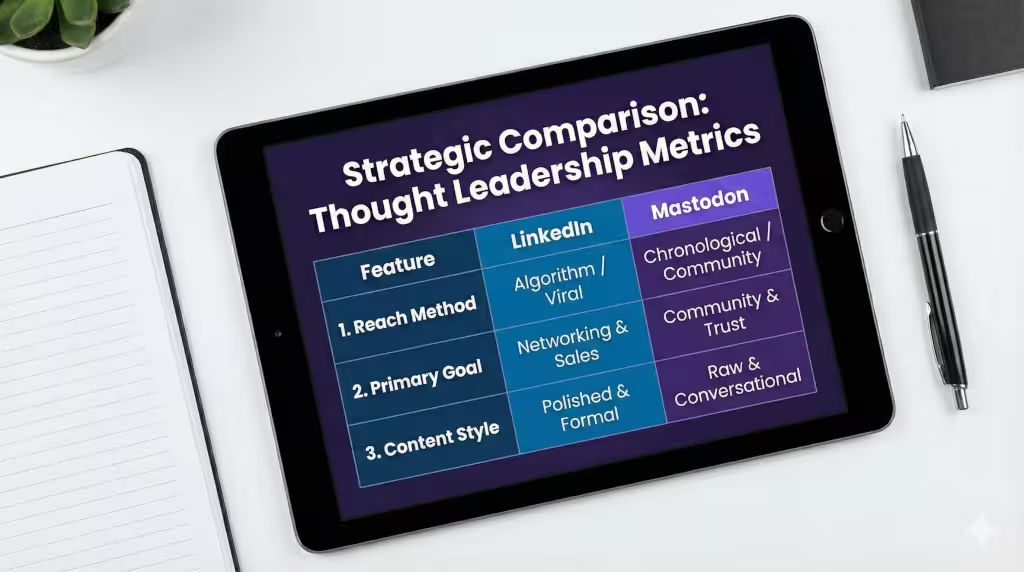
When we look at mastodon vs. linkedin for B2B thought leadership, we have to compare the numbers. LinkedIn gives you a lot of data. You can see how many people saw your post and what companies they work for. This is very helpful for proving that your thought leadership is working. You can track your Social Selling Index, which is a score LinkedIn gives you based on how well you network.
Mastodon does not give you as much data. You won’t see fancy charts about your followers’ job titles. However, you will see more “boosts” and replies. On Mastodon, a boost is like a retweet. It is the main way people share your thought leadership. Because there is no algorithm, your reach depends entirely on how much people like what you say. If your thought leadership is helpful, people will boost it to their own friends.
The trust factor is also different. On LinkedIn, people expect you to be selling something. On Mastodon, people expect you to be helping. If you want to build a very loyal following that trusts every word you say, Mastodon is often better. But if you need to reach thousands of new people every day, LinkedIn is the winner. Most smart leaders use a mix of both to balance their thought leadership efforts.
| Feature | Mastodon | |
| Main Audience | All Professionals | Tech, Privacy, Science |
| Reach Method | Algorithm | Chronological Feed |
| Data Ownership | Microsoft | You / Community |
| Primary Goal | Networking & Sales | Community & Trust |
| Content Style | Professional & Polished | Raw & Conversational |
Understanding the Fediverse and ActivityPub
If you want to be a master of thought leadership on Mastodon, you need to understand the tech. Mastodon uses a system called ActivityPub. This is a set of rules that lets different social sites talk to each other. It is like how you can send an email from Gmail to Yahoo. This is a big deal for B2B thought leadership because it means you are not stuck in one “walled garden.”
When you share your thought leadership on a Mastodon server, it can be seen by people on other types of sites too. This creates a giant web of content. For a business expert, this means your reach is actually bigger than it looks. You are building a presence in a global network that no single company can shut down. This kind of open system is the future of the internet, and getting in early can help your thought leadership stand out.
Personal Branding and Social Selling
Your personal brand is the heart of your thought leadership. On LinkedIn, your profile is your digital resume. It should be very professional. Use a clear photo and a headline that tells people exactly what problem you solve. This helps the LinkedIn search engine find you. If your headline says you are an expert in “supply chain thought leadership,” people looking for that topic will find you easily.
On Mastodon, your brand is more about your personality. Your bio can be a bit more casual. People want to know that you are a real person, not a corporate bot. To do social selling on Mastodon, you have to be very subtle. You can’t just post links to your product. Instead, use your thought leadership to show you know your stuff. When someone has a problem, give them a detailed answer. Eventually, they will look at your profile and see what you do for work. This “helpful first” approach is the best way to handle thought leadership in a decentralized space.
Repurposing Content for Better Reach
You don’t have to write different things for every site. You can take one big idea and change it to fit. This is called repurposing. For example, you might write a long whitepaper about new tech. That is your core thought leadership. On LinkedIn, you can turn that into a 1,000-word article with a professional tone. You can also make a short video talking about the three main points.
On Mastodon, you can break that same whitepaper into a “thread” of 10 short posts. Use a casual tone and ask people what they think. This way, your thought leadership reaches people who like long articles and people who like quick updates. It also saves you a lot of time. By using this strategy, you can maintain high-quality thought leadership on both platforms without getting burned out.
Managing Your Online Community
Thought leadership is a two-way street. It is not just about talking; it is about listening. On LinkedIn, you should reply to every comment on your posts. This tells the algorithm that your post is starting a conversation, which helps more people see it. It also shows that you are a leader who cares about your audience.
On Mastodon, community management is even more important. The moderators on Mastodon are volunteers who keep the peace. You should be friendly with them and follow the rules of your server. If you are helpful and kind, the community will reward your thought leadership by sharing it with others. This builds a “vouching” system where people trust you because their friends trust you. This is the strongest form of thought leadership you can have.
The Role of Employee Advocacy
Your company’s reach is much bigger when your employees help. This is called employee advocacy. When your staff shares your company’s ideas, it feels more real than when a brand account posts it. This is a huge part of modern thought leadership. You should encourage your team to build their own voices on LinkedIn and Mastodon.
Give them the tools they need to succeed. Maybe provide a few hours a week for them to write about their work. When multiple people from one company share smart ideas, it creates a “halo effect.” People start to see your whole company as a hub for thought leadership. This makes it much easier to win big B2B deals because the client feels like they are working with a whole team of experts.
Common Questions about Thought Leadership
Many people have specific questions about these platforms. One common question is: “Is Mastodon better than LinkedIn for privacy?” The answer is yes. Mastodon does not track you to sell ads. For many B2B leaders in legal or medical fields, this privacy is very important for their thought leadership.
Another question is: “Can I get leads on Mastodon?” Yes, but it takes longer. On LinkedIn, you can pay for ads to get leads right away. On Mastodon, you have to earn leads through months of helpful thought leadership. However, the leads you get from Mastodon are often higher quality because they already trust you.
A third question is: “Which platform is better for tech leaders?” Tech leaders often prefer Mastodon because they like the open-source nature of the site. But they still need LinkedIn to find investors and new hires. For most leaders, the best strategy is to be a leader on both.
Optimizing for Modern Search Engines
The way people find information is changing. It is not just about Google anymore. People use AI tools and voice search to get answers. To make sure these tools find your thought leadership, you need to use clear language. Use headers that look like questions, such as “How do I build thought leadership in 2026?” This helps AI engines like ChatGPT or Perplexity find your content and give it as an answer.
This is called Answer Engine Optimization (AEO). It is a vital part of thought leadership today. You want to be the “answer” to your industry’s biggest questions. Also, make sure your profiles are linked together. If your LinkedIn profile links to your Mastodon account and your website, it tells search engines that you are the same person. This builds your authority across the whole web.
The Future of B2B Interaction
Looking ahead, we see that the internet is becoming more fragmented. People are leaving giant “town square” sites and moving into smaller, specialized groups. This makes thought leadership more important than ever. In a world with too much information, people look for guides they can trust.
LinkedIn will likely stay the main place for finding jobs and making formal connections. But Mastodon and other decentralized sites will be where the real “innovation talk” happens. If you want to be seen as a pioneer, you should be active where the new ideas are being born. Your thought leadership should be a bridge between these two worlds.
Practical Steps to Start Today
If you are ready to grow your thought leadership, start with a plan. First, fix your LinkedIn profile. Make sure it highlights your expertise. Then, find a Mastodon server that fits your industry. Don’t worry about having zero followers at first. Just start by helping people.
Spend 30 minutes a day on each site. Share one smart idea and reply to three other people. This small habit will build your thought leadership over time. Remember, it is a marathon, not a sprint. The leaders who stay consistent are the ones who win in the end.
Avoiding Common Pitfalls
Many people fail at thought leadership because they try to be everywhere at once. Don’t sign up for ten sites. Just focus on LinkedIn and Mastodon for now. Another mistake is being too “salesy.” If every post you make is about your product, people will stop following you. Your goal is to provide value.
Also, avoid the “post and ghost” habit. If you post something but never reply to comments, you are missing the point. Thought leadership is a conversation. If you don’t talk back, people will think you are just a bot. Be a human first, and an expert second.
Using Graphics to Boost Your Message
People love visual information. When you share a complex idea, try to use a chart or a simple drawing. This makes your thought leadership much easier to understand. On LinkedIn, “document posts” or carousels that people can click through are very popular right now. They keep people looking at your content longer, which helps your reach.
On Mastodon, images are also great, but remember to add “alt text.” This is a description of the image for people who cannot see well. The Mastodon community cares a lot about being inclusive. Adding alt text shows that you are a thoughtful leader who cares about everyone in your audience. This small detail can really boost your thought leadership reputation.
Building a Content Calendar
To keep your thought leadership on track, use a calendar. Decide what you will talk about each week. For example, Monday could be for “Big Industry Trends.” Wednesday could be for “Answering a Common Question.” Friday could be for “Lessons Learned This Week.”
Having a plan makes it much easier to stay consistent. It also helps you make sure you are covering all the important parts of your topic. A balanced calendar ensures your thought leadership stays fresh and interesting for your followers.
Finding Your Best Path
The battle of mastodon vs. linkedin for B2B thought leadership is not about which one is “better.” It is about which one is better for you right now. LinkedIn is the place for scale, professional reach, and quick networking. It is essential for anyone who wants to be a player in the global business world.
Mastodon is the place for deep trust, niche communities, and owning your future. It is the perfect spot for leaders who want to be at the cutting edge of tech and privacy. By using both, you can build a powerful brand that no algorithm can destroy.
Your journey in thought leadership is just beginning. As the internet changes, your voice will become your most valuable asset. Keep learning, keep helping, and keep sharing. The world needs your expertise.