
Here at Silphium Design LLC, we look at the internet like a digital forest. We often think of screens as cold and hard. But the human brain still wants to find nature. This is called the biophilia hypothesis. When we use biophilic social media, we are trying to bring the calm of the woods to a smartphone screen. My goal today is to show you how we can track the money and value behind this. We call this the Return on Investment, or ROI.
Measuring how well biophilic social media works is a big challenge. Most marketing people just look at likes or shares. But nature-inspired design works deeper than that. It works on the nervous system. It lowers stress and helps people focus. To justify the cost of this design, we need a strong plan. We need to look at math and biology together. The thesis is simple. To find the ROI of biophilic social media, you must combine standard web tracking with how people feel and think.
Table of Contents
Defining the Biophilic Variable in Social Content
To measure anything, you first have to know what it is. In our work at Silphium Design LLC, we look for specific biophilic social media traits. These are things like the use of fractals. Fractals are patterns that repeat at different sizes, like a fern leaf or a snowflake. The human eye finds these very relaxing. We also look for natural colors. Instead of bright, neon “buy now” buttons, we use colors like moss green or sky blue.
We also look for organic shapes. Nature does not have many perfect squares. It has curves and waves. When we put these into a post, it changes how the user feels. To measure this, we use a “control” group. This means we make one post that is plain and clinical. Then we make another post that uses biophilic social media principles. We keep the message the same but change the look. By doing this, we can see exactly which visual style gets more clicks and sales.
The Core Framework: How to Measure Biophilic Social Media ROI
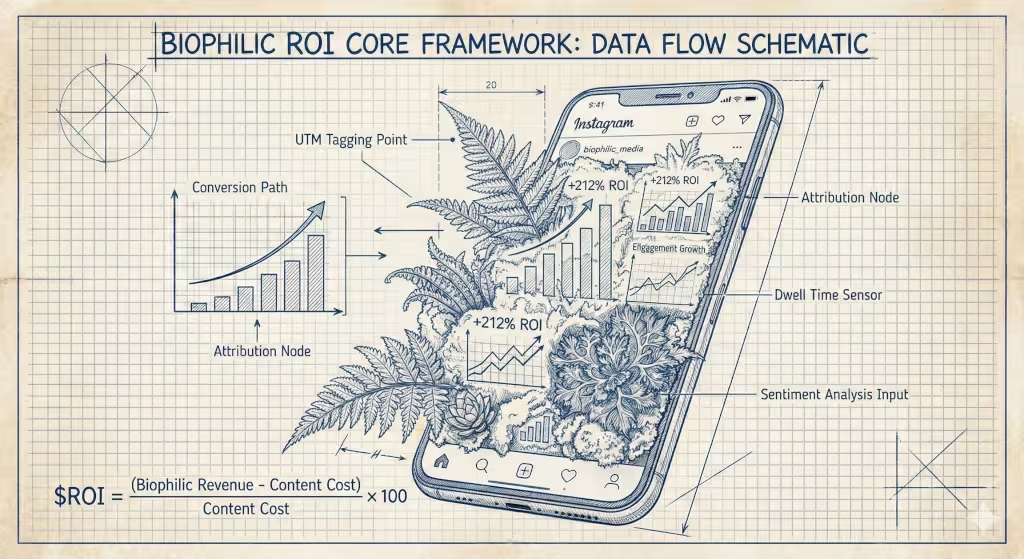
Now we get to the math. At a professional level, we use a specific formula. It looks like this:
ROI = (Revenue from Biophilic Leads – Content Cost)/(Content Cost) X 100
This tells us the percentage of profit. But we must go deeper. We use “Attribution Models” to see where the money comes from. Sometimes a person sees a calm, nature post and does not buy right away. But that post made them feel safe. Later, they search for the brand and buy. If we only look at the last click, we miss the power of biophilic social media.
We also use UTM tags. These are bits of code added to a link. They tell us exactly which post a person clicked on. For biophilic social media, we tag posts by their “nature type.” For example, we might tag one as “water-visuals” and another as “forest-fractals.” This shows us which type of nature is making the most money.
At Silphium Design LLC, we don’t just guess that a design is working; we use a technical framework to prove it. When we talk about “The Core Framework” for measuring biophilic social media ROI, we are looking at how a nature-inspired image or video moves a person from feeling calm to taking action. This framework is built on three main pillars: financial math, tracking the journey, and understanding why the user clicked.
The Financial Formula for Biophilic ROI
To explain the math in a way that makes sense for a business, we have to look at what we spend versus what we make. Creating high-quality biophilic social media content sometimes costs more than a standard text ad. You might need to hire a photographer to get real shots of local plants or pay a designer to create custom fractal patterns. Because of this, the ROI formula is vital.
We take the total money earned from people who clicked on our nature-inspired posts and subtract the cost of making those posts. Then, we divide that number by the cost again. If the number is high, it shows that the extra effort to include nature was worth it. For example, if a “forest-themed” ad costs $500 to make but brings in $2,500 in sales, your ROI is 400%. This math helps us tell our clients exactly how much every leaf and tree on their screen is worth in real dollars.
Attribution Models: Connecting the Calm to the Sale
One of the hardest parts of biophilic social media is that nature works slowly. In the fast world of the internet, most people look at “last-click attribution.” This means they only give credit to the very last thing a person saw before buying. But biophilic social media often acts as the “first touch.” It is the peaceful image that makes a user stop and think, “I like this brand.” They might not buy that second, but the seed is planted.
We use “Multi-Touch Attribution.” This model looks at every post a user saw. If a user saw three biophilic social media posts over a week and then bought a product on the eighth day, our framework gives credit to those early nature images. We can see that the calm feeling created by the design helped lead the user down the path to becoming a customer. Without this model, you might think your nature posts aren’t working, when in reality, they are doing all the hard work of building trust.
Technical Tracking with UTM Parameters
To make this framework work, we use technical labels called UTM parameters. Think of these like digital luggage tags. Every time we post biophilic social media content, we attach a tag to the link. We categorize these tags based on the specific type of nature being used.
At Silphium Design LLC, we might tag a post as “organic-curves” or “fractal-symmetry.” This allows us to look at our data in Google Analytics and see which specific biophilic element is driving the most traffic. If we see that “water-based visuals” have a 20% higher click-through rate than “mountain-based visuals,” we know how to adjust our strategy. This level of detail turns biophilic social media from an art project into a data-driven marketing machine.
Behavioral Analysis and the Funnel
The last part of the framework is looking at how a person moves through the “sales funnel.” In a standard funnel, people often drop out because they feel pressured or stressed by aggressive ads. Our framework tracks how biophilic social media keeps the funnel “greener” and more inviting.
We measure “Micro-Conversions.” These are small steps, like clicking to see more photos or spending time reading a caption. Because biophilic social media uses soft fascinations—things that hold our attention without making us tired—we often see much higher micro-conversion rates. By tracking these small wins, we can predict how many big wins (actual sales) we will have by the end of the month. This makes the ROI of your biophilic social media much easier to forecast and plan for the future.
Key Performance Indicators (The Natural KPIs)
A KPI is a way to see if you are winning. For biophilic social media, we look at “Dwell Time.” This is how long a person stays on a post. Research shows that nature images help people stop scrolling. They rest their eyes on the green trees or blue water. This is called Attention Restoration Theory. If people stay longer, they are more likely to remember the brand.
We also track “Sentiment Polarity.” This is a fancy way of saying “is the mood good or bad?” We use tools that read the comments. If people use words like “peaceful,” “trusted,” or “clean,” we know our biophilic social media strategy is working. Traditional ads often get “angry” or “bored” scores. Nature design gets “joy” and “trust” scores.
Finally, we look at conversion rates. Does a biophilic social media post lead to more sign-ups? Often, the answer is yes. This is because nature designs lower a person’s “cortisol” levels. Cortisol is the stress hormone. When people are less stressed, they are more willing to try a new product.
Does biophilic social media actually increase engagement?
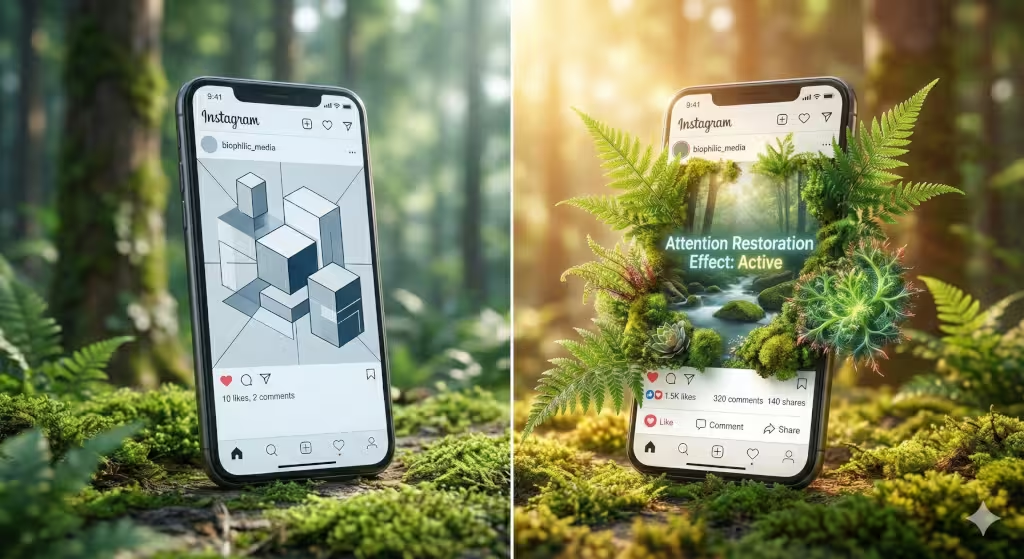
To understand why biophilic social media works, we have to look at how the human brain was built. At Silphium Design LLC, we often tell our clients that our brains are still “old” brains living in a “new” digital world. We spent millions of years living outdoors. Because of this, our eyes and minds are tuned to notice plants, water, and animals. When we see these things, even on a small phone screen, our brain reacts in a special way that increases engagement.
The Science of Soft Fascination
There is a concept called “Soft Fascination.” Most things on the internet use “Hard Fascination.” This includes bright flashing lights, loud noises, or big red text that yells at you to “BUY NOW.” Hard fascination makes your brain tired. It uses up your energy and makes you want to close the app.
Biophilic social media is different. It uses soft fascination. This is the kind of attention you use when you look at a sunset or watch clouds move. It holds your interest, but it does not wear you out. In fact, it actually helps your brain rest. Because the user feels better after looking at a nature-inspired post, they stay on the page longer. This “restorative effect” is why we see higher dwell times and more meaningful interactions on these types of posts.
Why Digital Fractals Stop the Scroll
One of the biggest problems for any brand is the “infinite scroll.” People thumb through their feeds so fast that they barely see anything. However, biophilic social media uses a secret weapon: fractals. As I mentioned before, these are repeating patterns found in things like pinecones or sea shells.
Our eyes are very good at recognizing these patterns. Research shows that when a person sees a fractal, their brain recognizes it in less than a second. This “easy recognition” causes a small spark of pleasure. This spark acts like a “scroll-stopper.” It makes the person pause their thumb for just a second. That second is all we need to share our message. By using these natural patterns, biophilic social media earns the attention that other ads have to fight for.
Building Emotional Trust Through Nature
Engagement isn’t just about clicking a button; it is about how a person feels. At Silphium Design LLC, we measure “Sentiment,” which is the emotion behind a comment. Traditional ads often get “negative engagement.” This is when people hide the ad or leave mean comments because they feel annoyed.
Biophilic social media creates “positive engagement.” When people see images of a lush garden or a calm river, their bodies produce less cortisol (the stress hormone) and more oxytocin (the trust hormone). This makes them feel a connection to the brand. They are more likely to leave a positive comment, share the post with a friend, or save it to look at later. This type of engagement is much more valuable for ROI because it builds a long-term relationship rather than a one-time click.
The Survival Instinct and Visual Reward
There is also a survival reason why biophilic social media increases engagement. Our ancestors looked for “Prospect and Refuge.” Prospect means a wide-open view where you can see danger coming. Refuge means a safe, cozy place where you can hide.
When we design biophilic social media posts that show a beautiful landscape (prospect) with a clear, safe space for the text (refuge), the user’s brain feels a sense of safety and reward. This triggers the release of dopamine. Dopamine is the “reward chemical” in the brain. Because your post gave them a “biological reward,” the user wants to engage with it. They might click “Like” simply because the image made them feel successful and safe. This is why nature-inspired content often goes viral—it taps into our deepest human instincts.
What are the best tools for tracking biophilic ROI?
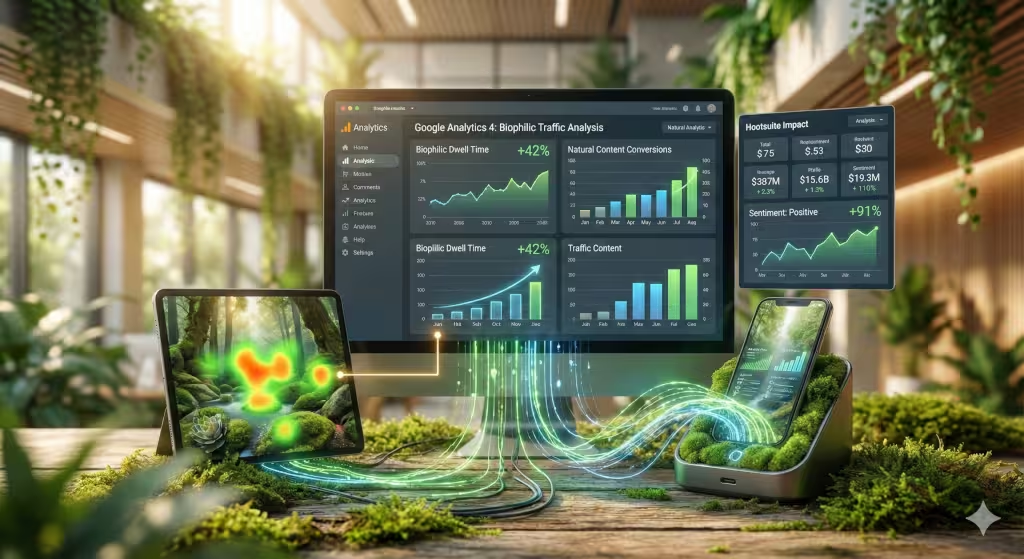
To do this right, you need the right gear. We use Google Analytics 4 to track where people go after they click. We also use tools like Hootsuite Impact to see the money value of every post. But for biophilic social media, we also use heat-mapping. This shows us exactly where a person looked on the screen. Did they look at the flower or the “buy” button? Usually, the flower draws them in, and then their eyes move to the button.
We also look at “social listening” tools. These tools find every time someone talks about our brand. We can see if using biophilic social media changed the way people talk about us over six months. If they start seeing the brand as “sustainable” or “high-quality,” the design has paid for itself.
Can biophilic social media improve B2B performance?
Many people think nature design is just for yoga brands. That is not true. In the B2B (business-to-business) world, people are very stressed. They have a lot of work and very little time. When a B2B company uses biophilic social media, they stand out from the gray, boring crowd.
Using the “prospect and refuge” rule helps here. This means showing a wide view (prospect) and a safe place (refuge). In an ad, this might look like a wide mountain view with a clear, simple text box in the corner. This makes the business leader feel in control. When they feel in control, they are more likely to book a demo or sign a contract.
The GEO and AEO Edge: Entity Integration
Today, search engines are getting smarter. They don’t just look for words; they look for “entities.” An entity is a big idea or a real thing. When we write about biophilic social media, we connect it to things like “Environmental Psychology” and “Sustainable UX.”
By using these big ideas, we help “Answer Engines” like AI find our content. If someone asks an AI, “How can I make my ads more relaxing?” the AI will look for brands that talk about biophilic social media. This helps us show up first in the new age of the internet. We also use Local SEO. If a store has real plants inside, we use pictures of those plants in their biophilic social media posts. This connects the digital world to the physical world.
The Future of Sustainable Digital Design
At Silphium Design LLC, we believe the future of the internet is green. Not just the color green, but the feeling of life. Measuring the ROI of biophilic social media is how we prove that beauty is good for business. When you lower a user’s stress, they stay longer. When they stay longer, they trust you more. When they trust you more, they buy more.
This is not just a trend. It is a return to what makes us human. Biophilic social media is the tool we use to build a better, calmer digital world. By using the math and tools I shared today, you can show that nature-inspired design is the best investment your brand can make.